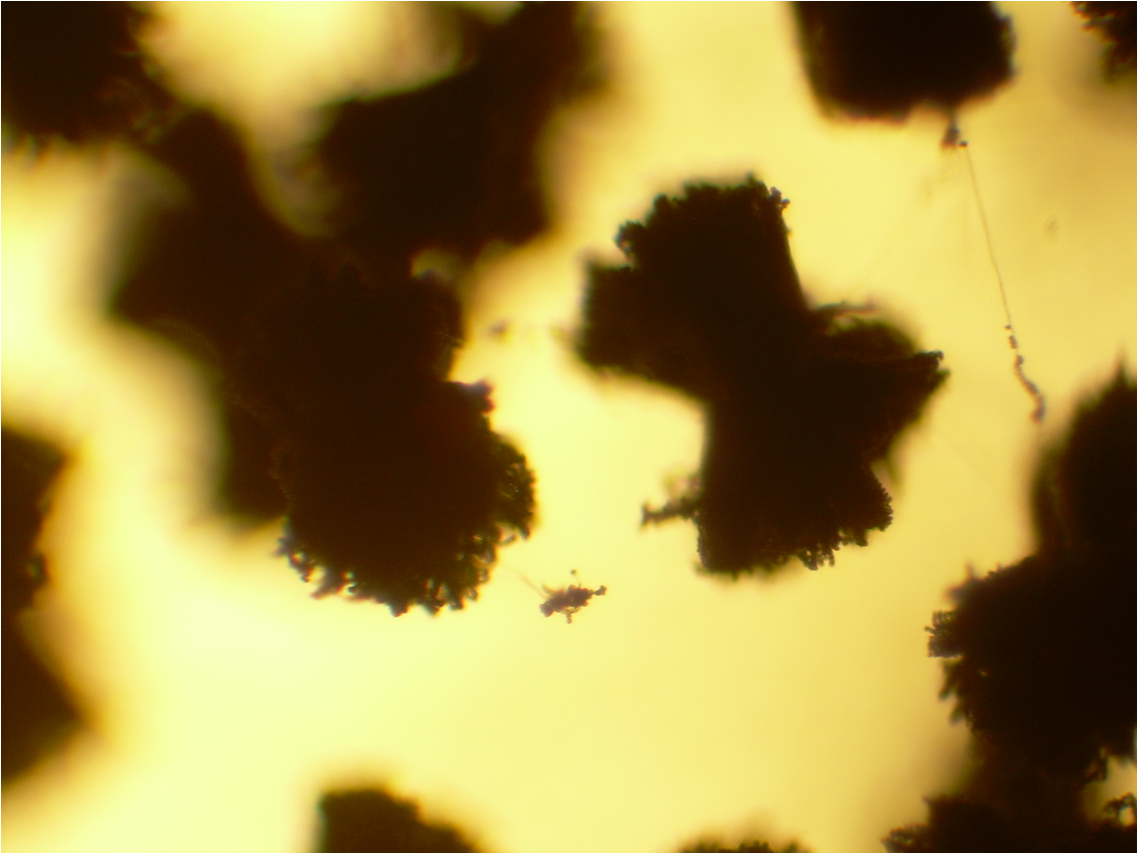
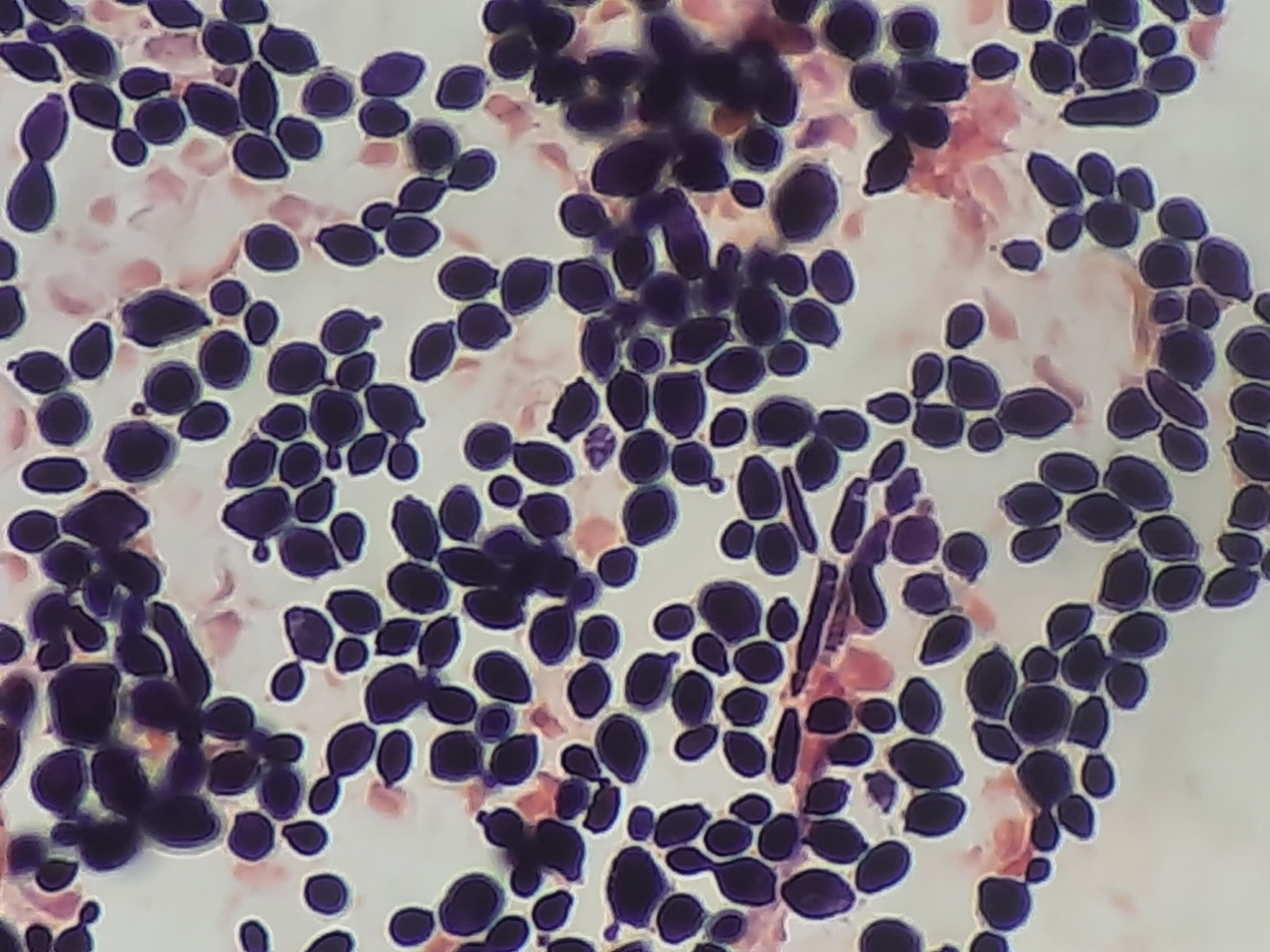
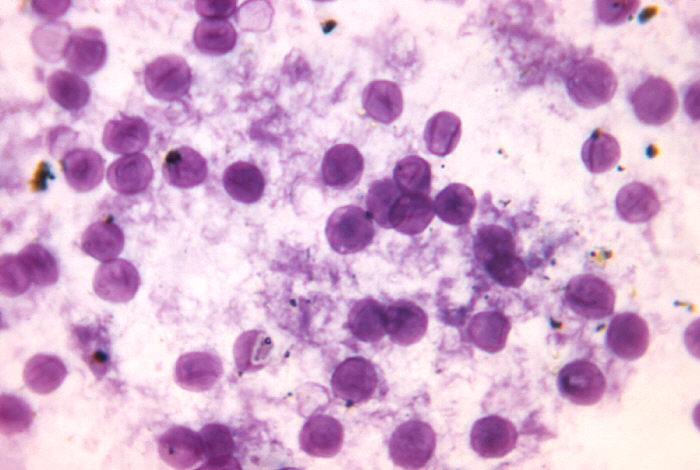
FUNGUS · Encapsulated yeast
Cryptococcus neoformans
Cryptococcus neoformans — India ink preparation
Stain: India ink (negative stain) of CSFMorphology: Round/oval narrow-based budding yeast surrounded by a wide clear polysaccharide capsule (halo) against black ink backgroundYield: HIGHDifficulty: MEDIUM
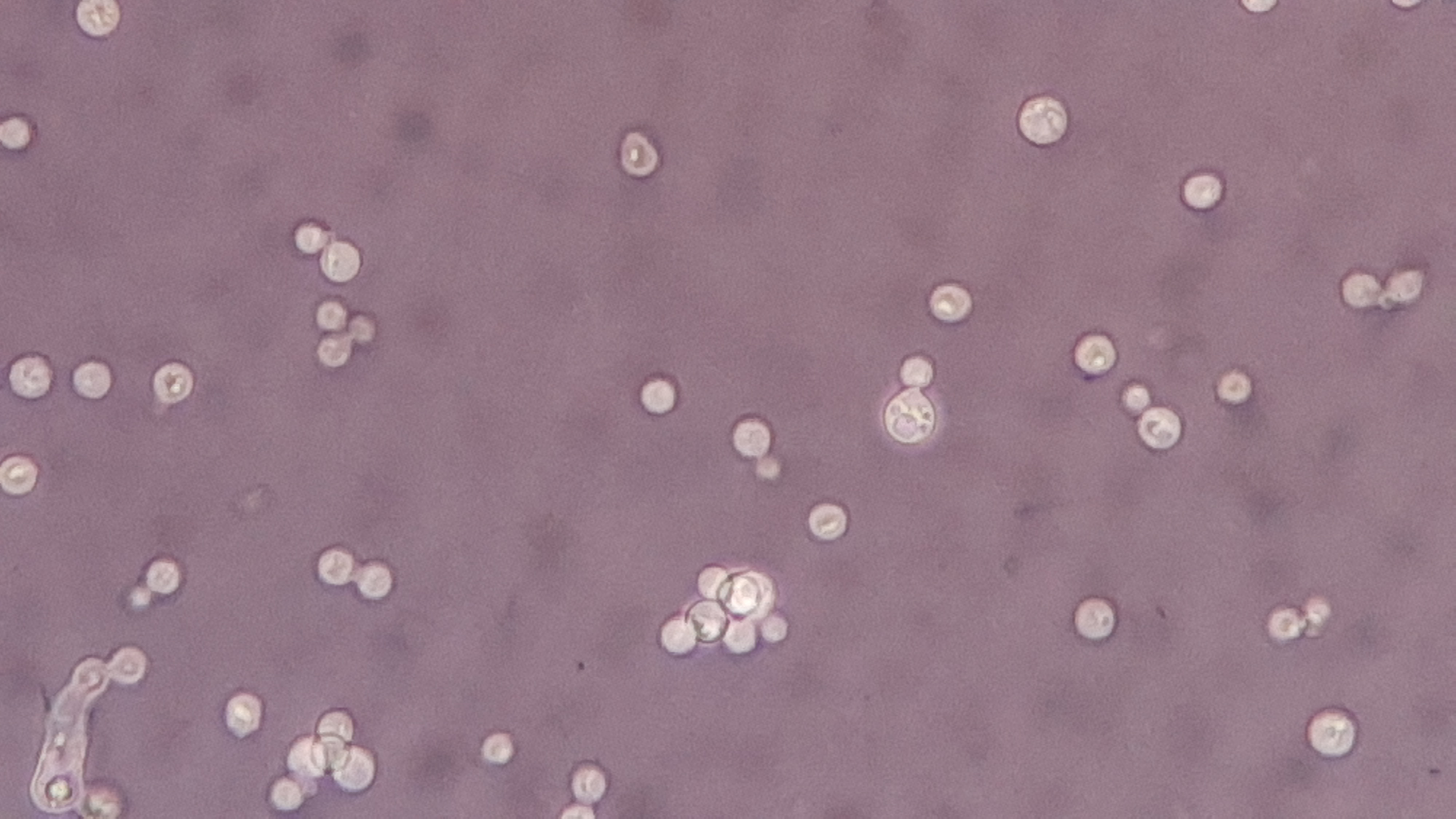
Image: Wikimedia Commons (CC BY-SA 4.0)
Key facts
**Pathogenesis**: Inhalation from soil/pigeon droppings; polysaccharide capsule (glucuronoxylomannan) inhibits phagocytosis and is the only major virulence factor. Dissemination to CNS in T-cell deficiency (HIV/AIDS, transplants). **Diagnostic clue**: India ink CSF shows encapsulated yeast (halo); serum/CSF cryptococcal antigen (CrAg) highly sensitive; mucicarmine stains capsule red; urease-positive; melanin production on niger seed agar. **Virulence**: Capsule, melanin (laccase) antioxidant defense, ability to grow at 37°C.
Boards buzzwords
- India ink halo
- soap-bubble lesions
- narrow-based budding
- cryptococcal antigen
- pigeon droppings
- AIDS meningitis
Associated diseases
- Cryptococcal meningitis / meningoencephalitis (AIDS CD4 <100)
- Cryptococcoma of brain ('soap-bubble' lesions)
- Pulmonary cryptococcosis
Treatment
Induction: liposomal amphotericin B + flucytosine × 2 weeks; consolidation: fluconazole 800 mg × 8 weeks; maintenance: fluconazole 200 mg until CD4 >100 sustained; serial LPs to manage elevated ICP