PARASITE · Hemoflagellate protozoan
Trypanosoma cruzi
Trypanosoma cruzi — Blood smear (trypomastigote)
Stain: Giemsa-stained thin blood smearMorphology: C- or S-shaped trypomastigote with central nucleus, posterior kinetoplast, and undulating membrane terminating in a free flagellum, between RBCsYield: MEDIUMDifficulty: MEDIUM
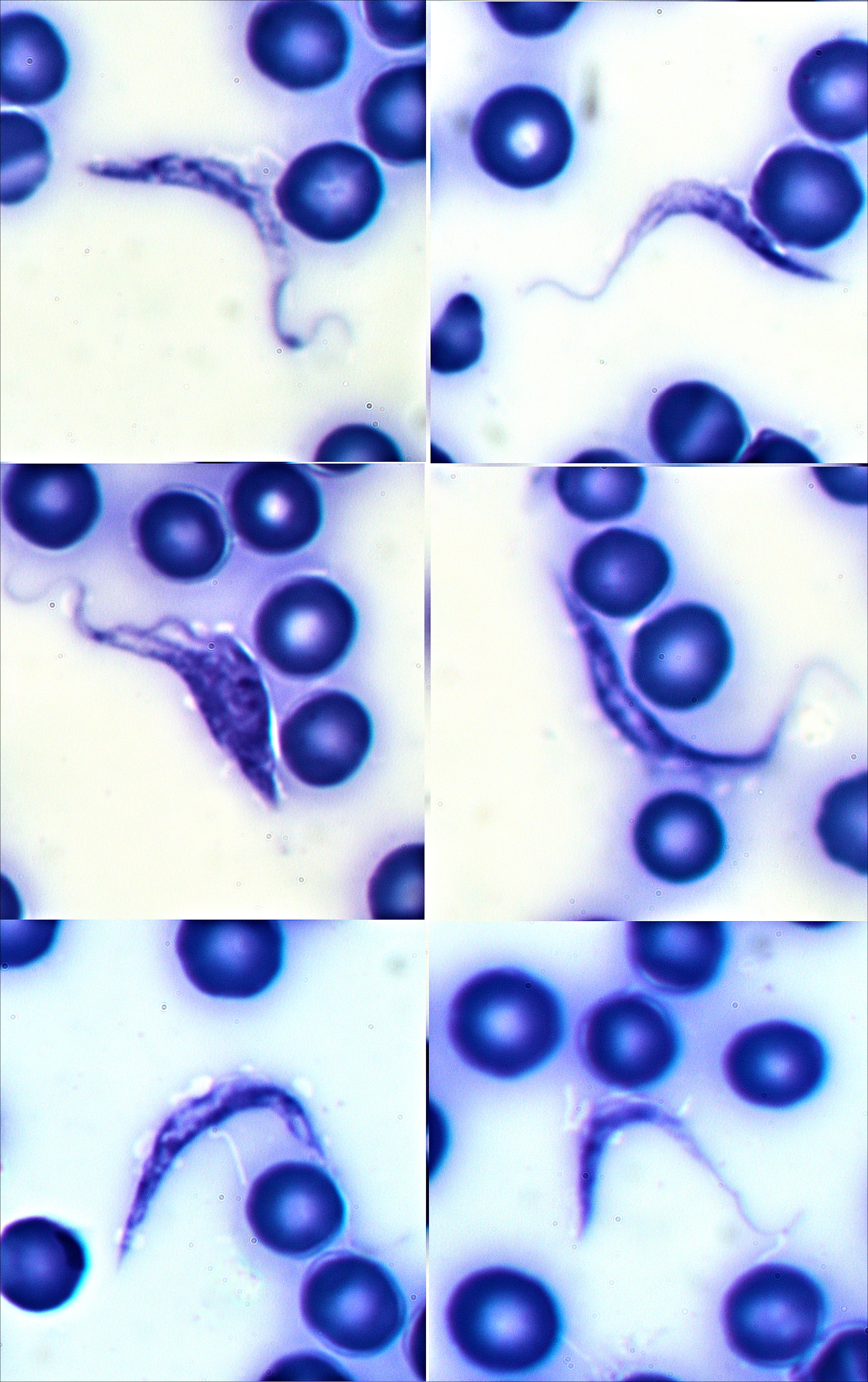
Image: Wikimedia Commons · Dr Graham Beards (CC BY-SA 4.0)
Key facts
**Pathogenesis**: Reduviid (kissing) bug deposits feces while feeding; trypomastigotes enter wound or conjunctiva → invade cells → intracellular amastigotes in cardiac/GI smooth muscle → chronic damage decades later. **Diagnostic clue**: Acute — periorbital swelling (Romaña sign), fever, trypomastigotes on Giemsa smear; chronic — dilated cardiomyopathy with apical aneurysm, megacolon, megaesophagus; serology (ELISA, IFA) for chronic. Endemic in Latin America. **Virulence**: trans-Sialidase, intracellular replication as amastigote.
Boards buzzwords
- reduviid (kissing) bug
- Romaña sign
- megacolon and megaesophagus
- dilated cardiomyopathy
- amastigotes in cardiac muscle
- Latin America
Associated diseases
- Acute Chagas disease (Romaña sign, myocarditis)
- Chronic Chagas cardiomyopathy (DCM, biventricular failure, apical aneurysm, sudden death)
- Megaesophagus / achalasia-like
- Megacolon
Treatment
Benznidazole (first-line) or nifurtimox during acute phase and for children with chronic infection; chronic cardiac management (ACE inhibitor, beta-blocker, ICD as indicated)