Sjögren, Scleroderma & Mixed Connective Tissue Disease
A Step 1–focused, clinically verified lesson on three antibody-defined connective tissue diseases — Sjögren, systemic sclerosis (limited/CREST vs diffuse), and MCTD — emphasizing signature autoantibodies, buzzword vignettes, and next-best-step decisions like ACE inhibitors for scleroderma renal crisis. Includes a comparison table, the standard CREST mnemonic, and two verified Commons images.
The big picture: three antibody-defined diseases
Three autoimmune connective tissue diseases that Step 1 loves to separate by autoantibody. Sjögren syndrome is a chronic autoimmune lymphocytic (predominantly T-cell–mediated, type IV) destruction of exocrine glands — lacrimal and salivary — producing the sicca complex; it can be primary or secondary to RA/SLE. Systemic sclerosis (scleroderma) is a fibrosing vasculopathy: endothelial injury plus fibroblast/TGF-β–driven collagen overproduction thickens skin and scars viscera, splitting into limited (CREST) and diffuse forms. Mixed connective tissue disease (MCTD) is an overlap syndrome blending SLE, systemic sclerosis, and polymyositis, unified by high-titer anti-U1 RNP. Two exam heuristics: the antibody usually gives away the diagnosis, and Raynaud phenomenon is a shared early clue across scleroderma and MCTD.
- Sicca complex: dry eyes (keratoconjunctivitis sicca) + dry mouth (xerostomia); dental caries, trouble swallowing dry food
- Bilateral parotid / salivary gland enlargement
- Antibodies: anti-Ro/SSA and anti-La/SSB; ANA and rheumatoid factor often positive
- Dx: ↓ Schirmer test (decreased tear wetting); labial (minor salivary gland) biopsy = gold standard → focal lymphocytic sialadenitis
- Feared complication: B-cell non-Hodgkin (MALT) lymphoma — suspect a firm, persistent, unilateral parotid mass
- Anti-Ro/SSA (± anti-La/SSB) crosses the placenta → neonatal lupus + congenital complete heart block
- Rx: artificial tears; pilocarpine / cevimeline (muscarinic agonists) to stimulate secretions; meticulous oral hygiene
Vignette: A 52-year-old woman reports 6 months of a gritty, sandy sensation in both eyes and needing water to swallow crackers. Exam shows dry buccal mucosa, multiple dental caries, and bilateral parotid enlargement.
- Diagnosis: Sjögren syndrome
- Next best step: check anti-Ro/SSA and anti-La/SSB (+ Schirmer test); a labial salivary gland biopsy confirms when serology is equivocal
Twist: One year later she develops a firm, enlarging, unilateral parotid mass with cervical lymphadenopathy. → Think MALT / non-Hodgkin lymphoma — biopsy the mass; do not dismiss it as routine glandular swelling.
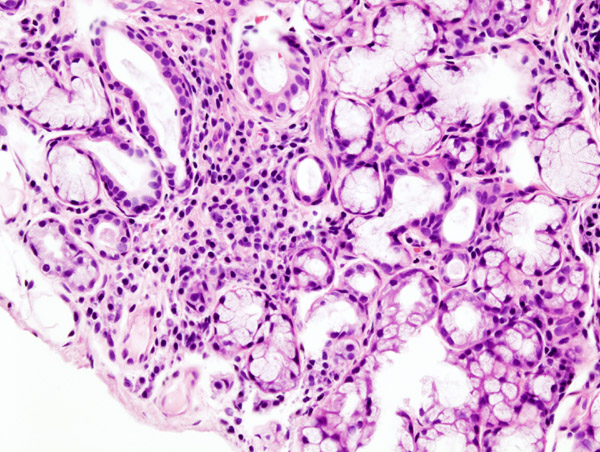
- Raynaud phenomenon is often the first sign; look for abnormal nailfold capillaries
- Limited (CREST): skin thickening distal to elbows/knees + face; anti-centromere antibody; late risk = pulmonary arterial hypertension
- Diffuse: truncal/proximal skin, early visceral disease; anti-Scl-70 (anti-topoisomerase I); risk = interstitial lung disease
- Anti-RNA polymerase III → rapid skin progression + highest risk of scleroderma renal crisis
- Scleroderma renal crisis: malignant HTN + AKI ± MAHA → ACE inhibitor (captopril) is first-line and lifesaving; avoid high-dose corticosteroids (they precipitate it)
- Organ-based Rx: esophageal dysmotility/GERD → PPI; Raynaud → dihydropyridine CCB; ILD → mycophenolate

Vignette: A 46-year-old with diffuse scleroderma — recently started on corticosteroids for arthralgias — presents with headache and blurred vision. BP is 220/120; creatinine has risen from 0.9 to 2.4 mg/dL. Peripheral smear shows schistocytes, and platelets are low.
- Diagnosis: scleroderma renal crisis (with microangiopathic hemolytic anemia)
- Next best step: start an ACE inhibitor (captopril) — first-line, and continued even as creatinine climbs
- Do NOT: give more high-dose steroids or rely on other antihypertensives alone — steroids can trigger renal crisis, and non-ACEi agents do not address the pathophysiology
- Overlap of SLE + systemic sclerosis + polymyositis features
- Defining antibody: high-titer anti-U1 RNP; ANA positive in a speckled pattern
- Classic exam clues: Raynaud, puffy / swollen (edematous) hands, arthritis, and proximal muscle weakness (myositis, ↑ CK)
- Pulmonary arterial hypertension = leading cause of death
- Key contrast: unlike pure scleroderma, MCTD is typically corticosteroid-responsive
CREST = the features of limited cutaneous systemic sclerosis (think anti-centromere antibody):
- C — Calcinosis cutis
- R — Raynaud phenomenon
- E — Esophageal dysmotility
- S — Sclerodactyly
- T — Telangiectasias
Side-by-side comparison
| Disease | Key antibody | Skin / glands | Joints & other | Hallmark complication |
|---|---|---|---|---|
| Sjögren | Anti-Ro/SSA, anti-La/SSB | Sicca; parotid enlargement | Non-erosive arthritis | MALT lymphoma; neonatal heart block |
| Limited SSc (CREST) | Anti-centromere | Skin distal to elbows/knees + face | Sclerodactyly, telangiectasia | Pulmonary arterial hypertension |
| Diffuse SSc | Anti-Scl-70; anti-RNA pol III | Truncal/proximal thickening | Contractures | ILD; scleroderma renal crisis |
| MCTD | Anti-U1 RNP (high titer) | Puffy hands; Raynaud | Arthritis + myositis (↑ CK) | Pulmonary HTN; steroid-responsive |
Practice MSK now
Board-style questions, spaced-repetition flashcards, and a Socratic AI tutor — free to start.