Pituitary Disorders: Acromegaly, Prolactinoma & Hypopituitarism
A boards-focused walk through the three most-tested pituitary syndromes—acromegaly, prolactinoma, and hypopituitarism—emphasizing hormone-axis logic, dynamic testing, vignette buzzwords, and next-best-step decisions (hormone level first, MRI second; dopamine agonist before surgery for prolactinoma; glucocorticoid before levothyroxine).
Framing the sella: excess vs. mass effect
The anterior pituitary (adenohypophysis) secretes six hormones under hypothalamic control: GH, PRL, ACTH, TSH, LH, FSH. The posterior pituitary stores hypothalamic ADH and oxytocin. Boards test pituitary disease along two axes: (1) hormone excess from a functioning adenoma and (2) mass effect from tumor growth.
A sellar mass compresses the optic chiasm → bitemporal hemianopia (loss of the temporal/peripheral visual fields), causes headache, and by crushing normal gland produces progressive hypopituitarism. Adenomas are sized as microadenoma (<1 cm) vs. macroadenoma (≥1 cm). The most common functioning adenoma is a prolactinoma; the most common sellar mass in adults is a pituitary adenoma (in children, craniopharyngioma).
For every vignette ask: Which hormone is over- or under-produced? Is there mass effect? What is the single next best step—for a functional syndrome almost always a hormone level first, MRI second.
GH-secreting somatotroph adenoma → ↑ hepatic IGF-1
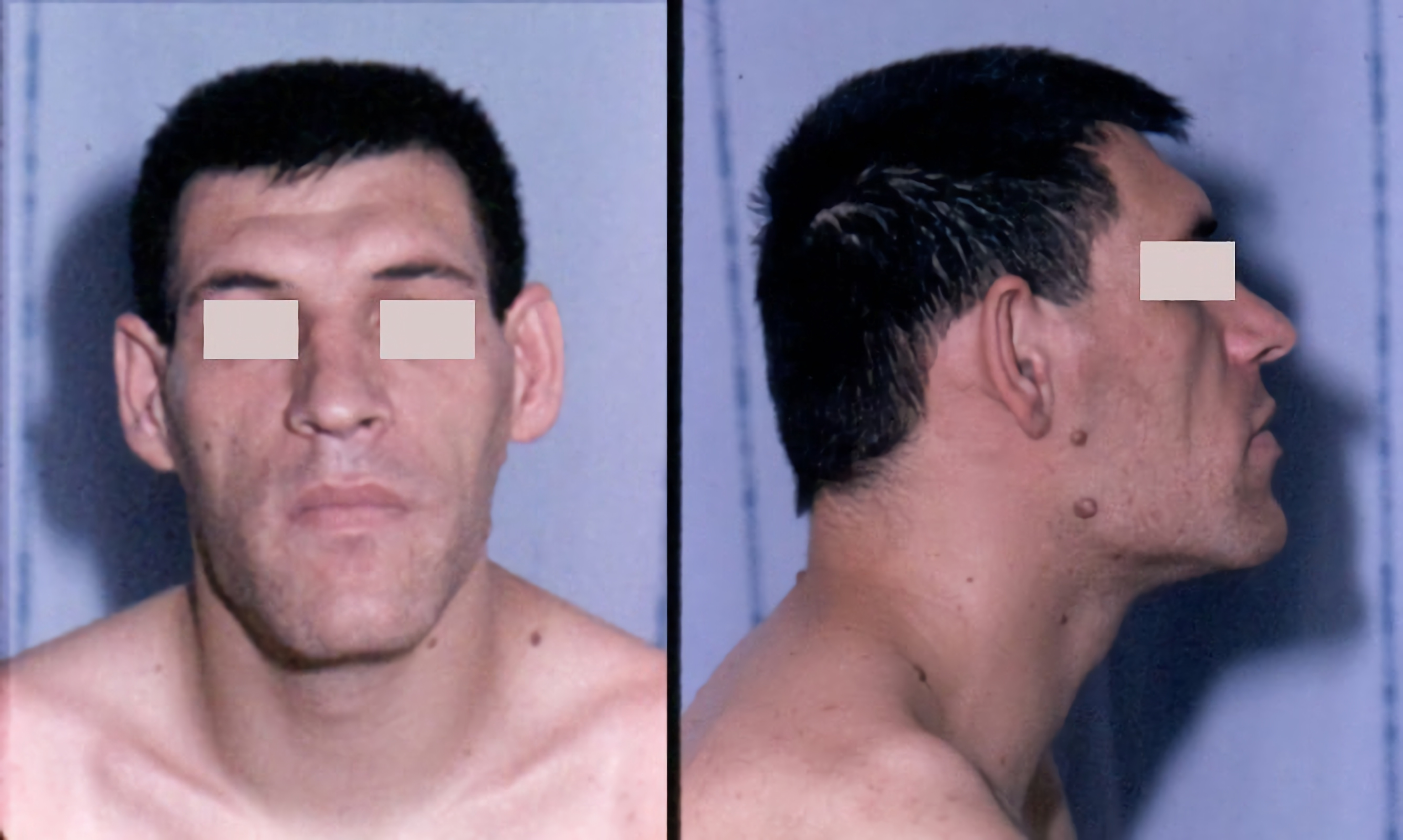
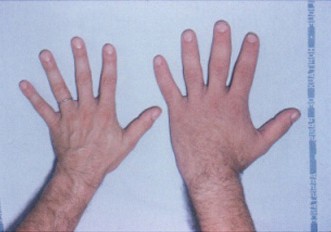
- Adults: coarse facial features, frontal bossing, prognathism, macroglossia, dental diastema, enlarging hands/feet (rising ring & shoe size), skin tags, oily skin, sweating
- Carpal tunnel syndrome, deepening voice, arthropathy, organomegaly
- Systemic killers: cardiovascular disease — HTN, cardiomyopathy, arrhythmia (leading cause of death), impaired glucose tolerance / DM, OSA, colon polyps → colon cancer (screen with colonoscopy)
- Children with open epiphyses → gigantism (tall stature)
- Screen: serum IGF-1 — best initial test (GH is pulsatile/unreliable)
- Confirm: OGTT showing failure to suppress GH (oral glucose normally suppresses GH)
- Localize: pituitary MRI after biochemical confirmation
- Rx: transsphenoidal resection (first-line) → somatostatin analogs (octreotide/lanreotide) or pegvisomant (GH-receptor antagonist); cabergoline as an add-on for modest residual disease
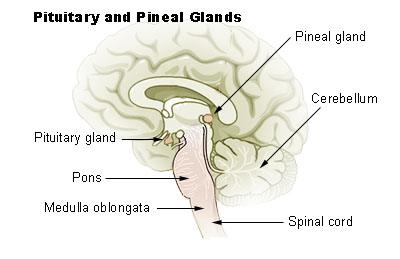
Vignette: A 48-year-old man reports his wedding ring no longer fits and he has gone up two shoe sizes. He has new hypertension, bilateral hand tingling worse at night, and his wife notes his facial features have coarsened across photos spanning 5 years. Fasting glucose 142 mg/dL.
- Diagnosis: Acromegaly
- Next best step: Measure serum IGF-1 (not a random GH level)
- If IGF-1 elevated → confirm with OGTT showing non-suppressible GH, then pituitary MRI
- Pitfall: Don't image first—biochemistry precedes MRI because incidental pituitary "incidentalomas" are common. The buzzword cluster is new carpal tunnel + skin tags + jaw/soft-tissue growth + new glucose intolerance.
Most common functioning pituitary adenoma
- Prolactin suppresses GnRH → ↓ LH/FSH → hypogonadism
- Women (present early, microadenoma): galactorrhea, oligo-/amenorrhea, infertility, low libido
- Men (present late, macroadenoma): low libido, ED, infertility, gynecomastia ± mass effect (headache, bitemporal hemianopia)
- Dx: serum prolactin; >200 ng/mL ≈ prolactinoma. First exclude: pregnancy (β-hCG), primary hypothyroidism (↑TRH drives PRL), dopamine antagonists (antipsychotics, metoclopramide), renal failure, and stalk-effect compression (usually <100–200)
- Hook effect: a huge tumor can give a falsely low PRL → dilute the serum to unmask it
- Rx: dopamine agonist first-line — cabergoline (or bromocriptine); shrinks even macroadenomas. Surgery only if resistant/intolerant, CSF leak, or apoplexy.
- Unique point: medical therapy precedes surgery for prolactinoma.
Vignette: A 26-year-old woman has 6 months of amenorrhea and milky nipple discharge. She is not sexually active and takes no antipsychotics. Prolactin 180 ng/mL, TSH normal, β-hCG negative.
- Diagnosis: Prolactinoma (likely microadenoma)
- Next best step: Pituitary MRI (pregnancy, hypothyroidism, and drugs already excluded)
- Treatment: Cabergoline — restores menses/fertility and shrinks the tumor
- Contrast the distractor: If she were taking risperidone, the answer is medication-induced hyperprolactinemia → stop/switch the drug rather than image first. Modest PRL elevation (<100) with a normal MRI points away from a true adenoma.
Loss of anterior pituitary hormones
- Order of hormone loss: GH → LH/FSH → TSH → ACTH → PRL (prolactin lost last / often spared)
- Causes: pituitary adenoma / apoplexy, Sheehan syndrome, craniopharyngioma (kids; calcified, Rathke pouch), empty sella, infiltrative (hemochromatosis, sarcoidosis), lymphocytic hypophysitis (postpartum, checkpoint inhibitors), radiation, TBI
- Sheehan: postpartum pituitary infarction after hemorrhage/hypotension → failure to lactate, amenorrhea, fatigue, loss of pubic/axillary hair
- Pituitary apoplexy: acute hemorrhage into an adenoma → sudden severe headache, visual loss, ophthalmoplegia, hypotension → EMERGENCY: IV hydrocortisone (stress-dose steroids) + urgent MRI + neurosurgery
- Central vs. primary (Addison) adrenal failure: ACTH low → no hyperpigmentation; aldosterone/RAAS intact → no hyperkalemia (hyponatremia still possible)
- Replacement rule: glucocorticoid BEFORE levothyroxine—thyroxine first can precipitate adrenal crisis.
FLAT PiG — the six anterior pituitary hormones (the genuine classic)
- FSH, LH, ACTH, TSH, PRL, GH (the lowercase i is just a spacer)
- FLAT = the tropic hormones (act on downstream glands — gonads, adrenal cortex, thyroid); PiG = the direct-acting hormones (PRL → breast, GH → tissues via hepatic IGF-1)
Order of hormone loss in progressive hypopituitarism — memorize the sequence, not a forced sentence
- GH → LH/FSH → TSH → ACTH → PRL
- A slowly compressing mass knocks out GH and the gonadotropins first — so ↓ growth velocity in children and hypogonadism/low libido in adults are the early clues.
- ACTH is lost late but is the most dangerous deficiency (adrenal crisis); PRL is typically spared or even rises via stalk effect (loss of dopamine inhibition). There is no single standard sentence-mnemonic for this order — learn the sequence and its logic directly.
Side-by-side: axes, labs & first-line Rx
| Feature | Acromegaly | Prolactinoma | Hypopituitarism (e.g., Sheehan) |
|---|---|---|---|
| Core defect | ↑ GH → ↑ IGF-1 | ↑ Prolactin | ↓ multiple anterior hormones |
| Key hormone test | IGF-1 (screen); OGTT non-suppression (confirm) | Prolactin (>200 ≈ tumor) | Low target hormone + low/inappropriately normal pituitary hormone |
| Gonadal axis | Variable | ↓ LH/FSH (PRL suppresses GnRH) | ↓ LH/FSH (lost early) |
| Buzzwords | Ring/shoe size ↑, prognathism, carpal tunnel | Galactorrhea + amenorrhea, bitemporal hemianopia | Failure to lactate, postpartum fatigue |
| Imaging | MRI after biochemistry | MRI after excluding pregnancy/hypothyroid/drugs | MRI ± empty sella |
| First-line Rx | Transsphenoidal surgery | Cabergoline (dopamine agonist) | Hormone replacement (steroid before T4) |
Practice Endocrine now
Board-style questions, spaced-repetition flashcards, and a Socratic AI tutor — free to start.