Infectious Diarrhea & Colitis
A Step 2 CK high-yield lesson on infectious diarrhea and colitis, organized around the inflammatory-vs-non-inflammatory framework with buzzword-to-bug associations, next-best-step decisions, and guideline-current C. difficile and EHEC/HUS management. Emphasizes when to withhold antibiotics and antimotility agents.
Framing infectious diarrhea for the boards
Step 2 CK frames infectious diarrhea around two questions: is it inflammatory or non-inflammatory, and does the vignette demand a specific next step (stool study, culture, or — critically — withholding antibiotics)?
- Non-inflammatory (watery/secretory): small-bowel, enterotoxin- or virus-mediated. Large-volume watery stool, periumbilical cramps, little/no fever, no fecal leukocytes. Rehydration is the mainstay. Classics: cholera (rice-water stool), ETEC (traveler's), norovirus (cruise-ship/outbreak), rotavirus (young children), Giardia, and S. aureus/B. cereus preformed toxin.
- Inflammatory (dysentery/colitis): colonic mucosal invasion or cytotoxin. Small-volume bloody, mucoid stool, fever, tenesmus, fecal leukocytes/lactoferrin positive. Classics: Shigella, nontyphoidal Salmonella, Campylobacter, EHEC (Shiga toxin — bloody, but fecal WBCs are often only mildly positive), Yersinia, Entamoeba histolytica, and C. difficile.
Most acute watery diarrhea is self-limited and needs only oral rehydration. Testing and antibiotics are reserved for dysentery, severe or prolonged illness, high fever, immunocompromise, or public-health/exposure red flags.
- Rice-water stools; contaminated water (endemic area / returning traveler) → Vibrio cholerae (massive isotonic secretory loss).
- Raw oysters/shellfish, watery diarrhea → Vibrio parahaemolyticus (self-limited); in cirrhosis/hemochromatosis, V. vulnificus → sepsis and hemorrhagic bullae.
- Undercooked poultry → Campylobacter jejuni (most common bacterial cause); comma/S-shaped, oxidase-positive, microaerophilic, grows at 42°C. Sequelae: Guillain-Barré, reactive arthritis.
- Undercooked ground beef → bloody diarrhea + AKI → EHEC O157:H7 (Shiga toxin, HUS); sorbitol non-fermenting on MacConkey. No antibiotics/antimotility.
- Eggs, poultry, pet reptiles/turtles → nontyphoidal Salmonella; osteomyelitis in sickle cell.
- Very low inoculum; kids with febrile seizure or HUS → Shigella (Shiga toxin; HUS specifically with S. dysenteriae type 1).
- Reheated fried rice → Bacillus cereus; mayonnaise/dairy/custards, vomiting <6 h → S. aureus (both preformed toxin).
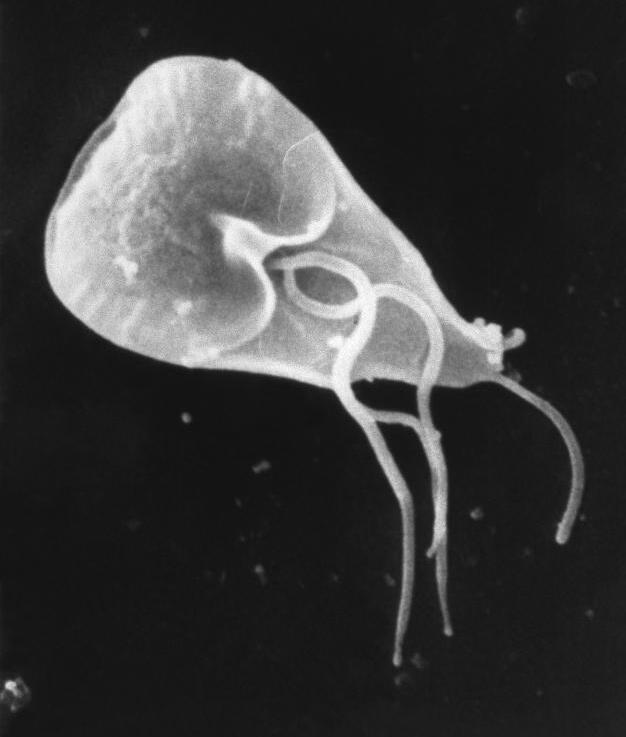
- Camping/mountain streams, greasy foul stool, bloating → Giardia (fatty malabsorption; think IgA deficiency).
- HIV with CD4 <100, watery diarrhea, acid-fast oocysts → Cryptosporidium.
- RUQ pain + "anchovy-paste" liver abscess → Entamoeba histolytica (flask-shaped ulcers).
- Pseudoappendicitis/mesenteric adenitis (pork, chitterlings) → Yersinia enterocolitica.
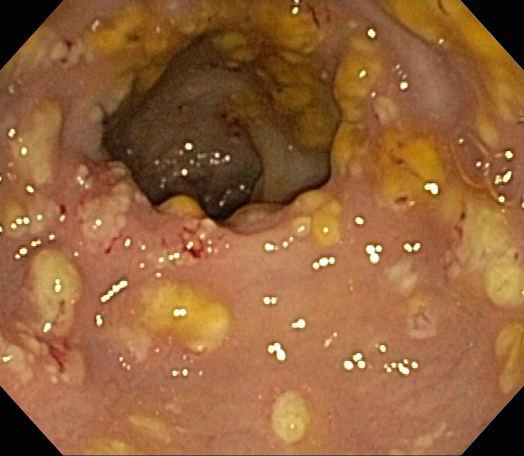
- Recent antibiotics or hospitalization, watery diarrhea → C. difficile.
Non-inflammatory vs inflammatory diarrhea
| Feature | Non-inflammatory (watery) | Inflammatory (dysentery) |
|---|---|---|
| Site | Small bowel | Colon |
| Mechanism | Enterotoxin / virus / osmotic | Invasion / cytotoxin |
| Stool | Large-volume, watery | Small-volume, bloody, mucoid |
| Fever | Absent or low | Common |
| Fecal WBC / lactoferrin | Negative | Positive |
| Prototypes | Cholera, ETEC, viral, Giardia, preformed toxin | Shigella, Campylobacter, Salmonella, EHEC, Entamoeba, C. diff |
| First step | Oral rehydration | Stool studies ± empiric antibiotics (see cautions) |
Vignette: A 5-year-old develops crampy abdominal pain and bloody diarrhea 3 days after eating undercooked hamburger. He is afebrile. Five days later: pallor, decreased urine output, and petechiae. Labs — Hb 7.5, platelets 40k, rising creatinine, schistocytes on smear, elevated LDH, negative Coombs.
- Diagnosis: Hemolytic uremic syndrome from Shiga toxin–producing E. coli (O157:H7) — the triad of microangiopathic hemolytic anemia + thrombocytopenia + acute kidney injury.
- Best diagnostic step: stool culture on sorbitol-MacConkey (O157:H7 is sorbitol non-fermenting) plus Shiga-toxin EIA/PCR.
- Management: supportive — IV fluids, correct electrolytes, transfuse as needed, dialysis if indicated. Do NOT give antibiotics or antimotility agents — both increase toxin release and HUS risk.
- Pearl: Typical (Shiga-toxin) HUS is the classic post-diarrheal cause of pediatric AKI and is managed supportively — unlike TTP (plasma exchange) or atypical/complement-mediated HUS (eculizumab).

Vignette: A 68-year-old woman finishing clindamycin for cellulitis develops profuse watery diarrhea, lower abdominal pain, low-grade fever, and WBC 18,000. The abdomen is distended and lactate is mildly elevated.
- Diagnosis: C. difficile infection (pseudomembranous colitis) — the classic exception that is colonic/inflammatory yet presents with watery stool.
- Best diagnostic step: stool NAAT/PCR, or a two-step GDH + toxin EIA algorithm (resolve discordant results with NAAT). Test only liquid/unformed stool; do not test asymptomatic patients or repeat as a test-of-cure.
- Assess severity: WBC ≥15k or creatinine ≥1.5× baseline = severe; hypotension/shock, ileus, or megacolon = fulminant.
- Next step: stop the inciting antibiotic and start oral vancomycin or fidaxomicin (preferred first-line). Avoid antimotility agents.
- Red flag: worsening distension with rising lactate/WBC → CT for toxic megacolon and urgent surgical consult.
C. difficile — guideline-current management
Per IDSA/SHEA, oral vancomycin and fidaxomicin are preferred first-line for both non-severe and severe disease; metronidazole is reserved for when neither is available (non-severe only) or as an IV adjunct in fulminant disease.
- Initial (non-severe or severe): oral vancomycin 125 mg QID or fidaxomicin 200 mg BID, for 10 days.
- Fulminant (hypotension/shock, ileus, or megacolon): high-dose oral vancomycin 500 mg QID + IV metronidazole; add a vancomycin retention enema if ileus is present. Emergent colectomy for perforation, toxic megacolon, or failure to improve.
- First recurrence: fidaxomicin, or a vancomycin tapered-and-pulsed regimen; bezlotoxumab (anti-toxin-B monoclonal) may be added to cut further recurrence.
- Multiple recurrences: fecal microbiota transplantation is highly effective.
- Prevention: contact precautions + soap-and-water hand hygiene — alcohol gel does not kill spores.
Protozoal diarrhea at a glance
| Parasite | Exposure / host | Stool & diagnostic clue | Treatment |
|---|---|---|---|
| Giardia lamblia | Streams/wells, hikers, daycare; IgA deficiency | Fatty, foul, non-bloody; pear-shaped trophozoite; stool antigen/PCR | Tinidazole or metronidazole (nitazoxanide alt) |
| Entamoeba histolytica | Travel, MSM, fecal-oral | Bloody; flask-shaped ulcers; RBC-ingesting trophozoite; liver abscess | Metronidazole/tinidazole + luminal paromomycin |
| Cryptosporidium | Pools/contaminated water; HIV CD4 <100 | Profuse watery; acid-fast oocysts | Immune recovery (ART); nitazoxanide |
Post-infectious reactive arthritis — "Can't see, can't pee, can't climb a tree" (conjunctivitis, urethritis, arthritis). Enteric triggers: Shigella, Salmonella, Yersinia, Campylobacter; strongly HLA-B27-associated, following the GI infection by 1–4 weeks.
Preformed-toxin food poisoning — short incubation, vomiting-predominant: vomiting 1–6 h after eating = *S. aureus* (mayonnaise, dairy, custards) or *B. cereus* (reheated fried rice). Onset at 8–16 h with cramps/diarrhea points to C. perfringens (reheated meats/gravy).
Campylobacter → GBS: the most common identified antecedent of Guillain-Barré syndrome (ascending paralysis via molecular mimicry).
- Withhold antibiotics in suspected/confirmed EHEC O157:H7 (HUS risk) and in uncomplicated nontyphoidal *Salmonella* in healthy hosts (prolongs fecal carriage) — supportive care only.
- Empiric therapy for febrile dysentery while awaiting studies: azithromycin (covers Shigella, Campylobacter, and fluoroquinolone-resistant strains).
- Traveler's diarrhea: ETEC most common → azithromycin or a fluoroquinolone; add loperamide only if there is no fever and no blood.
- Salmonella — treat if young infant, adults >50, immunocompromised, hemoglobinopathy, prosthetic joints/valves or aneurysm, or bacteremia.
- Antimotility agents (loperamide) are contraindicated in bloody/febrile dysentery, EHEC, and C. difficile.
- Work-up triggers: bloody stool, fever, severe dehydration, symptoms >7 days, immunocompromise, recent antibiotics, or an outbreak → send stool culture / multiplex GI PCR ± C. diff toxin and ova-and-parasite testing.
Practice GI now
Board-style questions, spaced-repetition flashcards, and a Socratic AI tutor — free to start.