Diabetes Mellitus: Chronic Complications & Screening
A Step 2 CK high-yield lesson on the chronic complications of diabetes, walking from hyperglycemic-injury pathophysiology through the ADA screening schedule to guideline-based, next-best-step management of retinopathy, nephropathy, neuropathy, and macrovascular disease. Emphasizes board buzzwords and decision points (UACR + ACEi/ARB/SGLT2i, PDR → panretinal photocoagulation, Kimmelstiel-Wilson nodules).
Overview & Pathophysiology
Chronic hyperglycemia injures blood vessels, producing microvascular (retinopathy, nephropathy, neuropathy) and macrovascular (coronary artery disease, stroke, peripheral artery disease) complications. ASCVD is the leading cause of death in diabetes.
Key mechanisms of hyperglycemic damage:
- Advanced glycation end-products (AGEs): nonenzymatic glycation crosslinks proteins, thickens basement membranes, and stiffens vessels.
- Polyol (aldose reductase) pathway: glucose is reduced to sorbitol in tissues with low sorbitol dehydrogenase activity (lens, Schwann cells, retina, kidney) → osmotic injury and NADPH depletion (impaired glutathione regeneration → oxidative stress).
- Protein kinase C activation and oxidative stress → endothelial dysfunction and mesangial expansion.
Landmark trials frame management: intensive glycemic control (DCCT in T1DM, UKPDS in T2DM) chiefly reduces microvascular disease, whereas blood pressure and lipid (statin) control, plus SGLT2 inhibitors and GLP-1 receptor agonists, reduce macrovascular events and mortality. Boards heavily test the screening schedule and the next-best-step in prevention.
- Retinopathy: dilated eye exam — T1DM within 5 yr of diagnosis, T2DM at diagnosis; then annually (may extend to every 1–2 yr if no retinopathy and glycemia well controlled).
- Nephropathy: spot UACR + eGFR — T1DM 5 yr after diagnosis, T2DM at diagnosis; then annually.
- Albuminuria = UACR ≥30 mg/g; confirm with 2 of 3 abnormal samples over 3–6 months (exclude UTI, heavy exercise, menses, fever).
- Neuropathy: T2DM at diagnosis, T1DM 5 yr after diagnosis, then annually. Test 10-g monofilament plus one of: 128-Hz vibration, pinprick, temperature, or ankle reflexes.
- Feet: comprehensive exam annually; visual inspection every visit (more often if high-risk).
- BP measured every visit; lipid panel at diagnosis/initial evaluation, then periodically (and to monitor statin therapy). Statin therapy for most patients aged 40–75.
Microvascular Complications at a Glance
| Complication | Screen (test) | Classic findings | First-line management |
|---|---|---|---|
| Retinopathy | Dilated fundus exam | Microaneurysms, dot-blot hemorrhages, hard exudates, cotton-wool spots (NPDR); neovascularization (PDR) | Glycemic/BP control; PRP or anti-VEGF for PDR; anti-VEGF for macular edema |
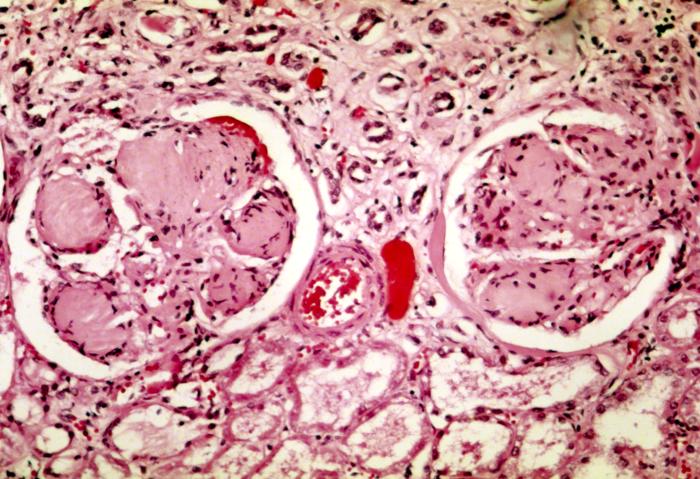
| Nephropathy | Spot UACR + eGFR | Albuminuria; Kimmelstiel-Wilson nodular glomerulosclerosis | ACEi/ARB (if HTN + albuminuria); SGLT2i; finerenone; BP <130/80 |
| Neuropathy (DSPN) | 10-g monofilament + vibration | Stocking-glove sensory loss; painless foot ulcer | Glycemic control; pregabalin/gabapentin, duloxetine, TCA for pain |
Diabetic Kidney Disease — Management
Screen and stage with spot UACR and eGFR. Treatment layers several agents with proven kidney/cardiovascular benefit:
- ACEi or ARB (never both together): first-line when hypertension + albuminuria coexist; titrate to maximum tolerated dose. Recheck potassium and creatinine in 1–2 weeks — a mild creatinine rise (<30%) is expected and acceptable.
- SGLT2 inhibitors: slow CKD progression and reduce CV events; can be initiated when eGFR ≥20 with albuminuria (CREDENCE, DAPA-CKD).
- Finerenone (nonsteroidal mineralocorticoid receptor antagonist): add in T2DM with residual albuminuria on a maximally dosed ACEi/ARB to further lower CKD/CV risk; monitor for hyperkalemia.
- GLP-1 receptor agonists: reduce albuminuria and CV events.
- BP goal <130/80; optimize glycemia.
Refer to nephrology for advanced or rapidly declining eGFR.
Vignette: A 58-year-old man with 10-year type 2 diabetes, BP 148/90, on metformin. Labs: eGFR 62, spot UACR 240 mg/g (confirmed on a repeat sample); potassium normal.
Diagnosis: Diabetic kidney disease — moderately increased albuminuria (A2) with hypertension.
Next best step:
- Start an ACEi or ARB (e.g., lisinopril or losartan) and titrate up; recheck K+/creatinine in 1–2 weeks.
- Add an SGLT2 inhibitor for kidney and cardiovascular protection.
- Target BP <130/80; continue metformin (safe here, eGFR >30).
Pearl: Do not combine an ACEi with an ARB — no added benefit and more hyperkalemia/AKI.
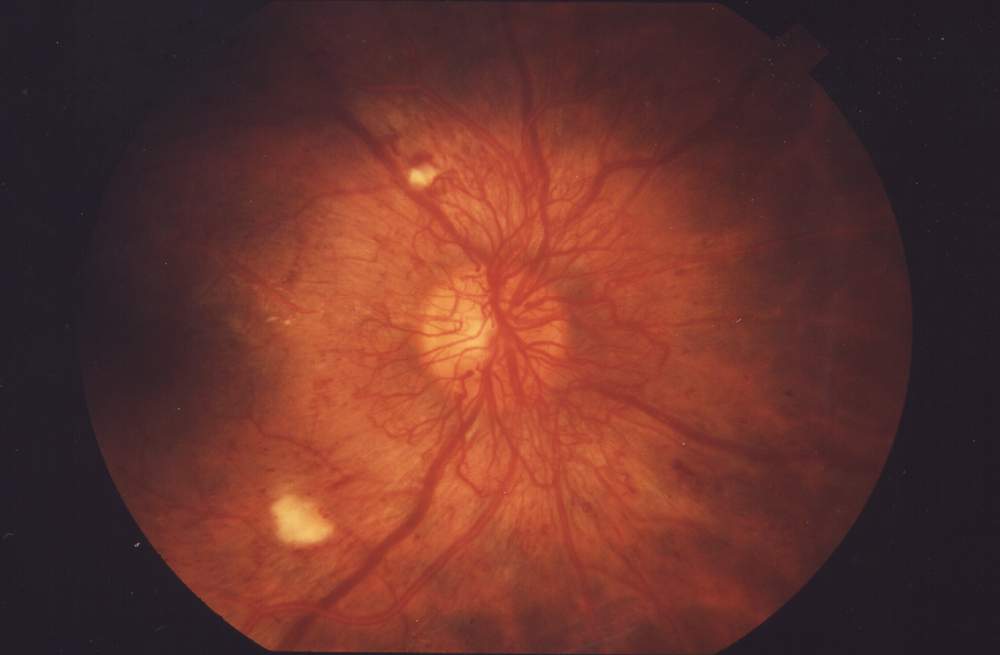
- NPDR: microaneurysms, dot-blot hemorrhages, hard exudates, cotton-wool spots, venous beading, IRMA. PDR: neovascularization, vitreous hemorrhage, tractional retinal detachment.
- Diabetic macular edema is the most common cause of vision loss → intravitreal anti-VEGF first-line.
- PDR → panretinal (scatter) photocoagulation ± anti-VEGF.
- Distal symmetric polyneuropathy (most common): stocking-glove; pain → pregabalin, gabapentin, duloxetine, TCAs.
- Autonomic neuropathy: gastroparesis (dx gastric-emptying scintigraphy; tx metoclopramide), orthostatic hypotension, resting tachycardia, erectile dysfunction, neurogenic bladder.
- Mononeuropathy: classic pupil-sparing CN III palsy (ischemic — spares peripheral pupillomotor fibers).
- Foot ulcer: offloading + wound care; assess perfusion (ABI); probe-to-bone / MRI for osteomyelitis. Charcot = deformed, warm, insensate foot.

Vignette: A 62-year-old woman with poorly controlled type 2 diabetes (A1c 10.8%) reports new floaters and blurry vision. Dilated fundus exam shows neovascularization of the optic disc and a vitreous hemorrhage.
Diagnosis: Proliferative diabetic retinopathy (PDR).
Next best step:
- Urgent ophthalmology referral.
- Panretinal (scatter) photocoagulation and/or intravitreal anti-VEGF.
- Intensify glycemic and BP control to slow progression.
Pearl: New floaters + neovascularization = vitreous hemorrhage from PDR — a vision-threatening emergency, not "watch and wait."
- ASCVD (MI, stroke, PAD) is the leading cause of death in diabetes — aggressive risk-factor control matters more than tight glucose for survival.
- Statins: moderate-intensity for age 40–75; high-intensity if established ASCVD or multiple risk factors. Consider in age 20–39 with additional risk factors.
- SGLT2i / GLP-1 RA with proven CV benefit for patients with or at high risk of ASCVD (SGLT2i also for heart failure and CKD).
- Aspirin: secondary prevention (established ASCVD); primary prevention only in selected higher-risk patients after shared decision-making.
- BP <130/80 for most.
- Smoking cessation.
- Foot care: annual comprehensive exam, daily self-inspection, and well-fitting footwear prevent ulcers and amputation.
The "4-2-1 rule" (from the ETDRS) identifies severe nonproliferative diabetic retinopathy — a high-risk stage that often progresses to PDR and warrants closer follow-up/treatment. Severe NPDR = any one of:
- 4 quadrants of diffuse intraretinal hemorrhages/microaneurysms
- 2 or more quadrants of venous beading
- 1 or more quadrants of intraretinal microvascular abnormalities (IRMA)
Anchor it as: "4 hemorrhage quadrants, 2 beading, 1 IRMA."
Practice Endocrine now
Board-style questions, spaced-repetition flashcards, and a Socratic AI tutor — free to start.