Carcinoid Syndrome & Neuroendocrine Tumors
A boards-focused walkthrough of carcinoid syndrome and neuroendocrine tumors — from serotonin pathophysiology and first-pass hepatic clearance through the classic flushing/diarrhea/right-heart presentation, 5-HIAA and DOTATATE workup, a functional-NET comparison table, and octreotide-centered management including carcinoid crisis.
Pathophysiology: why the syndrome needs liver mets
Neuroendocrine tumors (NETs) arise from enterochromaffin (Kulchitsky) cells of the diffuse neuroendocrine system. Carcinoid tumors are the prototype, arising mainly in the GI tract (midgut: appendix, terminal ileum) and the bronchopulmonary tree. They secrete serotonin (5-HT) plus histamine, kinins, and prostaglandins.
Key concept boards test: gut carcinoids drain into the portal vein, so the liver clears secreted serotonin on first pass (MAO → 5-HIAA). Localized bowel carcinoids are therefore usually asymptomatic, and carcinoid syndrome (systemic vasoactive effects) appears only when mediators bypass hepatic metabolism — i.e., with liver metastases or a primary outside portal drainage (bronchial, ovarian).
Serotonin synthesis also diverts dietary tryptophan, which can precipitate niacin (B3) deficiency → pellagra.
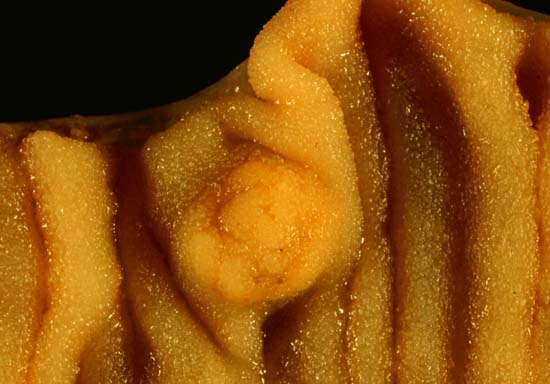
- Cardinal features: episodic dry cutaneous flushing (face/neck), secretory watery diarrhea, bronchospasm/wheezing, and carcinoid heart disease
- The syndrome means the mediators escaped the liver — think liver metastases, or a primary draining outside the portal system (bronchial, ovarian). A localized gut carcinoid alone rarely causes it.
- Attacks often triggered by alcohol, stress, or eating
- Carcinoid heart disease: serotonin-induced fibrous plaques on right-sided valves → tricuspid regurgitation + pulmonic stenosis; left heart is spared (pulmonary MAO inactivates 5-HT)
- Niacin deficiency → pellagra: dermatitis, diarrhea, dementia (tryptophan diverted into serotonin)
- Appendiceal carcinoids are commonly incidental and benign; ileal/small-bowel primaries more often metastasize and cause the syndrome
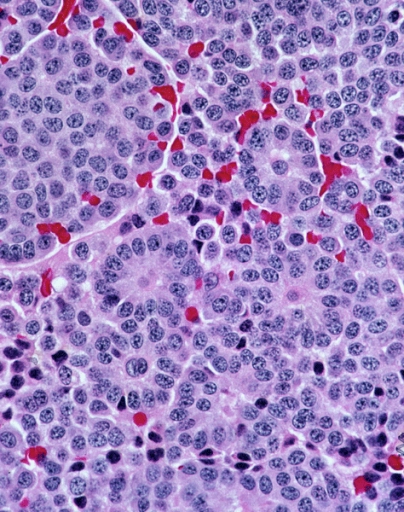
- Histology: chromogranin A and synaptophysin positive; Ki-67 grades the tumor
Vignette: A 54-year-old woman has 6 months of intermittent facial flushing and watery diarrhea, worse after wine. Exam reveals a holosystolic murmur at the left lower sternal border that increases with inspiration. CT shows an ileal mass with multiple liver lesions.
- Diagnosis: Carcinoid syndrome from a metastatic midgut NET, with tricuspid regurgitation (carcinoid heart disease; inspiratory augmentation = Carvallo sign)
- Next best step: 24-hour urinary 5-HIAA (serotonin metabolite) — most specific initial test; first hold serotonin-rich foods (bananas, tomatoes, walnuts, pineapple)
- Then localize/stage: Ga-68 DOTATATE PET/CT (somatostatin-receptor imaging)
- Symptom control: octreotide (somatostatin analog)
Diagnosis: biochemical → anatomic (and dynamic tests)
Work up biochemistry first, then imaging:
- 24-h urinary 5-HIAA — serotonin's end metabolite; highly specific for carcinoid. Avoid interfering foods/drugs first.
- Chromogranin A (CgA) — sensitive but nonspecific general NET marker; best for monitoring/follow-up.
- Localization/staging: Ga-68 DOTATATE PET/CT (functional somatostatin-receptor imaging) is now first-line, having superseded ¹¹¹In-pentetreotide (OctreoScan); add CT/MRI for anatomy.
Other functional NETs rely on dynamic (provocative) testing: the secretin stimulation test produces a paradoxical rise in gastrin in gastrinoma (normal G cells are suppressed by secretin), and a supervised 72-hour fast unmasks insulinoma — hypoglycemia with inappropriately high insulin and C-peptide (endogenous hyperinsulinism; reproduces the Whipple triad).
Functional GI/pancreatic NETs — compare the axes
| Tumor | Hormone | Key lab / test | Hallmark |
|---|---|---|---|
| Carcinoid | Serotonin | ↑ urinary 5-HIAA, CgA | Flushing, diarrhea, right-heart valve disease |
| Gastrinoma (ZES) | Gastrin | ↑ fasting gastrin; secretin → ↑ gastrin | Refractory/multiple PUD, diarrhea |
| Insulinoma | Insulin | ↑ insulin, C-peptide, proinsulin; ↓ glucose | Whipple triad (72-h fast) |
| VIPoma | VIP | ↑ serum VIP | WDHA: watery diarrhea, hypokalemia, achlorhydria |
| Glucagonoma | Glucagon | ↑ glucagon, hyperglycemia | Necrolytic migratory erythema, diabetes |
| Somatostatinoma | Somatostatin | ↑ somatostatin | Diabetes, gallstones, steatorrhea |
- First-line symptom control: somatostatin analogs — octreotide / lanreotide (blunt flushing & diarrhea; also antiproliferative)
- Localized tumor: surgical resection can be curative (e.g., appendectomy for a small appendiceal carcinoid)
- Diarrhea refractory to a somatostatin analog: add telotristat (tryptophan hydroxylase inhibitor → ↓ serotonin synthesis)
- Advanced, SSTR-positive disease: PRRT with ¹⁷⁷Lu-DOTATATE; everolimus or sunitinib for pancreatic NETs
- Carcinoid heart disease: valve replacement
- Pellagra: niacin repletion
Vignette: A patient with known metastatic carcinoid undergoes tumor debulking. At anesthesia induction / tumor manipulation they develop severe flushing, profound hypotension, bronchospasm, and tachyarrhythmia.
- Diagnosis: Carcinoid crisis — massive mediator release triggered by anesthesia, surgical handling, or tumor embolization
- Next best step / prevention: IV octreotide (bolus + infusion); give prophylactic octreotide before surgery/anesthesia
- Pitfall: the hypotension is often resistant to standard catecholamine pressors — octreotide is the key therapy, and catecholamines may paradoxically worsen mediator release
Pellagra (niacin/B3 deficiency) — the "3 D's":
- Dermatitis (photosensitive; Casal necklace)
- Diarrhea
- Dementia
- (± Death — the 4th D)
Carcinoid diverts tryptophan into serotonin, starving niacin synthesis.
Carcinoid heart disease points RIGHT:
- Tricuspid regurgitation + pulmonic stenosis (TR / PS)
- Left-sided valves are spared — the lungs (MAO) inactivate serotonin before it reaches them
Practice Endocrine now
Board-style questions, spaced-repetition flashcards, and a Socratic AI tutor — free to start.