Vaginitis & Cervicitis
A board-focused walkthrough of the three vaginitides (bacterial vaginosis, candidiasis, trichomoniasis) and cervicitis (chlamydia, gonorrhea), driven by classic buzzwords and pH/microscopy/NAAT decision points toward next-best-step management.
The board approach: pH, microscopy, then the drug
Vaginitis is inflammation/irritation of the vagina presenting with abnormal discharge, pruritus, or odor; the three classic causes are bacterial vaginosis (BV), vulvovaginal candidiasis, and trichomoniasis. Cervicitis is inflammation of the cervix — mucopurulent discharge from the os with a friable cervix — usually from Chlamydia trachomatis or Neisseria gonorrhoeae.
On exams the workup is stereotyped: vaginal pH, the KOH "whiff" test, and saline/KOH microscopy discriminate the vaginitides, while cervicitis is confirmed by NAAT. Normal flora is dominated by lactobacilli that keep vaginal pH acidic (3.8–4.5); a pH >4.5 immediately shifts you toward BV or Trichomonas and away from Candida (which keeps a normal, acidic pH). Anchor each diagnosis to its buzzword — clue cells, pseudohyphae, motile flagellates, strawberry cervix — then choose the drug and decide whether the partner needs treatment.
- Physiologic discharge: pH 3.8–4.5, lactobacilli, no inflammation; no treatment
- Bacterial vaginosis: thin gray-white homogeneous discharge, fishy odor, pH >4.5, clue cells, positive whiff test; NOT inflammatory (few WBCs); not classically an STI
- Amsel criteria (≥3 of 4): homogeneous thin discharge, pH >4.5, positive amine (whiff) test, clue cells >20% of epithelial cells
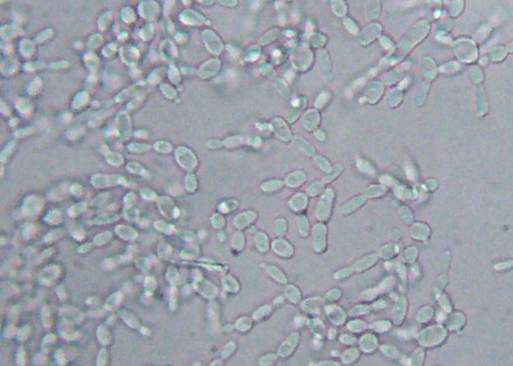
- Candidiasis: thick "cottage-cheese" discharge, intense vulvar pruritus, NORMAL pH (<4.5), pseudohyphae/budding yeast on KOH; risks = diabetes, recent antibiotics, pregnancy, corticosteroids, HIV/immunosuppression
- Trichomoniasis: frothy yellow-green malodorous discharge, pruritus/dysuria, pH >4.5, motile flagellated protozoa, strawberry cervix (punctate hemorrhages); an STI — treat partners
- Cervicitis: mucopurulent os discharge, friable cervix, postcoital bleeding; chlamydia (often asymptomatic, most common reportable bacterial STI) and gonorrhea; diagnose by NAAT
Vaginitis at a glance
| Feature | Bacterial vaginosis | Candidiasis | Trichomoniasis |
|---|---|---|---|
| Organism | Gardnerella + anaerobes | Candida albicans | Trichomonas vaginalis |
| Discharge | Thin, gray-white, homogeneous | Thick, white, cottage-cheese | Frothy, yellow-green |
| Odor | Fishy (amine) | None | Malodorous |
| pH | >4.5 | <4.5 (normal) | >4.5 |
| Micro | Clue cells, + whiff | Pseudohyphae / budding yeast (KOH) | Motile flagellates; strawberry cervix |
| Itch/inflammation | Minimal | Marked pruritus | Pruritus, dysuria |
| Treatment | Metronidazole (or clindamycin) | Fluconazole 150 mg PO once | Metronidazole; treat partner |
| STI? | No | No | Yes |
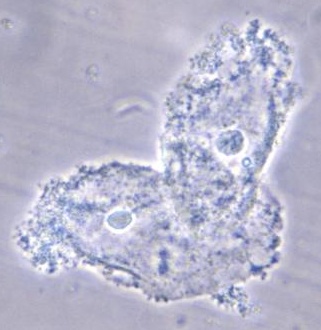
Vignette 1: A 27-year-old has thin gray discharge with a fishy odor worse after intercourse. pH 5.0; wet mount shows epithelial cells with stippled, obscured borders. → Dx: bacterial vaginosis (clue cells + positive whiff). Next step: oral or vaginal metronidazole. No partner treatment.
Vignette 2: A 24-year-old finishing a course of antibiotics reports intense vulvar itching and thick white curd-like discharge; pH 4.0; KOH shows pseudohyphae. → Dx: vulvovaginal candidiasis. Next step: single-dose oral fluconazole (use a topical azole if pregnant).
Vignette 3: A sexually active 30-year-old has frothy green malodorous discharge and dysuria; exam shows punctate cervical hemorrhages ("strawberry cervix"); wet mount shows motile flagellated organisms. → Dx: trichomoniasis. Next step: metronidazole for patient AND partner; screen for other STIs.
Pearl: many WBCs on wet mount point to Trichomonas or cervicitis — not BV (which is non-inflammatory).
Cervicitis: chlamydia and gonorrhea
Cervicitis is inflammation of the cervix, classically mucopurulent discharge from the os with a friable cervix that bleeds easily on contact (postcoital or intermenstrual bleeding). The two tested organisms are *Chlamydia trachomatis* — the most common reportable bacterial STI and frequently asymptomatic — and *Neisseria gonorrhoeae*. Diagnosis is by NAAT.
Because coinfection is common and untreated infection ascends to cause pelvic inflammatory disease (PID) — risking tubo-ovarian abscess, ectopic pregnancy, infertility, and Fitz-Hugh-Curtis perihepatitis (RUQ pain + "violin-string" adhesions) — treat empirically at the visit (especially higher-risk patients — age <25, new/multiple partners — or when follow-up is uncertain) rather than waiting for results. Both infections are reportable; offer expedited partner therapy and screen for other STIs (HIV, syphilis). Reactive arthritis (conjunctivitis, urethritis, arthritis) can follow chlamydia.
Vignette: A 21-year-old with a new partner reports postcoital spotting and yellow cervical discharge; the cervix bleeds when swabbed. NAAT is sent but pending. → Dx: cervicitis (assume chlamydia ± gonorrhea). → Next step (empiric, don't wait for NAAT): ceftriaxone 500 mg IM once PLUS doxycycline 100 mg PO BID × 7 days to cover gonorrhea and chlamydia.
Pregnancy twist: doxycycline is contraindicated — use azithromycin 1 g PO once for chlamydia (plus ceftriaxone if gonorrhea suspected).
PID twist: if she also has cervical-motion / adnexal tenderness, she has PID — broaden to ceftriaxone + doxycycline + metronidazole and do not delay treatment.
The classic teaching maps the finding to the bug:
- BV → Clue cells + whiff of fish (thin gray, non-inflammatory); first-line metronidazole (clindamycin is the alternative)
- Candida → Cottage-Cheese Curd, no odor, normal/acidic pH (Candida is "acid-loving")
- Trich → Twitchy motile flagellates, sTrawberry cervix, sTinky green froth, Transmitted (STI — treat the partner)
pH rule: Candida keeps it acidic (<4.5); BV and Trich turn it basic (>4.5).
- Metronidazole is the workhorse for BV and Trichomonas; classically counsel to avoid alcohol (disulfiram-like reaction)
- Partner treatment: required for Trichomonas (STI); NOT needed for BV or Candida
- Candida in pregnancy: use topical azoles; avoid oral fluconazole (esp. high-dose, first trimester)
- BV in pregnancy: associated with preterm birth and PROM — treat symptomatic patients
- Chlamydia: doxycycline 100 mg BID × 7 d preferred (azithromycin 1 g once if pregnant); Gonorrhea: ceftriaxone 500 mg IM once
- Untreated cervicitis → PID → Fitz-Hugh-Curtis, ectopic pregnancy, infertility; reactive arthritis can follow chlamydia
- Recurrent candidiasis: screen for uncontrolled diabetes or HIV
Practice OB/GYN now
Board-style questions, spaced-repetition flashcards, and a Socratic AI tutor — free to start.