Sleep Stages & Sleep Disorders
A high-yield Step 1 walkthrough of sleep architecture — EEG waveforms by stage, REM/NREM neurochemistry, and stage-specific parasomnias — paired with board-style vignettes and next-best-step decisions for narcolepsy, obstructive sleep apnea, and night terrors.
Sleep architecture: how the boards frame it
Sleep alternates between two states: NREM (stages N1, N2, N3) and REM. A full cycle lasts about 90 minutes, repeating 4–5 times per night. The first half of the night is dominated by slow-wave (N3) sleep, while REM periods lengthen toward morning — the reason you dream (and remember it) just before waking.
Step 1 tests this topic in four predictable ways: (1) matching each stage to its EEG waveform, (2) knowing which parasomnia occurs in which stage, (3) recognizing sleep-disorder vignettes (narcolepsy, OSA, night terrors), and (4) choosing the next best step — usually a diagnostic test (polysomnography, MSLT) or first-line therapy (CPAP, modafinil, reassurance).
Anchor two facts and the rest follows: N3 = deep, delta, and the parasomnia stage (sleepwalking, night terrors, enuresis), and REM = dreaming, muscle atonia, and an 'awake-looking' EEG (paradoxical sleep).
- Awake, eyes open = beta (high freq, low amp); eyes closed = alpha
- N1 = theta; lightest sleep, easy to arouse
- N2 = sleep spindles + K complexes; largest share of total sleep; bruxism (teeth grinding) occurs here
- N3 (slow-wave) = delta (low freq, high amp); deepest sleep; site of sleepwalking, night terrors, and enuresis
- REM = beta / sawtooth waves; dreaming and nightmares, skeletal muscle atonia, variable HR/BP, penile/clitoral tumescence, ↑ brain O₂ use
- REM recurs ~every 90 min and lengthens through the night
- Neurochemistry: ACh drives REM; norepinephrine and serotonin suppress REM
- Benzodiazepines and barbiturates ↓ REM and ↓ N3 (slow-wave) sleep — benzos are used to treat N3 parasomnias; alcohol ↓ REM with rebound on withdrawal
- Extraocular movements in REM are generated by the PPRF (paramedian pontine reticular formation)
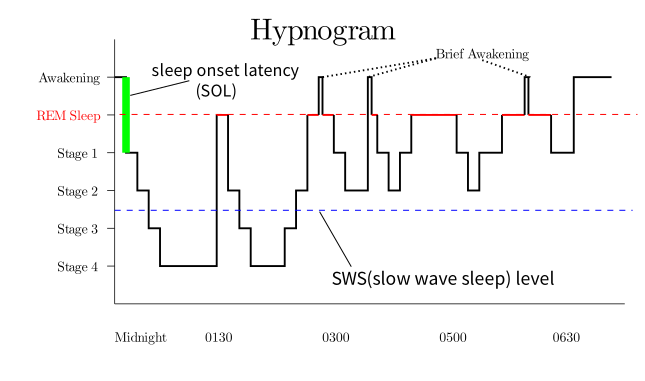
Sleep stages at a glance
| Stage | EEG waveform | Hallmark / associations |
|---|---|---|
| Awake (eyes open) | Beta (fast, low amp) | Alert, concentrating |
| Awake (eyes closed) | Alpha | Relaxed, drowsy |
| N1 (light) | Theta | Dozing; easily aroused |
| N2 | Sleep spindles + K complexes | Bruxism; largest % of sleep |
| N3 (slow-wave) | Delta (slow, high amp) | Deepest; sleepwalking, night terrors, enuresis |
| REM | Beta / sawtooth | Dreaming, nightmares; atonia; ↑ HR/BP variability; tumescence |
For the EEG waveforms in stage order — "At night, BATS Drink Blood":
- Beta → Awake (eyes open)
- Alpha → Awake (eyes closed)
- Theta → N1
- Sleep spindles → N2
- Delta → N3 (slow-wave)
- Beta → REM (paradoxical — EEG looks awake)
Two more classic anchors:
- REM is 'paradoxical' sleep — the EEG looks awake (beta) and the brain is highly active, yet skeletal muscle is paralyzed (atonia); essentially only the eyes (PPRF) and the diaphragm keep moving.
- Parasomnias of deep sleep: sleepwalking, night terrors, and bedwetting all happen in N3 (no dream recall).

A 22-year-old reports irresistible daytime sleep attacks, falling asleep in class despite adequate nighttime sleep. He describes sudden bilateral leg weakness and buckling when he laughs, vivid dream-like hallucinations as he falls asleep (hypnagogic), and episodes of being unable to move on awakening (sleep paralysis).
Diagnosis: Narcolepsy type 1 (with cataplexy) — loss of orexin (hypocretin) neurons in the lateral hypothalamus → low CSF orexin. Sleep episodes begin directly with REM (sleep-onset REM), explaining the atonia (cataplexy), dream hallucinations, and paralysis.
Next best step: confirm with polysomnography followed by the Multiple Sleep Latency Test (MSLT) — short sleep latency with ≥2 sleep-onset REM periods.
Management: modafinil (first-line for daytime sleepiness) plus scheduled daytime naps; sodium oxybate (GHB) or an SNRI/TCA (REM-suppressing) for cataplexy.
A 52-year-old obese man has loud snoring with witnessed pauses in breathing, gasping arousals, morning headaches, and severe daytime somnolence. BP is 158/96; neck circumference is increased.
Diagnosis: Obstructive sleep apnea (OSA) — repeated collapse of the upper airway despite continued respiratory effort, causing hypoxia and fragmented sleep. Contrast with central sleep apnea, where respiratory effort is absent (brainstem drive failure).
Next best step: polysomnography (gold standard); diagnosis = AHI ≥5 with symptoms (≥15 without).
Complications (high yield): systemic and pulmonary hypertension → cor pulmonale, arrhythmias, secondary polycythemia (chronic hypoxia → ↑ EPO), and increased sudden-death risk.
Management: weight loss + CPAP (first-line). Dental appliances or surgery for selected cases; avoid alcohol/sedatives that worsen airway collapse.
A 5-year-old is brought in because, about 90 minutes after falling asleep, she suddenly sits up screaming, is inconsolable, tachycardic, and diaphoretic, with a glassy stare. She does not fully awaken and has no memory of the event the next morning.
Diagnosis: Sleep (night) terror — an NREM parasomnia of N3 (slow-wave) sleep, most common in children; benign and self-limited.
Next best step: reassurance and parental education (do not forcibly wake; ensure safety and good sleep hygiene). No pharmacotherapy in typical cases.
Key contrast — nightmare disorder: occurs during REM in the late night, the child fully awakens and vividly recalls the frightening dream. Night terror = N3, no recall; nightmare = REM, full recall.
Sleep disorders — clue, diagnosis, first step
| Disorder | Classic clue | Diagnosis | Management |
|---|---|---|---|
| Narcolepsy | Cataplexy, hypnagogic hallucinations, sleep-onset REM; ↓ orexin | MSLT (≥2 SOREMPs) | Modafinil; scheduled naps; sodium oxybate for cataplexy |
| Obstructive sleep apnea | Obese, loud snoring, witnessed apneas, daytime sleepiness | Polysomnography (AHI ≥5) | Weight loss + CPAP |
| Sleep (night) terror | Child, screams in N3, no recall | Clinical | Reassurance, sleep hygiene |
| Nightmare disorder | REM, late night, vivid recall | Clinical | Reassurance; treat PTSD trigger |
| Restless legs syndrome | Urge to move legs at rest/night, relieved by movement | Clinical; check ferritin | Iron if deficient; dopamine agonist (pramipexole) |
Sleep changes in major depression (classic):
- ↓ REM latency (REM starts sooner)
- ↑ total REM, especially early in the night
- ↓ slow-wave (N3) sleep
- Repeated awakenings and early-morning (terminal) insomnia
Circadian regulation:
- The suprachiasmatic nucleus (SCN) of the hypothalamus is the master pacemaker.
- Light entrains it via the retinohypothalamic tract; the SCN drives pineal melatonin release (melatonin ↑ in darkness).
Restless legs syndrome: urge to move legs, worse at rest/night, relieved by movement; linked to iron deficiency and pregnancy — check ferritin, replace iron, or use a dopamine agonist (gabapentinoids also used).
REM sleep behavior disorder: loss of normal REM atonia → patients physically act out dreams (punching, kicking). Strongly associated with synucleinopathies (Parkinson disease, Lewy body dementia). Treat with melatonin or clonazepam.
Practice Behavioral Science now
Board-style questions, spaced-repetition flashcards, and a Socratic AI tutor — free to start.