Seizures & Epilepsy
A boards-focused walkthrough of seizures and epilepsy — from excitation/inhibition pathophysiology and 2017 ILAE classification through syndrome-specific semiology, EEG signatures, and first-line drugs, to first-seizure workup and status epilepticus next-best-step decisions.
Pathophysiology & Definitions
A seizure is a transient episode of abnormal, excessive, synchronous neuronal firing; epilepsy is the disease of recurrent unprovoked seizures. Mechanistically, seizures reflect an imbalance between excitation (glutamate/NMDA, Na⁺ and Ca²⁺ influx) and inhibition (GABA-A Cl⁻ channels) — which is why antiseizure medications either dampen Na⁺/Ca²⁺ currents or enhance GABA.
The ILAE defines epilepsy as any of:
- ≥2 unprovoked seizures >24 h apart
- 1 unprovoked seizure with ≥60% recurrence risk (e.g., abnormal EEG or a structural lesion)
- a defined epilepsy syndrome
Crucially, separate these from provoked (acute symptomatic) seizures — hyponatremia, hypoglycemia, hypocalcemia, uremia, alcohol/benzodiazepine withdrawal, eclampsia, cocaine/TCA/bupropion, fever in children — which are not epilepsy and are treated by correcting the trigger, not with chronic antiseizure drugs.
The 2017 ILAE scheme classifies seizures by onset: focal (aware vs impaired awareness), generalized (absence, tonic-clonic, myoclonic, tonic, atonic), or unknown onset.
- Focal aware (old "simple partial"): consciousness preserved; Jacksonian march (motor cortex), déjà vu / fear / autonomic rising sensation (mesial temporal).
- Focal impaired awareness (old "complex partial"): usually temporal lobe; aura (rising epigastric sensation, olfactory/gustatory hallucination) → automatisms (lip-smacking, picking, chewing) → postictal confusion.
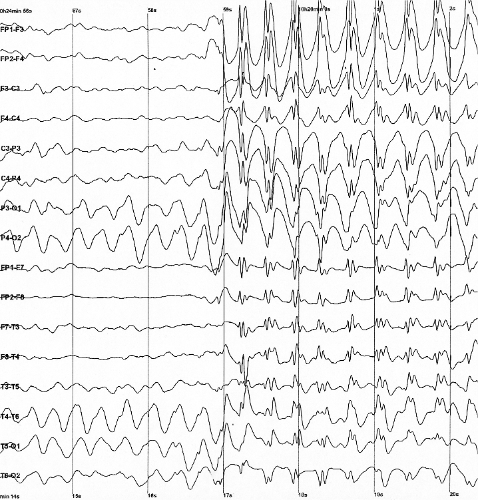
- Absence: child, brief staring / eyelid flutter, no aura, no postictal state, provoked by hyperventilation; 3-Hz spike-and-wave.
- Juvenile myoclonic epilepsy (JME): teen, early-morning myoclonic jerks (drops toothbrush/coffee) ± a generalized tonic-clonic after sleep deprivation or alcohol; 4–6 Hz polyspike-and-wave.
- Generalized tonic-clonic: loss of consciousness, tonic then clonic, lateral tongue-biting, incontinence, prolonged postictal confusion.
- Todd paralysis: transient postictal focal weakness mimicking stroke — resolves over hours.
- Features favoring a true epileptic (vs psychogenic) event: lateral tongue-biting, incontinence, postictal confusion, and a transient prolactin rise.
Comparison: Classic Seizure Syndromes
| Syndrome | Vignette clues | EEG | First-line drug |
|---|---|---|---|
| Childhood absence | 6–10 yo, staring spells, hyperventilation-induced, no postictal state | 3-Hz spike-and-wave | Ethosuximide (blocks thalamic T-type Ca²⁺); valproate if GTC coexist |
| Juvenile myoclonic | Teen, AM jerks → GTC, sleep-deprived; lifelong | 4–6 Hz polyspike-wave | Valproate (levetiracetam/lamotrigine in women of childbearing age) |
| Focal / temporal lobe | Aura + automatisms + postictal confusion; mesial temporal sclerosis on MRI | Focal temporal spikes | Lamotrigine / levetiracetam / carbamazepine |
| Generalized tonic-clonic | LOC, tonic→clonic, tongue-bite, incontinence | Generalized spikes | Valproate, levetiracetam, lamotrigine |
Vignette: A 7-year-old girl has months of "daydreaming" — she abruptly stops, stares, and flutters her eyelids for ~8 seconds several times daily, then resumes activity with no confusion. The episodes are reproduced in clinic after 3 minutes of hyperventilation.
- Diagnosis: Childhood absence epilepsy (generalized) — no aura, no postictal state, hyperventilation-provoked.
- Best confirmatory test: EEG → generalized 3-Hz spike-and-wave.
- Next best step / treatment: Ethosuximide (first-line; blocks thalamic T-type Ca²⁺ channels). Switch to valproate if generalized tonic-clonic seizures also occur.
- Contrast — the classic distractor: focal impaired-awareness (temporal lobe) seizures also cause "staring," but feature an aura, automatisms (lip-smacking), and postictal confusion with focal EEG changes — treated with lamotrigine/levetiracetam, not ethosuximide. Choosing ethosuximide for a focal seizure is a trap.
- Absence → "the three T's": E-T-hosuximide blocks T-type Ca²⁺ channels in the Thalamus. First-line for pure absence.
- "JME never quits": juvenile myoclonic epilepsy typically needs lifelong therapy — it commonly relapses when medication is stopped.
- Valproate = worst teratogen: neural Tube defects (spina bifida) — plus hepatotoxicity and pancreatitis. Prefer Levetiracetam / Lamotrigine in patients who could become pregnant.
- Status epilepticus — "Benzos buy time": give a benzodiazepine first (lorazepam, or IM midazolam if no IV), then load a longer-acting agent (fosphenytoin / valproate / levetiracetam).
- First, exclude a provoked cause: fingerstick glucose, Na⁺/Ca²⁺/Mg²⁺, BUN/Cr, tox screen, β-hCG; add LP if febrile, immunocompromised, or meningitis is suspected.
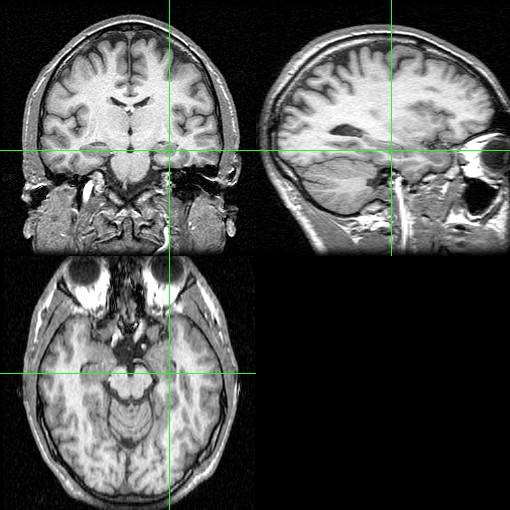
- Neuroimaging: MRI brain is best for structural lesions and mesial temporal sclerosis; get an emergent non-contrast CT in the acute setting to exclude hemorrhage or mass.
- EEG: classifies the seizure and gauges recurrence risk (interictal epileptiform discharges).
- Prolactin may rise within ~10–20 min of a generalized or focal-impaired-awareness seizure (helps distinguish from psychogenic events); a normal level does not exclude a seizure.
- When to start a drug: generally not after a single unprovoked seizure — unless high recurrence risk: abnormal EEG, structural MRI lesion, nocturnal or focal onset, or presentation as status.
- Counsel on state-specific seizure-free driving restrictions.
Vignette: A 24-year-old man is brought in with continuous generalized tonic-clonic activity for 7 minutes and has not regained consciousness. Fingerstick glucose is 96 mg/dL.
Definition: Status epilepticus = ≥5 min of continuous seizure or ≥2 seizures without recovery of consciousness in between.
Stepwise next-best-steps:
- Stabilize (0–5 min): ABCs, O₂, IV access, cardiac monitor; give thiamine + dextrose if hypoglycemic/alcohol-related.
- First-line (5–20 min): IV lorazepam 0.1 mg/kg (or IM midazolam if no IV, or IV diazepam). The benzodiazepine is the answer.
- Second-line (20–40 min): IV fosphenytoin, valproate, or levetiracetam — the ESETT trial found these roughly equivalent.
- Refractory (>40 min): intubate + continuous midazolam / propofol / pentobarbital infusion under EEG.
Trap: do not delay the benzodiazepine to obtain a CT — treat the seizure first.
High-Yield Antiseizure-Drug Toxicities
| Drug | Classic board association |
|---|---|
| Carbamazepine | SIADH/hyponatremia; agranulocytosis & aplastic anemia; SJS/TEN — screen HLA-B*15:02 (Han Chinese / SE-Asian ancestry); CYP450 inducer; teratogen (NTD) |
| Phenytoin | Gingival hyperplasia, hirsutism, nystagmus→ataxia, megaloblastic anemia (↓folate), DRESS, zero-order kinetics, fetal hydantoin syndrome |
| Valproate | Hepatotoxicity, pancreatitis, teratogen (NTD), hyperammonemia, tremor, weight gain, thrombocytopenia; CYP450 inhibitor |
| Lamotrigine | SJS/TEN if titrated too fast; relatively pregnancy-safe |
| Levetiracetam | Neuropsychiatric — irritability/depression ("Keppra rage"); no CYP interactions |
| Topiramate | Weight loss, kidney stones, word-finding difficulty, acute angle-closure glaucoma |
| Vigabatrin | Irreversible peripheral visual-field loss |
- Febrile seizures (6 mo–5 yr): Simple = generalized, <15 min, once in 24 h → reassurance, no routine EEG/imaging/LP; antipyretics do not prevent recurrence. Complex = focal, >15 min, or recurrent within 24 h. Do an LP if meningeal signs, or in a young/under-immunized or antibiotic-pretreated child.
- Psychogenic nonepileptic seizures (PNES): forced eye closure, side-to-side head shaking, pelvic thrusting, asynchronous/out-of-phase limb movements, waxing-waning course, no postictal confusion, no prolactin rise. Diagnose with video-EEG (gold standard).
- Pregnancy: avoid valproate, topiramate, phenytoin; prefer lamotrigine or levetiracetam; give folate; keep an effective drug — uncontrolled seizures are more dangerous than the medication.
- Eclampsia: a seizure in pregnancy/postpartum → magnesium sulfate (not standard antiseizure drugs) + delivery.
Practice Neuro now
Board-style questions, spaced-repetition flashcards, and a Socratic AI tutor — free to start.