OCD & Related Disorders
A board-focused Step 2 CK review of OCD and its related disorders (BDD, hoarding, trichotillomania, excoriation): DSM-5 criteria and the ">1 hour/day" rule, epidemiology, classic vignette buzzwords, SSRI-plus-ERP management with next-best-step decisions, and the high-yield OCD-vs-OCPD distinction. Clinically verified against DSM-5 and standard board pharmacology.
The OCD Spectrum
OCD and related disorders form their own DSM-5 chapter, split off from the anxiety disorders, and share driven, repetitive thoughts or behaviors. The prototype, obsessive-compulsive disorder (OCD), pairs obsessions — recurrent, intrusive, unwanted thoughts/urges/images that spike anxiety — with compulsions — repetitive behaviors or mental acts performed to neutralize that anxiety. The link is the tell: hand-washing "undoes" contamination fear; checking "prevents" harm. Symptoms are ego-dystonic (distressing and senseless to the patient) — the fastest discriminator from OCPD, in which perfectionism feels appropriate (ego-syntonic).
The related conditions — body dysmorphic disorder (BDD), hoarding disorder, trichotillomania (hair-pulling), and excoriation (skin-picking) — each center on a repetitive behavior the patient struggles to resist. Insight ranges from good to absent/delusional, and poor insight does not exclude the diagnosis. On Step 2 CK, the vignette usually hinges on recognizing the obsession–compulsion loop and then choosing first-line treatment.
- Obsessions and/or compulsions that are time-consuming (>1 hour/day) OR cause marked distress/functional impairment.
- No minimum symptom duration for OCD (contrast: GAD needs 6 months, PTSD >1 month) — the ">1 hr/day" clock is the tested threshold.
- Not due to a substance/medical condition; not better explained by another disorder.
- Specify insight: good/fair → poor → absent/delusional; plus a tic-related specifier.
- Prevalence ~2–3% lifetime; F ≈ M in adults, but earlier onset in males (childhood/adolescence). Mean onset ~19–20 yr; distribution is bimodal.
- Comorbid tics/Tourette, major depression (most common), other anxiety disorders; abrupt childhood-onset after strep → PANDAS.
- Classic obsessions: contamination, symmetry/order, pathologic doubt (checking), taboo aggressive/sexual/religious thoughts (scrupulosity).
- Classic compulsions: washing (→ chapped, raw hands), checking locks/stove, counting, ordering, reassurance-seeking.

OCD-Related Disorders at a Glance
| Disorder | Hallmark feature | First-line treatment |
|---|---|---|
| OCD | Obsessions + compulsions, >1 hr/day, ego-dystonic | SSRI (high-dose) + CBT-ERP |
| Body dysmorphic disorder | Preoccupation with a perceived appearance flaw not visible to others; mirror-checking; high suicide risk | SSRI + CBT (not cosmetic surgery) |
| Hoarding disorder | Persistent difficulty discarding possessions; distress on discarding; clutter congests living space | CBT (SSRIs less effective) |
| Trichotillomania | Recurrent hair-pulling → hair loss; repeated attempts to stop | CBT / habit-reversal (± N-acetylcysteine) |
| Excoriation | Recurrent skin-picking → skin lesions; repeated attempts to stop | CBT / habit-reversal (± SSRI) |
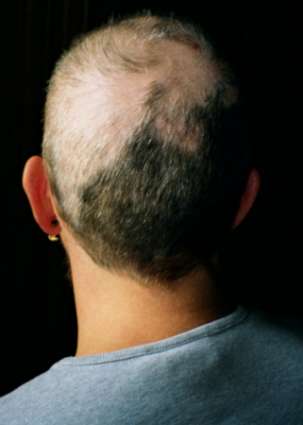
- First-line = SSRI + CBT with Exposure and Response Prevention (ERP). Either alone can work; combined therapy is best for moderate–severe disease.
- OCD typically needs higher SSRI doses and a longer trial (8–12 weeks) than depression before you call it a failure.
- SSRIs used: fluoxetine, fluvoxamine, sertraline, paroxetine (FDA-approved); escitalopram/citalopram common off-label.
- Inadequate response after a full-dose 8–12-week trial → switch to another SSRI, or to clomipramine (TCA — highly effective but anticholinergic/cardiac side effects and seizure risk → 2nd-line).
- Refractory → augment with an atypical antipsychotic (risperidone, aripiprazole), particularly with comorbid tics.
- Severe, treatment-refractory adults: deep brain stimulation is an accepted last-resort option.
- BDD next step: name the diagnosis and start SSRI + CBT — do NOT refer for the requested cosmetic/dermatologic procedure; it won't help and may worsen the preoccupation.
- Benzodiazepines are not effective for the core disorder — a classic wrong answer.
Vignette 1. A 22-year-old man washes his hands 40 times a day after intrusive fears of "germs"; his hands are cracked and bleeding. He knows the fear is excessive but cannot stop, and it consumes ~3 hours daily. → Dx: OCD. Next step: start an SSRI and refer for CBT-ERP.
Vignette 2. A 19-year-old woman spends hours inspecting her "huge, deformed" nose (which appears normal), avoids photographs, and has consulted three plastic surgeons. She reports passive suicidal thoughts. → Dx: body dysmorphic disorder. Next step: SSRI + CBT and formal suicide-risk screening; defer surgery.
Vignette 3. A 45-year-old accountant is rigid, perfectionistic, and devoted to work at the expense of relationships; he sees nothing wrong with it and refuses to delegate. There are no true obsessions or compulsions. → Dx: OCPD (ego-syntonic). Next step: psychotherapy — not an urgent SSRI.
First separate OCD (ego-dystonic; true obsessions + compulsions) from OCPD (ego-syntonic personality style with no true obsessions/compulsions). OCPD requires ≥4 of 8 criteria — mnemonic LAW FIRMS:
- L — Loses the point of activities (preoccupied with details, rules, lists, order)
- A — Ability to finish tasks lost to perfectionism
- W — Worthless/worn-out objects can't be discarded
- F — Friendships & leisure sacrificed to work devotion
- I — Inflexible about morals, ethics, and values
- R — Reluctant to delegate (unless done exactly their way)
- M — Miserly with money (toward self and others)
- S — Stubborn and rigid
Treatment contrast: OCD is ego-dystonic and responds to SSRIs + ERP; OCPD is treated with psychotherapy (CBT), with SSRIs reserved for comorbid depression/anxiety.
OCD vs OCPD
| Feature | OCD | OCPD |
|---|---|---|
| Category | Obsessive-compulsive & related disorder | Personality disorder (Cluster C) |
| Core | True obsessions + compulsions | Pervasive perfectionism/control; no true obsessions or compulsions |
| Insight | Ego-dystonic (distressing, unwanted) | Ego-syntonic (feels correct/appropriate) |
| Onset | Mean ~19–20 yr; may begin in childhood | Early adulthood; stable, lifelong trait |
| Duration rule | >1 hr/day or marked impairment | Enduring pattern across contexts |
| First-line Rx | SSRI (high-dose) + CBT-ERP; clomipramine 2nd-line | Psychotherapy (CBT); SSRI only for comorbidity |
- Ego-dystonic vs ego-syntonic is the fastest OCD-vs-OCPD discriminator — commit it to memory.
- Poor or absent insight does NOT rule out OCD (or BDD); a delusional-insight specifier exists.
- BDD ≠ vanity: it carries high suicide risk and drives repeated cosmetic procedures — treat it, don't operate.
- First-line is SSRI + ERP, never a benzodiazepine for the core disorder.
- Give SSRIs a full 8–12-week, high-dose trial before switching; premature switching is a classic distractor.
- Clomipramine is effective but second-line (anticholinergic, cardiac, and seizure risk).
- Hoarding and trichotillomania are primarily behavioral (CBT/habit-reversal); SSRIs are less reliably effective than in OCD/BDD.
- Abrupt childhood-onset OCD/tics after streptococcal infection → think PANDAS.
Practice Psychiatry now
Board-style questions, spaced-repetition flashcards, and a Socratic AI tutor — free to start.