NSAIDs, Acetaminophen & Analgesics
A STEP 1 high-yield walkthrough of NSAIDs, aspirin, celecoxib, and acetaminophen — anchored in the arachidonic acid/COX pathway so every mechanism, indication, and toxicity (GI ulcers, AKI/papillary necrosis, Reye, salicylate acid–base overdose, and NAPQI hepatotoxicity) falls out of a single framework. Includes a drug-comparison table, vignette-to-drug clinical block, and the true classic mnemonics.
The Prostaglandin Pathway & Where the Drugs Act
Membrane phospholipids are cleaved by phospholipase A2 into arachidonic acid, which is then handled by two enzymes. Cyclooxygenase (COX) makes prostaglandins (PGE2, PGI2/prostacyclin) and thromboxane A2 (TXA2); lipoxygenase makes leukotrienes. Corticosteroids block PLA2 (upstream); analgesics act at COX.
Two COX isoforms matter for the boards:
- COX-1 is constitutive — it protects gastric mucosa (PGE2), drives platelet TXA2, and maintains renal perfusion.
- COX-2 is inducible at sites of inflammation — it generates the prostaglandins of pain, fever, and inflammation (but is also constitutively active in endothelium and kidney).
Know what the prostaglandins actually do: PGE2 protects gastric mucosa, sensitizes nociceptors, produces fever, and vasodilates the renal afferent arteriole (maintaining GFR); PGE1/PGE2 keep the ductus arteriosus patent; TXA2 promotes platelet aggregation and vasoconstriction; PGI2 does the opposite (inhibits platelets, vasodilates). Every toxicity below falls out of losing one of these functions.
The four drug flavors: nonselective NSAIDs (reversible COX-1/2 block), aspirin (irreversible COX acetylation), celecoxib (selective COX-2), and acetaminophen (central COX inhibition, minimal anti-inflammatory action).
- Nonselective NSAIDs (ibuprofen, naproxen, indomethacin, ketorolac, diclofenac) reversibly inhibit COX-1 and COX-2 → ↓ prostaglandins/thromboxane; they are analgesic, antipyretic, AND anti-inflammatory
- Aspirin irreversibly acetylates COX-1/COX-2 — its antiplatelet effect lasts the platelet's lifespan (~7–10 days) because platelets are anucleate and can't resynthesize COX
- Low-dose aspirin preferentially knocks out platelet TXA2 → antiplatelet effect used for MI/stroke prophylaxis and ACS
- Celecoxib selectively inhibits COX-2 → anti-inflammatory with less GI ulceration and no antiplatelet effect (it spares platelet COX-1/TXA2)
- Acetaminophen inhibits COX mainly in the CNS and is inactivated peripherally by peroxides at inflamed tissue → antipyretic + analgesic but negligible anti-inflammatory or antiplatelet activity (and no Reye risk / no GI or platelet toxicity)
- NSAIDs cause afferent arteriolar vasoconstriction (loss of vasodilatory PGE2/PGI2) → ↓ GFR → prerenal AKI, especially in volume-depleted, CHF, or cirrhotic patients on ACE inhibitors/diuretics
- Because prostaglandins keep the ductus arteriosus open, indomethacin closes a PDA — the mirror image of PGE1 (alprostadil), which keeps it open
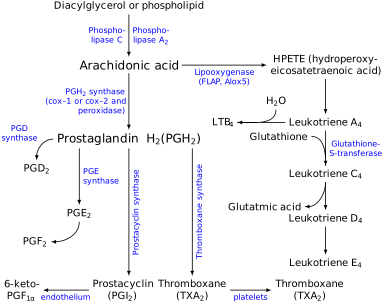
- GI: dyspepsia, gastric/duodenal ulcers, and GI bleeding from loss of PGE2 mucosal protection — the classic dose-limiting NSAID toxicity
- Renal: acute kidney injury, acute interstitial nephritis (can occur with nephrotic-range proteinuria/minimal change), chronic analgesic nephropathy → renal papillary necrosis; also fluid retention, edema, hyperkalemia, and blunted antihypertensive response
- Aspirin (salicylate) overdose: early respiratory alkalosis (direct stimulation of the medullary respiratory center) evolving into a mixed respiratory alkalosis + anion-gap metabolic acidosis; salicylates also uncouple oxidative phosphorylation → hyperthermia; chronic toxicity → tinnitus (salicylism)
- Reye syndrome: aspirin given during a viral illness (influenza, varicella) in children → hepatic encephalopathy + microvesicular fatty liver → avoid aspirin in kids
- Acetaminophen hepatotoxicity: overdose saturates glucuronidation/sulfation → CYP2E1 makes excess NAPQI, which depletes glutathione → centrilobular (zone 3) hepatic necrosis; antidote is N-acetylcysteine (regenerates glutathione). Risk ↑ with chronic alcohol use/fasting
- Celecoxib / COX-2 selective: ↑ cardiovascular thrombotic risk and sulfonamide ("sulfa") allergy — celecoxib is a sulfa drug
- Pregnancy: avoid NSAIDs in the 3rd trimester (premature ductus closure, oligohydramnios)
Drug Comparison: MOA → Use → Key Toxicity
| Drug | Mechanism | Clinical use | Key toxicity / association |
|---|---|---|---|
| Aspirin (ASA) | Irreversible COX-1/2 acetylation → ↓TXA2, ↓PGs | Antiplatelet (MI/stroke ppx, ACS); analgesic/antipyretic/anti-inflammatory | GI bleed/ulcer, tinnitus, Reye (children), mixed acid–base in overdose |
| Ibuprofen / Naproxen | Reversible nonselective COX inhibition | Pain, fever, inflammation, dysmenorrhea | GI ulcer/bleed, AKI, fluid retention, ↑K⁺ |
| Indomethacin | Reversible nonselective COX (potent) | Close PDA, acute gout | GI/renal toxicity, CNS effects |
| Ketorolac | Reversible nonselective COX (potent analgesic) | Short-term moderate–severe pain (parenteral) | GI bleed, AKI — limit to ≤5 days |
| Celecoxib | Selective COX-2 inhibition | RA/OA; patients at high GI-bleed risk | ↑ CV thrombotic risk, sulfa allergy |
| Acetaminophen (APAP) | Central COX inhibition; minimal peripheral | Analgesic/antipyretic (children, PUD, gout, ASA allergy) | Hepatotoxicity (NAPQI) — antidote N-acetylcysteine |
- A 4-year-old recovering from an influenza-like illness develops vomiting, lethargy, and hepatomegaly with elevated transaminases and hyperammonemia. → Reye syndrome from aspirin (avoid ASA in children).
- A college student is brought in after ingesting a bottle of pills: febrile, tachypneic, with tinnitus; ABG shows a primary respiratory alkalosis with a concurrent anion-gap metabolic acidosis. → Aspirin (salicylate) overdose (alkalinize urine ± dialysis).
- A teenager took "a handful of Tylenol"; 3 days later she has RUQ pain and markedly elevated AST/ALT; biopsy would show centrilobular necrosis. → Acetaminophen toxicity — give N-acetylcysteine.
- A heart failure patient on an ACE inhibitor and diuretic starts an OTC pain reliever and develops rising creatinine and hyperkalemia. → NSAID-induced AKI (afferent arteriolar constriction).
- A premature neonate has a continuous "machine-like" murmur and widened pulse pressure. → give indomethacin to close the PDA.
- A patient with asthma and nasal polyps develops bronchospasm and rhinorrhea after taking aspirin. → Aspirin-exacerbated respiratory disease (Samter triad) — arachidonic acid shunted toward leukotrienes.
- cele-COX-ib → selective for COX-2 (the "2" is hiding in the name), and it's a sulfa drug.
- Prostaglandins keep the ductus Patent → indomethacin shuts it. Mirror image: PGE1 (alprostadil) keeps it open.
- NAPQI → give NAC. N-AcetylCysteine replenishes glutathione in acetaminophen overdose.
- "Aspirin + a sick kid = Reye." No aspirin in children with viral illness (influenza, varicella).
Aspirin & Acetaminophen: The Two the Boards Love
Aspirin is dose-dependent. Low doses selectively suppress platelet TXA2 (antiplatelet); higher doses add analgesic/antipyretic/anti-inflammatory effects. Because acetylation is irreversible, the effect on any given platelet is permanent — bleeding time normalizes only as new platelets are made. Recognize aspirin-exacerbated respiratory disease (Samter triad: asthma + nasal polyps + aspirin sensitivity), where COX blockade shunts arachidonic acid into leukotrienes → bronchospasm. In overdose, tie together hyperthermia (uncoupled oxidative phosphorylation), tinnitus, and the mixed respiratory-alkalosis/anion-gap-metabolic-acidosis picture.
Acetaminophen is normally conjugated by glucuronidation and sulfation to nontoxic metabolites; a small fraction goes through CYP2E1 to the reactive electrophile NAPQI, which is detoxified by glutathione. In overdose (or with chronic alcohol use/malnutrition that induces CYP2E1 or depletes glutathione), NAPQI accumulates and causes zone 3 (centrilobular) hepatic necrosis. N-acetylcysteine restores glutathione stores and is the antidote. Its clean profile — no meaningful GI, renal, platelet, or Reye risk — is exactly why it's the analgesic/antipyretic of choice in children, peptic ulcer disease, gout, and aspirin allergy.
- Indomethacin = close the PDA (and a potent option for acute gout) — the single most tested NSAID association; IV ibuprofen is an equally effective, more renal-sparing alternative used first-line in many NICUs
- Ketorolac = powerful parenteral analgesic for short-term use only (≤5 days) because of GI/renal toxicity
- Celecoxib = COX-2 selective → GI-sparing but ↑ CV/thrombotic risk and sulfa cross-reactivity
- Aspirin = the only common analgesic that is irreversible and antiplatelet; unique to it are Reye, tinnitus/salicylism, and mixed acid–base overdose
- Acetaminophen = the answer when NSAIDs/aspirin are contraindicated (peptic ulcer disease, gout, children with viral illness, aspirin allergy); its danger is NAPQI hepatotoxicity
- Naproxen is generally regarded as having the most favorable cardiovascular profile among the nonselective NSAIDs
- All NSAIDs (except low-dose aspirin's protective effect) blunt antihypertensives, potentiate warfarin bleeding, and are avoided in the third trimester

Practice Pharmacology now
Board-style questions, spaced-repetition flashcards, and a Socratic AI tutor — free to start.