Neuromuscular Junction Disorders: Myasthenia & LEMS
A board-focused walk through myasthenia gravis and Lambert–Eaton syndrome — pathophysiology (postsynaptic AChR vs presynaptic P/Q-type Ca²⁺ channel), the use-dependent weakness discriminator, antibody and electrodiagnostic diagnosis, tumor associations (thymoma vs small cell lung cancer), and next-best-step management including myasthenic crisis. Anchored by vignettes, a comparison table, and legitimate memory hooks.
Pathophysiology: opposite sides of the synapse
The neuromuscular junction (NMJ) transmits via acetylcholine (ACh). Both disorders are autoimmune, but they strike opposite sides of the synapse — and that single fact drives every board discriminator.
Myasthenia gravis (MG): IgG against the postsynaptic nicotinic ACh receptor (anti-AChR); a seronegative subset carries anti-MuSK antibodies. With fewer working receptors the safety factor of transmission falls, so the normal rundown of ACh release during repetitive activity drops more end-plate potentials below threshold → fatigable weakness that worsens with use and recovers with rest. Strongly tied to thymic pathology (hyperplasia > thymoma).
Lambert–Eaton myasthenic syndrome (LEMS): IgG against presynaptic P/Q-type voltage-gated Ca²⁺ channels (anti-VGCC) → reduced Ca²⁺ influx → less ACh released per impulse. With repeated firing, Ca²⁺ accumulates in the terminal, so strength briefly improves with sustained use (facilitation). About half of cases are paraneoplastic, classically from small cell lung cancer (SCLC), and LEMS may precede the cancer diagnosis by months to years; the remainder are primary autoimmune.

- MG = postsynaptic (receptor blocked/destroyed); LEMS = presynaptic (ACh release fails)
- MG worsens with use; LEMS improves with use — the single most-tested distinction
- MG antibody: anti-AChR (highly specific, first serology); if seronegative → anti-MuSK
- LEMS antibody: anti-P/Q voltage-gated Ca²⁺ channel
- MG onset: ocular/bulbar — ptosis, diplopia, dysphagia, dysarthria; reflexes and autonomics normal, pupils spared
- LEMS onset: proximal legs, hyporeflexia, and autonomic signs (dry mouth, impotence, constipation)
- Tumor link: MG → thymoma; LEMS → small cell lung cancer
- Repetitive nerve stimulation: MG shows a decremental response at low frequency (2–3 Hz); LEMS shows a low resting CMAP with a marked incremental response after brief exercise or high-frequency (20–50 Hz) stimulation
- Both: get a CT chest — thymoma (MG) vs SCLC (LEMS)
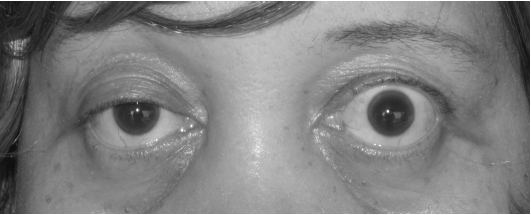
A 28-year-old woman reports 3 months of drooping eyelids and double vision — mild in the morning, worse by evening — plus tiring of the jaw partway through meals. Exam: fatigable ptosis that worsens on sustained upgaze; pupils and reflexes normal. Placing an ice pack on the lid for ~2 minutes lifts the ptosis.
- Diagnosis: Myasthenia gravis (young woman, fatigable ocular/bulbar weakness)
- Best initial test: serum anti-AChR antibody (highly specific; most useful first serology)
- If seronegative: check anti-MuSK; electrodiagnostics — repetitive nerve stimulation (decremental response) or single-fiber EMG (most sensitive test)
- Always next: CT chest to evaluate for thymoma
- Bedside clue: the ice-pack test — cooling inhibits acetylcholinesterase, improving transmission, so the lid rises (edrophonium/Tensilon is now largely historical)
Myasthenia gravis vs LEMS
| Feature | Myasthenia gravis | LEMS |
|---|---|---|
| Lesion site | Postsynaptic ACh receptor | Presynaptic Ca²⁺ channel |
| Antibody | Anti-AChR (or anti-MuSK) | Anti-P/Q VGCC |
| Weakness with use | Worsens (fatigability) | Improves (facilitation) |
| First muscles | Ocular/bulbar (ptosis, diplopia) | Proximal legs |
| Reflexes | Normal | Reduced/absent, facilitate after exercise |
| Autonomic signs | Absent (pupils spared) | Present (dry mouth, constipation, impotence) |
| Repetitive stim | Decrement at 2–3 Hz | Low resting CMAP, increment post-exercise / high freq |
| Tumor | Thymoma / thymic hyperplasia | Small cell lung cancer |
| Symptomatic drug | Pyridostigmine | 3,4-diaminopyridine |
A 62-year-old man with a 40-pack-year history has months of proximal leg weakness (hard to rise from a chair), dry mouth, and constipation. Strength briefly improves as he keeps moving. Deep tendon reflexes are absent at rest but return after brief exercise (post-exercise facilitation).
- Diagnosis: Lambert–Eaton myasthenic syndrome
- Best initial test: anti-P/Q-type VGCC antibody; on repetitive nerve stimulation the CMAP is low at rest and shows a marked incremental response after brief exercise or high-frequency stimulation
- Critical next step: CT chest (± PET) to hunt for small cell lung cancer; if negative, continue periodic surveillance because LEMS can precede the tumor by years
- Symptomatic therapy: 3,4-diaminopyridine (amifampridine) — blocks presynaptic K⁺ channels, prolonging depolarization to drive more Ca²⁺-dependent ACh release
- Best overall treatment: treat the underlying SCLC
- MG symptomatic: pyridostigmine (acetylcholinesterase inhibitor) — first-line for symptoms
- MG chronic immunotherapy: corticosteroids, then steroid-sparing agents (azathioprine, mycophenolate)
- Thymectomy: indicated for thymoma, and also benefits generalized AChR-positive MG in younger adults (MGTX trial)
- Myasthenic crisis (respiratory/bulbar failure): IVIG or plasmapheresis + airway support; starting high-dose steroids can transiently worsen weakness
- Drugs that unmask/worsen MG: aminoglycosides, fluoroquinolones, macrolides, β-blockers, IV magnesium, neuromuscular blockers (classic: undiagnosed MG worsens when a pre-eclamptic patient gets Mg²⁺)
- LEMS: treat the SCLC; 3,4-DAP for symptoms; IVIG/immunotherapy if refractory
- Cholinergic crisis (pyridostigmine excess): SLUDGE, miosis, fasciculations — distinguish from myasthenic crisis before up-titrating
- LEMS = the "L" disease: Lung cancer (small cell) · Lower-limb/proximal weakness · Loss of reflexes · weakness Lessens with use
- Gravis "grows": in MG, weakness grows with use (fatigability); think droopy lids + double vision + dysphagia (ocular/bulbar first)
- Ptosis + diplopia + fatigability = myasthenia gravis until proven otherwise
- Presynaptic vs postsynaptic: LEMS hits the Ca²⁺ channel that comes first (presynaptic terminal); MG hits the receptor that comes last (postsynaptic membrane)
A woman with known MG develops worsening dysphagia and dyspnea five days after starting an antibiotic for pneumonia. She is now using accessory muscles and speaks in short phrases.
- Recognize: myasthenic crisis, likely precipitated by infection ± an offending antibiotic (fluoroquinolone, aminoglycoside, or macrolide)
- Next best step: assess ventilation with serial forced vital capacity (FVC) and negative inspiratory force — do not wait for hypoxia or hypercapnia; intubate for impending failure
- Definitive treatment: plasmapheresis or IVIG; stop the trigger and escalate immunotherapy
- Avoid: simply up-titrating pyridostigmine (worsens secretions and risks cholinergic crisis)
Practice Neuro now
Board-style questions, spaced-repetition flashcards, and a Socratic AI tutor — free to start.