Menopause & Hormone Therapy
A high-yield STEP 2 CK lesson on menopause and hormone therapy, moving from the pathophysiology of follicular depletion and rising FSH through classic vignette presentations to guideline-based next-best-step management. Emphasizes the postmenopausal-bleeding-equals-endometrial-cancer rule, unopposed-estrogen risk, HT timing/contraindications, and non-hormonal alternatives.
Pathophysiology & Definitions
Menopause is the permanent cessation of menses from loss of ovarian follicular function, diagnosed retrospectively after 12 consecutive months of amenorrhea without another cause. Median age is ~51; a symptomatic perimenopausal transition precedes it by years.
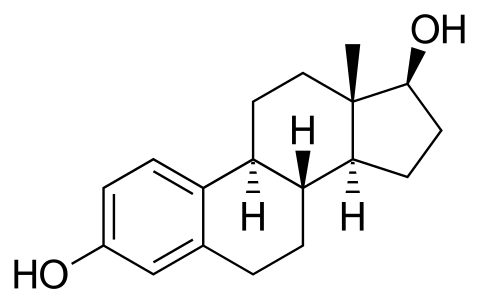
As the follicle pool is exhausted, estradiol and inhibin B fall, removing negative feedback on the pituitary → FSH rises markedly (>25–40 IU/L) with a smaller LH rise (loss of inhibin selectively disinhibits FSH). After menopause the dominant estrogen becomes estrone (E1), produced by peripheral aromatization of adrenal androstenedione in adipose tissue — so higher adiposity means higher estrone and greater unopposed-estrogen–driven endometrial risk.
- Menopause before age 40 = primary ovarian insufficiency (POI) → workup: repeat FSH, karyotype (Turner), FMR1 premutation (Fragile X), adrenal/thyroid antibodies
- Age 40–45 = early menopause
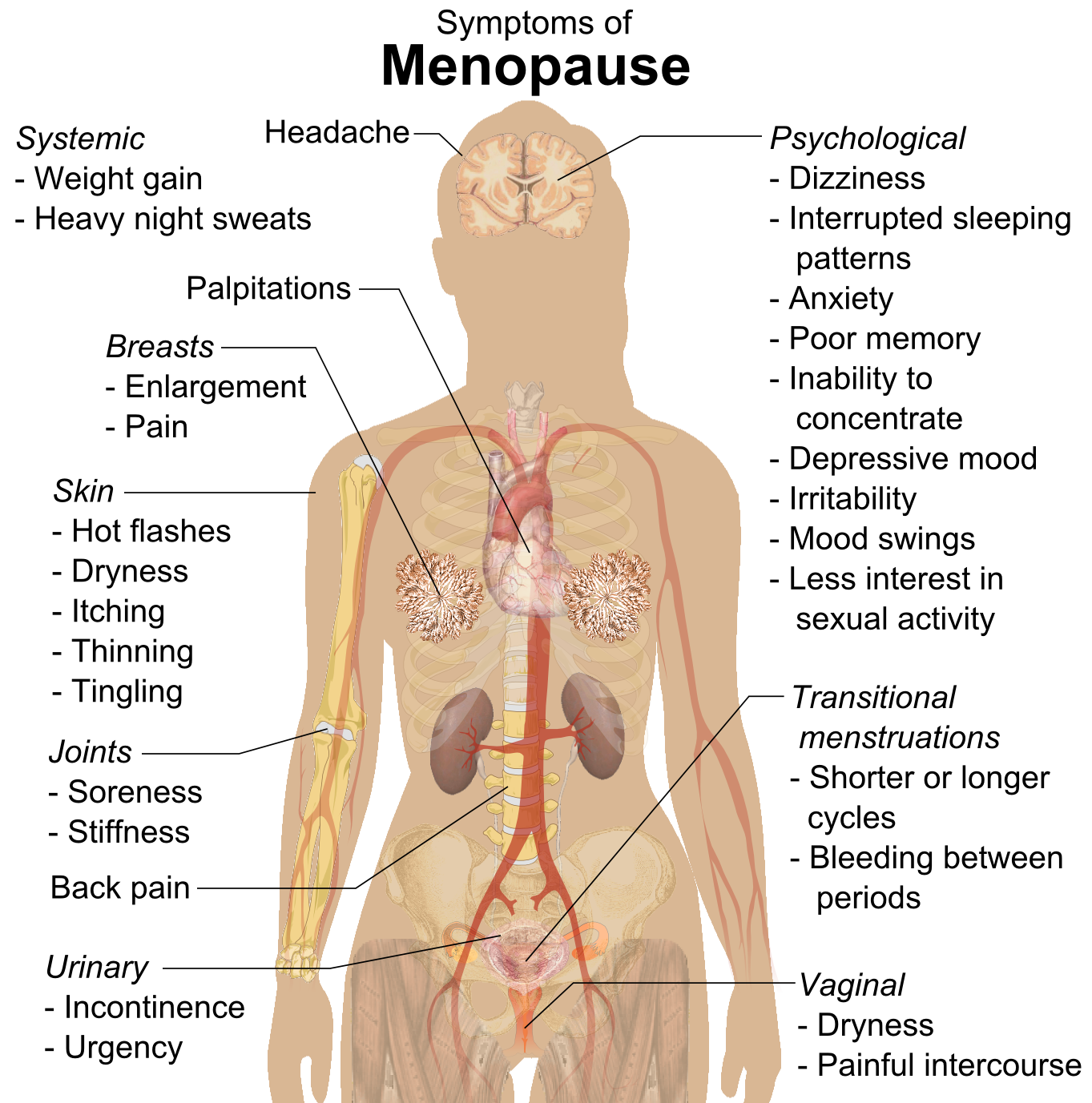
- Vasomotor symptoms (hot flashes, night sweats) = most common; sudden warmth, flushing, and sweating, often worse at night
- Genitourinary syndrome of menopause (GSM): vaginal dryness, dyspareunia, urinary urgency, recurrent UTIs, atrophic vaginitis
- Also: sleep disruption, mood lability, decreased libido, arthralgias
- Diagnosis is clinical in women ≥45 with typical symptoms — labs are usually unnecessary
- Check FSH (high) + estradiol (low) only if the age is atypical, the picture is unclear, or POI is suspected; always exclude pregnancy (β-hCG) and thyroid disease (TSH)
- Estrogen loss drives accelerated bone loss/osteoporosis and rising cardiovascular risk
- Any postmenopausal bleeding = endometrial cancer until proven otherwise
A 58-year-old woman, 6 years past her last period, reports 2 weeks of painless vaginal spotting. BMI 34, nulliparous, and has type 2 diabetes.
- Must exclude: endometrial carcinoma — risk factors here are obesity, nulliparity, and diabetes (chronic unopposed estrogen)
- Next best step: endometrial biopsy for tissue diagnosis, and/or transvaginal ultrasound
- Endometrial stripe >4 mm → biopsy
- Stripe ≤4 mm has a high negative predictive value
- Atrophy is actually the most common cause of postmenopausal bleeding — but never settle on it until malignancy is ruled out; this is the classic trap answer
Estrogen-Only vs Estrogen + Progestin Therapy
| Feature | Estrogen-only (ET) | Estrogen + Progestin (EPT) |
|---|---|---|
| Who | Women without a uterus (prior hysterectomy) | Women with an intact uterus |
| Role of progestin | Not needed | Opposes estrogen → prevents endometrial hyperplasia/cancer |
| Endometrial cancer | Would rise if given alone with a uterus | Neutralized by progestin |
| Breast cancer | Little/no increase (WHI estrogen-only arm) | Increased with prolonged use |
| Shared risks | VTE, stroke | VTE, stroke |
- Best indication: moderate-to-severe vasomotor symptoms — systemic HT is the most effective treatment
- Timing / "window of opportunity": most favorable risk–benefit when started in women <60 years old or within 10 years of menopause onset
- Estrogen alone only if no uterus; add progestin if the uterus is intact
- Transdermal estrogen is preferred over oral when VTE risk is a concern (lower thrombotic risk, avoids hepatic first-pass)
- Contraindications: history of breast or estrogen-dependent cancer, coronary heart disease, prior VTE or stroke, active liver disease, unexplained vaginal bleeding
- HT is not first-line for osteoporosis alone — use bisphosphonates; HT does prevent bone loss
- Use the lowest effective dose and reassess need periodically
A 54-year-old woman with a history of ER-positive breast cancer has disabling hot flashes and night sweats disrupting sleep.
- Systemic estrogen is contraindicated.
- Next best step: a non-hormonal agent —
- SSRI/SNRI: low-dose paroxetine (the only SSRI FDA-approved for vasomotor symptoms) or venlafaxine
- Gabapentin — especially useful for night sweats
- Fezolinetant — an NK3-receptor antagonist, a newer FDA-approved targeted option
- Tamoxifen caveat: avoid paroxetine/fluoxetine (strong CYP2D6 inhibitors lower active endoxifen) → prefer venlafaxine
- For isolated vaginal dryness, non-hormonal moisturizers/lubricants are first-line; low-dose vaginal estrogen (minimal systemic absorption) is reserved for refractory cases after oncology input
Systemic HT vs Low-Dose Vaginal Estrogen
| Feature | Systemic HT | Low-dose vaginal estrogen |
|---|---|---|
| Target symptoms | Vasomotor symptoms + GSM | GSM only (dryness, dyspareunia, urinary) |
| Progestin needed? | Yes if uterus present | No — minimal systemic absorption |
| Systemic risks | VTE, stroke, breast (EPT) | Negligible |
| Breast cancer history | Avoid | Often acceptable with oncology input |
Management Summary
Management is driven by symptom type and individual risk. For moderate-to-severe vasomotor symptoms in a healthy woman under 60 or within 10 years of menopause, systemic estrogen (plus progestin if the uterus is intact) gives the best relief with a favorable risk–benefit profile. When estrogen is contraindicated, SSRIs/SNRIs, gabapentin, or fezolinetant are effective alternatives.
Isolated genitourinary symptoms respond to vaginal moisturizers/lubricants and low-dose vaginal estrogen (no progestin required). Screen for osteoporosis with DEXA at age 65 (earlier with risk factors) and treat with bisphosphonates first-line. Above all, re-frame postmenopausal bleeding as possible endometrial cancer and biopsy it — the single most tested next-best-step in this topic.
Practice Reproductive now
Board-style questions, spaced-repetition flashcards, and a Socratic AI tutor — free to start.