Management of Acute Asthma & COPD Exacerbations
A Step 2 CK–focused, algorithm-first guide to managing acute asthma and COPD exacerbations — first-line therapy, ordered escalation, and the oxygen, antibiotic, and ventilation decisions that distinguish the two. Emphasizes the "next best step in management" and impending-respiratory-failure red flags.
The shared backbone — and where they split
Acute asthma and COPD exacerbations share a treatment backbone but diverge in three exam-critical ways: oxygen target, antibiotics, and ventilatory support.
The first moves are the same in both: rapid severity assessment (speech, work of breathing, mental status, SpO₂, peak flow), oxygen, inhaled short-acting bronchodilators (SABA ± SAMA), and early systemic corticosteroids. Step 2 CK tests you on the divergence — asthmatics get a higher O₂ target and rarely antibiotics, while COPD patients get controlled oxygen, antibiotics by symptom criteria, and early noninvasive ventilation for respiratory acidosis. Recognizing impending respiratory failure and choosing the correct next escalation step is the single highest-yield skill in both.
- Oxygen to target SpO₂ 93–95% (GINA, adults).
- SABA is first-line: nebulized albuterol 2.5–5 mg, repeat every 20 min ×3 or give continuously.
- Add ipratropium (SAMA) 0.5 mg neb for moderate–severe exacerbations (SABA + SAMA beats SABA alone).
- Systemic corticosteroids early (within 1 hour): prednisone 40–50 mg PO daily ×5–7 days — oral is as effective as IV.
- IV magnesium sulfate 2 g over 20 min for severe or life-threatening attacks not responding to initial therapy.
- Antibiotics are NOT routine; chest X-ray only if pneumonia, pneumothorax, or diagnostic doubt.
- Ominous signs → ICU / intubation: a rising or 'normalizing' PaCO₂ in a tiring patient, silent chest, drowsiness/confusion, inability to speak.
Stepwise ED algorithm — acute asthma
| Order | Intervention | Dose / target |
|---|---|---|
| 1 | Assess severity + oxygen | SpO₂ 93–95% |
| 2 | Albuterol (SABA), nebulized | 2.5–5 mg q20 min ×3 or continuous |
| 3 | Ipratropium (SAMA), nebulized | 0.5 mg (moderate–severe) |
| 4 | Systemic corticosteroid (give < 1 h) | Prednisone 40–50 mg PO (PO = IV) |
| 5 | IV magnesium sulfate (severe/refractory) | 2 g over 20 min |
| 6 | Escalate: ICU / intubation | Silent chest, rising PaCO₂, drowsiness |
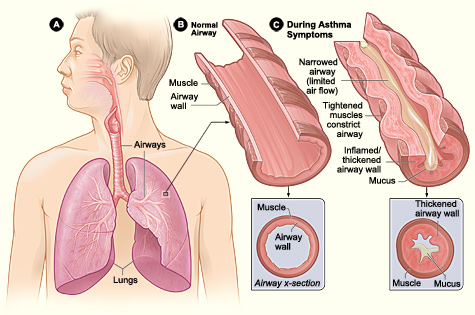
Vignette. A 24-year-old woman with asthma presents with acute severe dyspnea, speaking in single words. RR 30, HR 122, SpO₂ 89% on room air, diffuse wheeze with prolonged expiration, PEF 30% predicted. She receives oxygen, continuous nebulized albuterol, nebulized ipratropium, and IV methylprednisolone. Sixty minutes later she remains in severe distress with little improvement.
Next best step in management → IV magnesium sulfate 2 g over 20 minutes (adjunct for severe, refractory exacerbation).
- Contrast: if she instead developed drowsiness, a silent chest, or a rising/'normalizing' PaCO₂, the answer becomes prepare for intubation / ICU — those signal impending respiratory failure, not improvement.
- Controlled oxygen to SpO₂ 88–92% (e.g., Venturi mask); over-oxygenation worsens hypercapnia.
- Bronchodilators are first-line: nebulized albuterol ± ipratropium.
- Systemic corticosteroids: prednisone 40 mg PO daily ×5 days (REDUCE trial — 5 days is as good as longer courses).
- Antibiotics by Anthonisen cardinal symptoms — ↑dyspnea, ↑sputum volume, ↑sputum purulence: give if all 3, or 2 of 3 when increased purulence is one, or if mechanically ventilated (invasive or noninvasive). Options: azithromycin, doxycycline, or amoxicillin–clavulanate.
- Noninvasive ventilation (BiPAP) is first-line for respiratory acidosis (pH ≤ 7.35 and PaCO₂ ≥ 45 mmHg) with distress — it reduces intubation and mortality.
- Intubate if NIV fails or is contraindicated (altered mental status, can't protect airway, hemodynamic instability, vomiting).
Asthma vs. COPD — where management diverges
| Feature | Acute asthma | COPD exacerbation |
|---|---|---|
| O₂ target (SpO₂) | 93–95% | 88–92% (controlled) |
| Bronchodilators | SABA ± SAMA | SABA ± SAMA |
| Systemic steroids | Prednisone 40–50 mg ×5–7 d | Prednisone 40 mg ×5 d |
| Antibiotics | Not routine | Yes if Anthonisen criteria or ventilated |
| IV magnesium | Yes (severe/refractory) | Not standard |
| NIV / BiPAP | Rarely; cautious | First-line for pH ≤ 7.35 |
| Ominous sign | Rising/'normalizing' PaCO₂ | Worsening acidosis despite NIV |
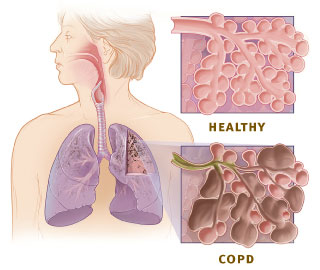
Vignette. A 70-year-old man (40 pack-years, COPD) has 3 days of worsening dyspnea and increased purulent sputum. He uses accessory muscles; RR 28, alert and cooperative. On controlled oxygen, ABG shows pH 7.28, PaCO₂ 62, PaO₂ 58, HCO₃⁻ 28. He has already received nebulized albuterol + ipratropium, systemic corticosteroids, and antibiotics.
Next best step in management → Noninvasive positive-pressure ventilation (BiPAP).
- Why: decompensated respiratory acidosis (pH < 7.35 with hypercapnia) in an awake, cooperative patient is the classic indication — NIV lowers intubation rates and mortality.
- If NIV fails (worsening pH/PaCO₂, deteriorating mental status) → endotracheal intubation.
COPD exacerbation — 'ABC' (plus O₂ and NIV):
- Antibiotics (by Anthonisen criteria)
- Bronchodilators (SABA ± SAMA)
- Corticosteroids (systemic)
- Add: controlled O₂ (88–92%) and NIV for respiratory acidosis
Acute severe asthma — 'O SHIT ME' (classic ED mnemonic): Oxygen, Salbutamol (albuterol), Hydrocortisone/systemic steroids, Ipratropium, Theophylline, Magnesium (IV), Escalate (ICU/intubation). Caveat: the T is a relic — IV theophylline/aminophylline is NOT part of modern management (no added benefit, more toxicity, and it is not a correct 'next step' answer). Keep the letter for recall only; never actually reach for the drug.
Common pitfalls (high-yield distractors)
- Over- vs. under-oxygenating: in COPD, uncontrolled high-flow O₂ worsens hypercapnia — chiefly by releasing hypoxic pulmonary vasoconstriction and increasing V/Q mismatch, plus the Haldane effect (reduced respiratory drive is a minor contributor, not the main mechanism) — so titrate to 88–92%; in asthma, don't withhold O₂ chasing a narrow range.
- A 'normal' PaCO₂ in a hyperventilating asthmatic is a red flag (fatigue → impending failure), not reassurance.
- Delaying corticosteroids: give them early in both conditions — they cut relapse and length of stay.
- Reflex antibiotics for every wheeze: asthma exacerbations rarely need them; reserve for COPD by Anthonisen criteria or a clear infection.
- BiPAP in the wrong patient: obtunded, vomiting, or hemodynamically unstable patients need intubation, not NIV.
Practice Clinical Management now
Board-style questions, spaced-repetition flashcards, and a Socratic AI tutor — free to start.