Malaria & Travel Medicine
A high-yield board review of malaria in the returning traveler — Plasmodium species and their exposures, the classic paroxysm and smear findings, thick/thin smear diagnosis with parasitemia grading, IV artesunate for severe disease, and primaquine/tafenoquine radical cure (after G6PD testing) for vivax/ovale — plus travel chemoprophylaxis and must-not-miss febrile differentials (typhoid, dengue).
Overview: the returning traveler with cyclical fever
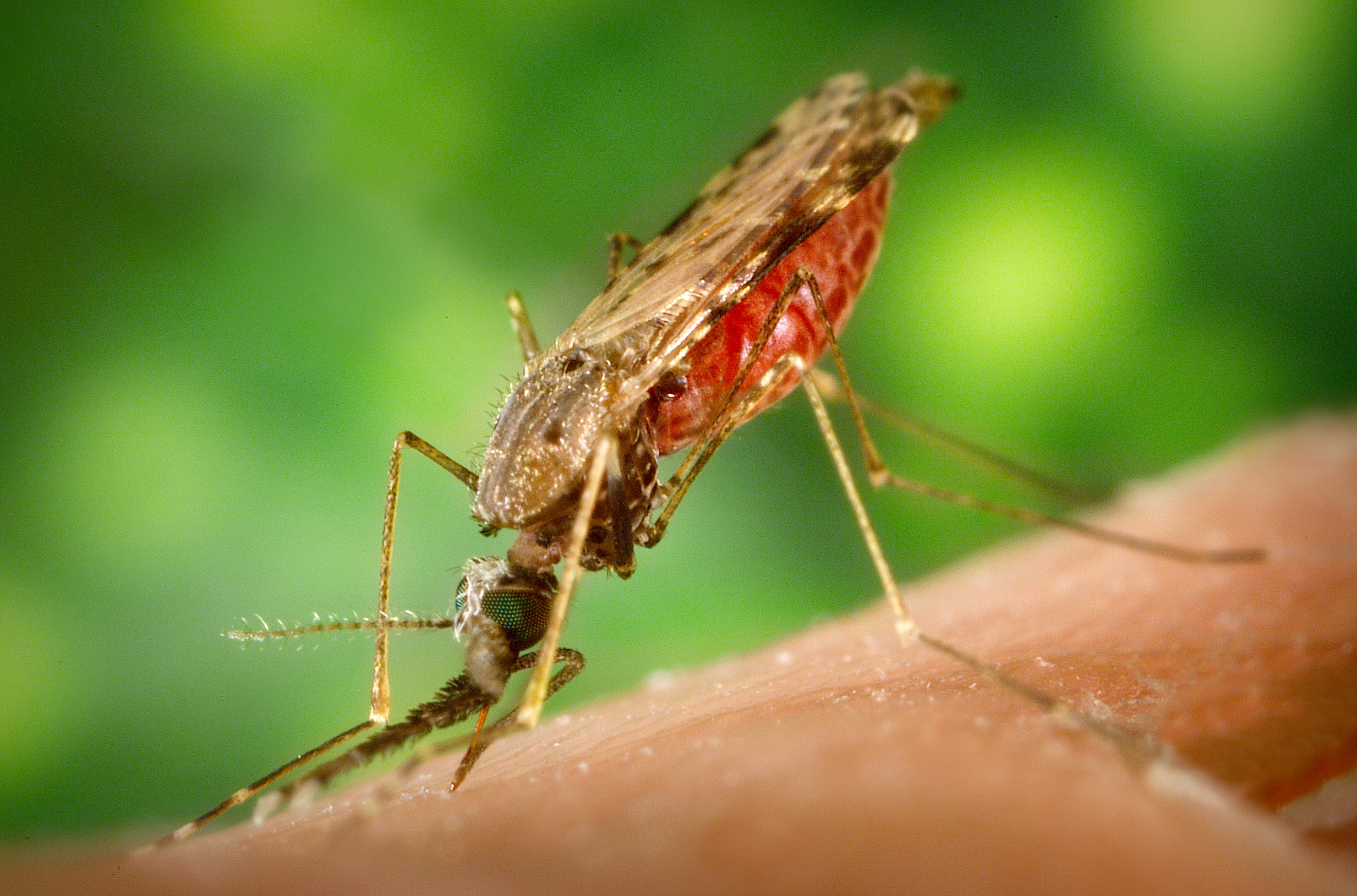
Malaria is a febrile illness caused by Plasmodium protozoa transmitted by the bite of the female Anopheles mosquito. Five species infect humans: P. falciparum (deadliest; sub-Saharan Africa), P. vivax and P. ovale (relapsing, via dormant liver hypnozoites), P. malariae (chronic, quartan), and P. knowlesi (Southeast Asia, macaque reservoir). Injected sporozoites seed hepatocytes (exoerythrocytic stage); released merozoites then invade RBCs, and synchronized schizont rupture drives paroxysms of fever, rigors, and hemolysis. Falciparum has no hypnozoites but causes cerebral malaria, high parasitemia, and most deaths, whereas vivax/ovale can relapse months to years after exposure.
On boards, malaria is the answer for almost any returning traveler with cyclical fevers — always confirm with a blood smear before treating. Protective host traits include sickle cell trait, thalassemia, G6PD deficiency, and Duffy-negative RBCs (which block P. vivax entry).
- Classic paroxysm: cold phase (shaking rigors) → hot phase (fever ≥40°C) → drenching sweats → defervescence
- Fever periodicity: tertian (~48 h) = vivax, ovale, falciparum; quartan (~72 h) = malariae. Falciparum is often irregular/continuous, not neatly periodic
- Exam/labs: fever, splenomegaly, hepatomegaly, jaundice, hemolytic anemia, thrombocytopenia, elevated LDH/indirect bilirubin
- Falciparum severe disease: cerebral malaria (coma, seizures), parasitemia >5–10%, ARDS, AKI, hypoglycemia, lactic (metabolic) acidosis, blackwater fever (massive hemolysis → hemoglobinuria, dark urine)
- P. vivax/ovale: generally milder but relapse from hypnozoites; vivax requires the Duffy antigen to invade RBCs
- P. malariae: indolent, chronic → nephrotic syndrome (immune-complex glomerulonephritis)
- P. knowlesi: 24-h (quotidian) cycle; resembles malariae on smear but can cause severe disease

Species comparison: organism / exposure / treatment
| Species | Exposure / geography | Buzzword / clue | Treatment |
|---|---|---|---|
| P. falciparum | Sub-Saharan Africa | Banana/crescent gametocytes; ring forms, high parasitemia; cerebral malaria | ACT (artemether-lumefantrine) if uncomplicated; IV artesunate if severe |
| P. vivax | South/SE Asia, Latin America | Schüffner dots; Duffy-dependent; relapse | Chloroquine (or ACT where resistant) + primaquine (check G6PD) |
| P. ovale | West Africa | Schüffner dots; oval RBCs; relapse | Chloroquine + primaquine (check G6PD) |
| P. malariae | Worldwide, focal | Quartan (72 h); nephrotic syndrome; band forms | Chloroquine |
| P. knowlesi | SE Asia (Borneo) | Macaque reservoir; 24-h cycle | ACT / artesunate if severe |
Vignette: A 34-year-old returns from a 3-week trip to Nigeria (took no prophylaxis) with 5 days of spiking fevers, headache, and myalgias. Temp 39.8°C, tender splenomegaly, scleral icterus. Labs: Hb 9.2, platelets 68k, elevated LDH and indirect bilirubin.
- Next best step (diagnosis): Giemsa-stained thick and thin blood smears. Thick = sensitive screen; thin = species ID + % parasitemia. If negative but suspicion is high, repeat q12–24 h ×3 before excluding malaria.
- Smear shows numerous ring forms, appliqué forms, multiply-infected RBCs, and 8% parasitemia → P. falciparum.
- Next best step (treatment): parasitemia ≥5% with hemolysis = severe malaria → admit and start IV artesunate (first-line; FDA-approved 2020), then complete a full ACT course. Monitor closely for hypoglycemia and acidosis.
- "Tertian = 3rd day, Quartan = 4th day" — Roman inclusive counting: tertian fever recurs every 48 h (days 1 and 3), quartan every 72 h (days 1 and 4)
- Relapse = viVax + oVale — the two species with liver hypnozoites; need Primaquine (or tafenoquine) for radical cure (P for Primaquine and hyPnozoite)
- Quartan → Kidney — P. malariae is the one linked to nephrotic syndrome
- Falciparum = Fatal — the classic cause of cerebral malaria and death
- -quine radical-cure drugs (primaquine, tafenoquine) → check G6PD first (oxidative hemolysis risk)
- Gold standard: Giemsa-stained thick and thin peripheral blood smears
- Thick smear — high sensitivity; screens for/detects parasites (RBCs lysed)
- Thin smear — species identification and quantifies % parasitemia (a severity marker)
- Serial smears q12–24 h ×3 before ruling out malaria — parasitemia fluctuates with the schizont cycle
- Rapid diagnostic tests (RDTs): antigen detection (HRP-2 for falciparum, pLDH) — fast, but confirm/quantify with a smear
- Falciparum smear clues: delicate ring forms, appliqué/accolé forms, multiply-infected RBCs, banana-shaped gametocytes, Maurer's clefts; schizonts usually absent (parasites sequestered in microvasculature)
- Vivax/ovale: enlarged RBCs with Schüffner dots; malariae: band forms and rosette (daisy-head) schizonts
- Uncomplicated, chloroquine-resistant falciparum (most regions): oral ACT (artemether-lumefantrine), atovaquone-proguanil, or quinine + doxycycline
- Severe/complicated malaria (cerebral, parasitemia ≥5%, AKI, ARDS, acidosis, shock): IV artesunate — first-line worldwide and in the US (replaced IV quinidine, now discontinued); follow with a full oral ACT course
- Chloroquine-sensitive areas (Central America west of the Panama Canal, Hispaniola/Haiti, parts of the Middle East): chloroquine
- Vivax/ovale: treat the blood stage (chloroquine or ACT) PLUS primaquine or tafenoquine to kill hypnozoites (radical cure) — test G6PD first
- Pregnancy: severe disease → IV artesunate (all trimesters); avoid primaquine, tafenoquine, doxycycline; watch for hypoglycemia
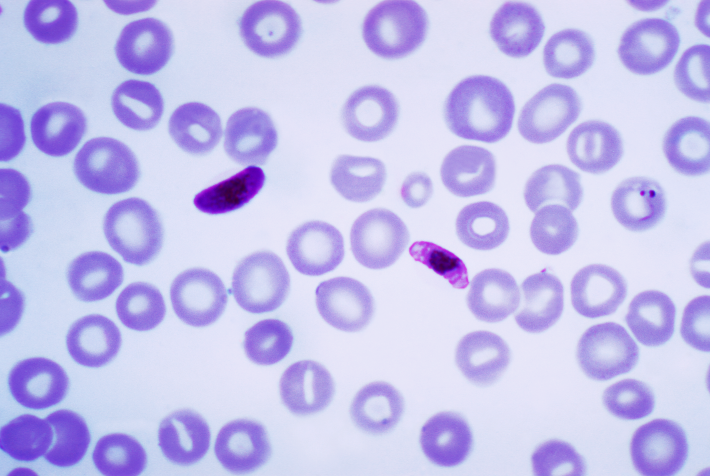
Vignette: A 26-year-old soldier treated for malaria after deployment to Papua New Guinea returns 2 months later with recurrent tertian fevers, chills, and sweats. Smear shows enlarged RBCs with Schüffner dots and amoeboid trophozoites.
- Diagnosis: P. vivax relapse from dormant hepatic hypnozoites — blood-stage drugs (e.g., chloroquine/ACT) clear parasitemia but do not eradicate the liver reservoir.
- Next best step: re-treat the blood stage, then give primaquine (or single-dose tafenoquine) for radical cure.
- Before starting primaquine/tafenoquine: test for G6PD deficiency — these oxidant drugs precipitate acute hemolysis in G6PD-deficient patients.
- Malaria chemoprophylaxis:
- Atovaquone-proguanil (Malarone): daily; start 1–2 days before, continue 7 days after leaving
- Doxycycline: daily; start 1–2 days before, continue 4 weeks after; causes photosensitivity; avoid in pregnancy and children <8
- Mefloquine: weekly; start ≥2 weeks before; neuropsychiatric effects; avoid with seizure/psychiatric disease or cardiac conduction defects
- Chloroquine: weekly; only in chloroquine-sensitive areas
- Personal protection: insecticide-treated bed nets, DEET / permethrin, cover skin at dusk/dawn
- Febrile-traveler differentials to consider:
- Typhoid (S. typhi): rose spots, relative bradycardia (Faget sign), stepwise fever → ceftriaxone/azithromycin
- Dengue: breakbone fever, retro-orbital pain, thrombocytopenia — avoid NSAIDs/aspirin
- Also: chikungunya, Zika, leptospirosis, rickettsial typhus, viral hepatitis
Practice Infectious Disease now
Board-style questions, spaced-repetition flashcards, and a Socratic AI tutor — free to start.