Lipid-Lowering Drugs
A high-yield Step 1 review of the six lipid-lowering drug classes — statins, ezetimibe, PCSK9 inhibitors, bile acid resins, fibrates, and niacin — mapping each to its molecular target, dominant lipid effect, and signature toxicity, anchored by the classic statin–fibrate rhabdomyolysis and niacin-flushing vignettes.
Big Picture
Lipid-lowering therapy reduces atherosclerotic cardiovascular disease (ASCVD) risk by reshaping the lipoprotein profile: LDL ("bad"), HDL ("good"), and triglycerides (TG). The boards test three things per class — (1) the molecular target, (2) which lipid it moves most, and (3) its signature toxicity.
One unifying principle ties several classes together: anything that lowers hepatic cholesterol content causes the liver to upregulate LDL receptors, which then clear LDL from the blood. Statins are first-line and the most effective LDL-lowering monotherapy; the remaining classes are layered on for specific goals — very high LDL, isolated hypertriglyceridemia, or statin intolerance.
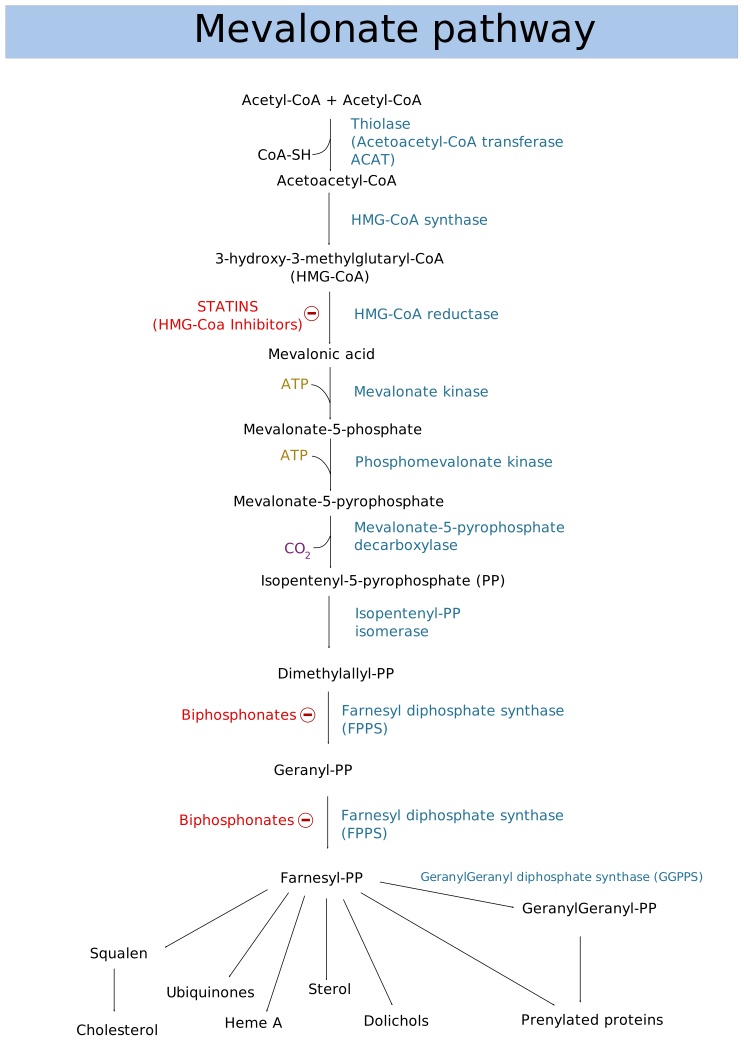
- Statins (HMG-CoA reductase inhibitors) — competitively inhibit HMG-CoA reductase, the rate-limiting enzyme of cholesterol synthesis (HMG-CoA → mevalonate); ↓ hepatic cholesterol → ↑ LDL receptors → greatest ↓ LDL. Signature tox: myopathy → rhabdomyolysis; ↑ transaminases.
- Ezetimibe — blocks the NPC1L1 cholesterol transporter at the intestinal brush border → ↓ dietary/biliary cholesterol absorption → ↓ LDL. Best-tolerated statin add-on (rare ↑ LFTs).
- PCSK9 inhibitors (evolocumab, alirocumab) — monoclonal antibodies that block PCSK9, which normally targets LDL receptors for lysosomal degradation → more LDL receptors recycled to the surface → dramatic ↓ LDL. Signature tox: injection-site reactions.
- Bile acid resins (cholestyramine, colestipol, colesevelam) — bind bile acids in the gut → liver diverts cholesterol into new bile acid synthesis → ↑ LDL receptors → ↓ LDL. Signature tox: GI upset; malabsorption of fat-soluble vitamins & drugs; can slightly ↑ TG.
- Fibrates (gemfibrozil, fenofibrate) — PPAR-α agonists → ↑ lipoprotein lipase (LPL) activity (and ↓ apoC-III) → greatest ↓ TG. Signature tox: myopathy (↑ risk with statins); cholesterol gallstones.
- Niacin (vitamin B3) — inhibits adipose-tissue lipolysis → ↓ free fatty acid delivery → ↓ hepatic VLDL/LDL synthesis; best ↑ HDL. Signature tox: flushing (PGD2), hyperglycemia, hyperuricemia.
Class Comparison: MOA → Use → Key Toxicity
| Drug class | Mechanism | Primary use | Key toxicity |
|---|---|---|---|
| Statins | Inhibit HMG-CoA reductase (↑ LDL receptors) | First-line ASCVD prevention; ↓↓↓ LDL | Myopathy → rhabdomyolysis; hepatotoxicity (↑ transaminases) |
| Ezetimibe | Block NPC1L1 (↓ intestinal cholesterol absorption) | Statin add-on; ↓↓ LDL | Rare ↑ LFTs, diarrhea |
| PCSK9 inhibitors | mAb blocks PCSK9 (spares LDL receptors) | Familial hypercholesterolemia, statin-intolerant; ↓↓↓ LDL | Injection-site reactions, myalgia |
| Bile acid resins | Bind gut bile acids (↑ LDL receptors) | ↓↓ LDL; also relieves cholestatic pruritus | GI upset; ↓ absorption of fat-soluble vitamins (ADEK) & drugs; ↑ TG |
| Fibrates | PPAR-α agonist → ↑ LPL | Severe hypertriglyceridemia; ↓↓↓ TG | Myopathy (↑ risk with statins); cholesterol gallstones; ↑ LFTs |
| Niacin | ↓ adipose lipolysis → ↓ hepatic VLDL | ↑↑↑ HDL, ↓ LDL, ↓ TG | Flushing/pruritus (PGD2); hyperglycemia; hyperuricemia (gout); hepatotoxicity |
Quick Reference: Magnitude of Lipid Change
| Drug | LDL | HDL | TG |
|---|---|---|---|
| Statins | ↓↓↓ | ↑ | ↓ |
| PCSK9 inhibitors | ↓↓↓ | ↑ | ↓ |
| Ezetimibe | ↓↓ | — | — |
| Bile acid resins | ↓↓ | slight ↑ | slight ↑ |
| Niacin | ↓↓ | ↑↑↑ | ↓ |
| Fibrates | ↓ | ↑ | ↓↓↓ |
A 68-year-old man stable on simvastatin has gemfibrozil added for persistent hypertriglyceridemia. Two weeks later he develops diffuse muscle pain and weakness with tea-colored urine. Labs show a markedly elevated creatine kinase and rising creatinine (myoglobinuric acute kidney injury).
→ Statin–fibrate rhabdomyolysis. Gemfibrozil inhibits statin glucuronidation and hepatic OATP1B1 uptake, raising statin levels. This combination — and statins co-administered with CYP3A4 inhibitors (e.g., macrolides, azoles, grapefruit juice) — is the classic setup for statin-induced myopathy/rhabdomyolysis. Fenofibrate carries a lower interaction risk and is preferred when a fibrate must be combined with a statin.
A patient started on niacin for low HDL reports intense cutaneous flushing and facial warmth minutes after each dose. Follow-up labs reveal a new elevated fasting glucose, and he presents with an acute gout flare (elevated uric acid).
→ Niacin. Flushing is prostaglandin (PGD2)-mediated and is blunted by aspirin/NSAID pretreatment and by taking the dose with food (tachyphylaxis also develops with continued use). Remember niacin's metabolic triad: flushing, hyperglycemia, and hyperuricemia.
- Statin + gemfibrozil (or CYP3A4 inhibitor) → rhabdomyolysis — the single highest-yield interaction; check CK in any statin patient with muscle pain.
- Niacin flushing → pretreat with aspirin (PGD2-mediated); niacin also causes hyperglycemia and gout.
- Bile acid resins → malabsorption of fat-soluble vitamins (A, D, E, K) and co-administered drugs (digoxin, warfarin, thiazides); take other drugs separated in time.
- Fibrates → cholesterol gallstones (inhibit cholesterol 7α-hydroxylase → ↑ biliary cholesterol saturation).
- PCSK9 inhibitors + statins = the two most potent LDL-lowering strategies, used together in familial hypercholesterolemia.
- Cholestyramine double duty: also relieves pruritus of cholestasis and bile-acid (post-ileal-resection) diarrhea.
- "-statin" suffix = HMG-CoA reductase inhibitor (atorva-, rosuva-, simva-, prava-, lova-statin).
- Column champions: Statins/PCSK9 → LDL; Fibrates → Fat (triglycerides); Niacin → Nice HDL.
- Statin tox checklist = Muscle + Liver → follow CK (myopathy/rhabdo) and transaminases (hepatotoxicity).
Practice Pharmacology now
Board-style questions, spaced-repetition flashcards, and a Socratic AI tutor — free to start.