Hepatitis Viruses (A–E)
A high-yield board-style comparison of hepatitis viruses A–E covering transmission, genome/structure, chronicity and cancer risk, HBV serology interpretation, classic vignette buzzwords, extrahepatic disease, and current treatment. Emphasizes the enteric vowels (A/E) vs. blood-borne B/C/D framework, HBV/HCV as the oncogenic pair, HDV's dependence on HBV, and HEV's danger in pregnancy.
Five Viruses, One Target Organ
The hepatitis viruses A through E are genetically unrelated viruses that happen to share a tropism for hepatocytes. The boards test them as a comparison set, so anchor every fact to four axes:
- Transmission — enteric (fecal–oral) vs. parenteral/blood-borne. The vowels A and E go fecal–oral; the consonants B, C, D go through blood, sex, and birth.
- Acute vs. chronic — only B, C, and D can become chronic. A and E are acute, self-limited (the exception: HEV can chronify in the immunocompromised).
- Cancer — only HBV and HCV cause hepatocellular carcinoma (HCC).
- Vaccine — only HAV and HBV have vaccines in the US (and the HBV vaccine also protects against HDV).
Acute hepatitis of any cause shares a picture: prodromal malaise/anorexia, then jaundice, dark urine, RUQ pain, and elevated aminotransferases (ALT > AST). The vignette's job is to tell you which virus from the exposure and serology.
- HAV & HEV = naked (+)ssRNA, fecal–oral, acute only, no chronic carrier state ("the vowels hit your bowels").
- HBV is the only DNA virus among them: partially double-stranded circular DNA, replicates via reverse transcriptase (RNA intermediate); enveloped; spread parenteral, sexual, and perinatal.
- HCV = enveloped (+)ssRNA flavivirus; #1 cause of chronic hepatitis in the US and a leading historical indication for liver transplant.
- Chronicity occurs with B, C, D — never A/E (except HEV in transplant/immunocompromised patients).
- HCC: HBV can cause HCC even without cirrhosis (its DNA integrates into the host genome); HCV causes HCC almost always via cirrhosis.
- HDV is defective — it requires HBsAg from HBV to assemble; the HBV vaccine prevents HDV.
- HEV → fulminant hepatitis in pregnant women (~20% mortality, especially 3rd trimester).
- Serology shorthand: anti-HAV IgM = acute, anti-HAV IgG = immune. HBsAg present = active infection; anti-HBs = immunity.
- HCV has no vaccine (RNA polymerase lacks proofreading → rapid envelope-glycoprotein variation). HBV vaccine was the first "anti-cancer" vaccine.
Hepatitis A–E at a Glance
| Virus | Family / genome | Transmission | Acute vs. chronic / cancer | Prevention & treatment |
|---|---|---|---|---|
| HAV | Picornavirus; naked (+)ssRNA | Fecal–oral (raw shellfish, travel, daycare) | Acute only; no chronic; fulminant rare | Inactivated vaccine; supportive; post-exposure vaccine/Ig |
| HBV | Hepadnavirus; partial dsDNA + reverse transcriptase; enveloped | Parenteral, sexual, perinatal | Acute or chronic; HCC ± cirrhosis | Recombinant HBsAg vaccine; entecavir / tenofovir, peg-IFN-α |
| HCV | Flavivirus; enveloped (+)ssRNA | Parenteral (IV drug use), less sexual/perinatal | ~75–85% chronic; cirrhosis → HCC | No vaccine; DAAs (sofosbuvir + an NS5A inhibitor) — curative |
| HDV | Deltavirus; (−)ssRNA, defective (needs HBsAg coat) | With or after HBV (parenteral, sexual) | Coinfection or superinfection; superinfection more severe | HBV vaccine prevents it; peg-IFN-α |
| HEV | Hepevirus; naked (+)ssRNA | Fecal–oral (contaminated water; undercooked pork/game) | Acute; fulminant in pregnancy; chronic if immunocompromised | Supportive; no US vaccine (vaccine available in China) |

HBV Serology — Decode the Panel
| Marker | What it means |
|---|---|
| HBsAg | Active infection (acute; chronic if positive > 6 months); first marker to appear |
| Anti-HBs | Immunity — from recovery or vaccination |
| Anti-HBc IgM | Acute / recent infection; the only positive marker in the "window period" (HBsAg gone, anti-HBs not yet up) |
| Anti-HBc IgG | Prior exposure or chronic infection; present after natural infection, absent after vaccination |
| HBeAg | Active viral replication → high infectivity |
| Anti-HBe | Low replication / low infectivity |
- Returning traveler / potluck / raw oysters, jaundice, self-limited course, anti-HAV IgM positive → Hepatitis A → supportive; give vaccine or immunoglobulin for post-exposure contacts.
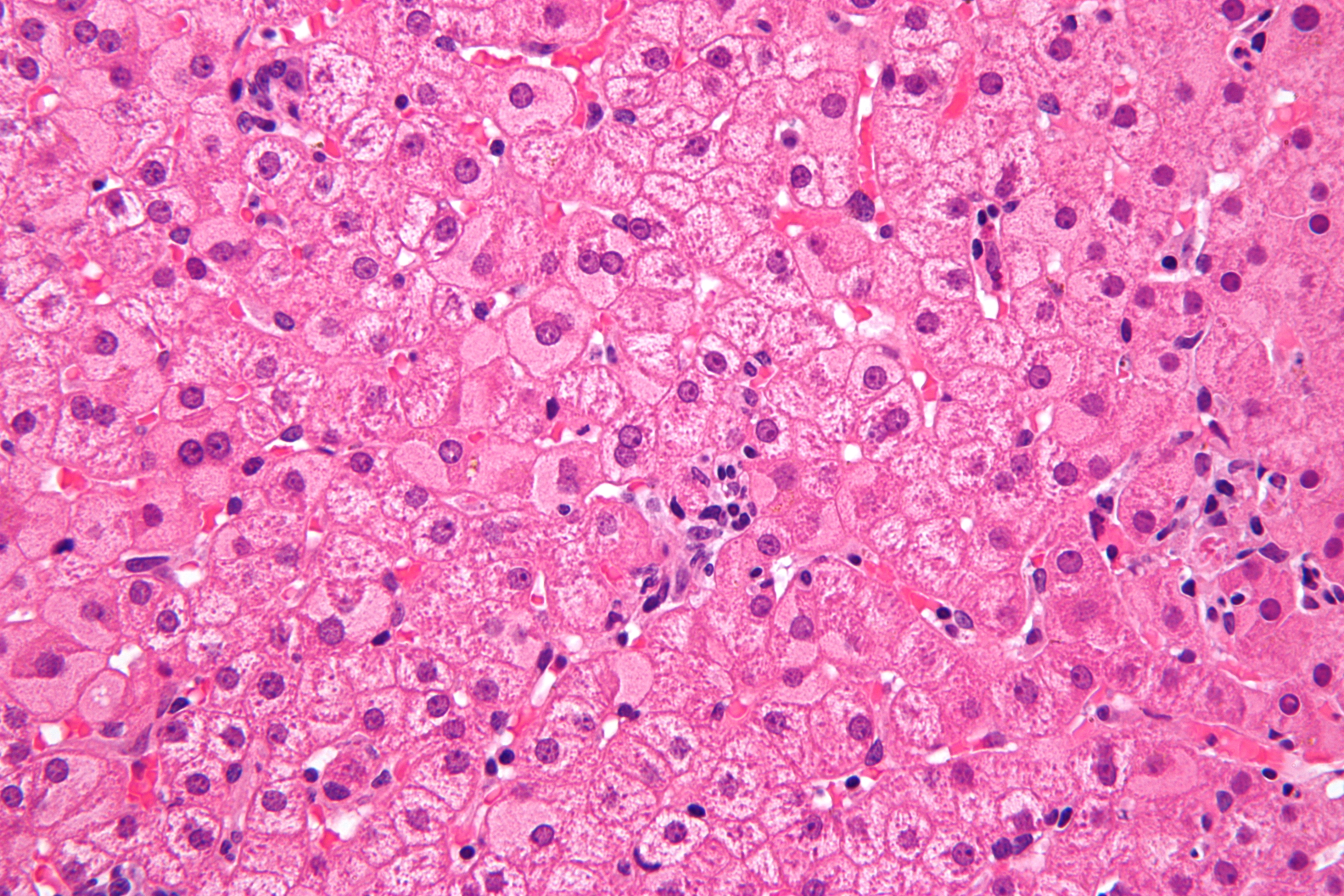
- Healthcare worker after a needlestick, prodrome with serum sickness–like fever/rash/arthralgias → acute Hepatitis B; chronic HBV biopsy shows ground-glass hepatocytes → tenofovir or entecavir (± peg-IFN-α).
- IV drug user with palpable purpura, arthralgias, low C4, and renal disease (mixed cryoglobulinemia) or blistering photosensitivity (porphyria cutanea tarda) → Hepatitis C → direct-acting antivirals (sofosbuvir-based) — curative in > 95%.
- Known chronic HBV patient with sudden clinical decompensation / fulminant flare → HDV superinfection → peg-IFN-α; would have been prevented by HBV vaccination.
- Pregnant woman (third trimester) in a developing region after flooding / contaminated water, now with fulminant hepatic failure → Hepatitis E → supportive (high maternal mortality).
- Chronic HBV with necrotizing vasculitis — abdominal angina, mononeuritis multiplex, hypertension, spared lungs → HBV-associated polyarteritis nodosa.
- "The vowels hit your bowels." Hepatitis A and E (the vowels) are transmitted fecal–oral (enteric) and cause acute, self-limited disease — no chronic state.
- "D is Dependent and Defective." HDV cannot make its own envelope — it borrows HBsAg from HBV, so it only infects HBV-positive patients.
- "E — Expectant mothers." HEV is the one that kills pregnant women (fulminant hepatitis, high 3rd-trimester mortality).
- B, C, D go chronic; only B and C cause cancer — the blood-borne ones stick around; the two that persist longest and integrate/scar drive HCC.
Special Situations & Extrahepatic Disease
HDV timing matters. Coinfection (HBV and HDV acquired simultaneously) usually behaves like a self-limited acute HBV. Superinfection (HDV landing on established chronic HBV) is the dangerous one — markedly higher risk of fulminant hepatitis and accelerated cirrhosis.
HEV isn't just a developing-world enteric bug. Zoonotic genotypes 3 and 4 (undercooked pork, wild boar, deer) can cause chronic hepatitis in solid-organ transplant and other immunocompromised patients — managed by reducing immunosuppression, with ribavirin if needed.
Extrahepatic manifestations are high-yield:
- HBV → polyarteritis nodosa and membranous nephropathy (classically in children).
- HCV → mixed (type II) cryoglobulinemia, membranoproliferative glomerulonephritis, porphyria cutanea tarda, and lichen planus.
Cancer surveillance: patients with chronic HBV or HCV cirrhosis get HCC screening with periodic ultrasound ± AFP. Curing HCV with DAAs lowers — but does not eliminate — HCC risk once cirrhosis is established.
Practice Microbiology now
Board-style questions, spaced-repetition flashcards, and a Socratic AI tutor — free to start.