Gram-Positive Cocci: Staph & Strep
A high-yield STEP 1 microbiology lesson on Gram-positive cocci that walks the boards' lab algorithm (morphology → catalase → coagulase/hemolysis → confirmatory tests) and maps each Staphylococcus and Streptococcus species to its virulence factors, classic vignette buzzwords, diseases, and treatment. Includes a full comparison table, vignette drills, a toxin deep-dive, post-strep sequelae, and only genuine, standard mnemonics (no fabricated acronyms).
The Big Picture: Running the Gram-Positive Coccus Algorithm
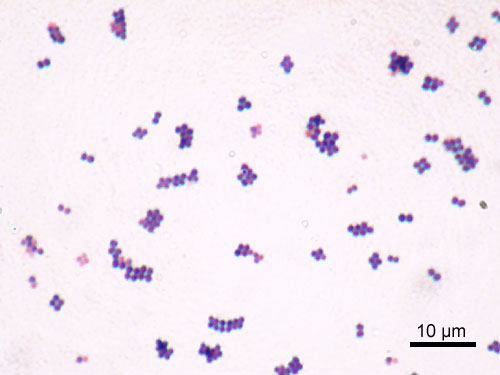
Every organism in this lesson is a Gram-positive coccus — a purple sphere on Gram stain. The boards rarely just hand you the name; they hand you lab clues and expect you to run the branching algorithm:
- Morphology on Gram stain. Grape-like clusters → Staphylococcus. Chains or pairs (diplococci) → Streptococcus / Enterococcus.
- Catalase test (add H₂O₂). Bubbles = catalase positive = *Staphylococcus. No bubbles = catalase negative = Streptococcus/Enterococcus*.
- For Staph, do the coagulase test. Coagulase positive = *S. aureus (converts fibrinogen → fibrin, forming a clot). Coagulase negative = S. epidermidis vs S. saprophyticus*, split by novobiocin.
- For Strep, read the hemolysis on blood agar. β-hemolysis (complete, clear zone), α-hemolysis (partial, green), or γ (none) — then confirm with optochin, bacitracin, bile-esculin, CAMP, and PYR tests.
Learn the algorithm and most "unknown organism" vignettes solve themselves before you even reach the disease.
- All staph are catalase positive — this is the single feature that separates them from strep.
- S. aureus: catalase +, coagulase +, β-hemolytic, golden/yellow colonies, ferments mannitol (yellow on mannitol salt agar).
- Protein A is S. aureus's key virulence factor: binds the Fc region of IgG, blocking opsonization and complement fixation.
- S. aureus diseases: skin/soft-tissue infections & abscesses, acute bacterial endocarditis (tricuspid valve in IV drug users), osteomyelitis (most common cause overall), septic arthritis, post-influenza pneumonia (patchy/bronchopneumonia pattern, can cavitate), toxic shock syndrome (TSST-1), scalded skin syndrome, and rapid-onset food poisoning (preformed enterotoxin).
- MRSA resistance = mecA gene → altered penicillin-binding protein PBP2a → resistant to all β-lactams except the anti-MRSA cephalosporin ceftaroline.
- Coagulase-negative staph split by novobiocin: S. epidermidis is novobiocin *sensitive* → biofilms on prosthetic devices, catheters, and prosthetic valves (common blood-culture contaminant). S. saprophyticus is novobiocin *resistant* → UTI in young, sexually active women (2nd most common cause after E. coli).
- Treatment: MSSA → nafcillin / oxacillin / dicloxacillin or cefazolin. MRSA → vancomycin (alternatives: linezolid, daptomycin, ceftaroline); community-MRSA SSTI → TMP-SMX, doxycycline, or clindamycin.
- All strep are catalase negative. Subgroup them by hemolysis, then confirm with a specific test.
- α-hemolytic (green):
- *S. pneumoniae* — optochin sensitive, bile *soluble*, lancet-shaped diplococci, encapsulated (positive Quellung reaction), IgA protease. #1 cause of the MOPS diseases. Rusty sputum, lobar pneumonia.
- Viridans group (S. mutans, S. sanguinis, S. mitis) — optochin resistant, bile *insoluble*, no capsule. S. mutans → dental caries; S. sanguinis → subacute endocarditis on previously damaged valves (dextran-mediated adherence after dental work).
- β-hemolytic (clear):
- Group A — *S. pyogenes* — bacitracin sensitive, PYR +. M protein, streptolysin O (→ ASO titers), pyrogenic exotoxins.
- Group B — *S. agalactiae* — bacitracin resistant, CAMP test +, hippurate +. Colonizes the vagina → neonatal meningitis, pneumonia, sepsis; screen mothers at 35–37 weeks and give intrapartum penicillin/ampicillin.
- Group D:
- Enterococcus (E. faecalis / faecium) — bile-esculin + and grows in 6.5% NaCl; PYR +. UTI, biliary infection, subacute endocarditis after GI/GU procedures. VRE → linezolid or daptomycin.
- S. gallolyticus (bovis) — bile-esculin + but does NOT grow in 6.5% NaCl. Bacteremia/endocarditis → work up for colon cancer (colonoscopy).

Comparison Table: Organism → Key Feature → Disease → Treatment
| Organism | Key lab feature | Classic disease | Treatment |
|---|---|---|---|
| S. aureus | Catalase +, coagulase +, β-hemolytic, mannitol +; protein A | SSTI/abscess, acute endocarditis (IVDU, tricuspid), osteomyelitis, TSS, scalded skin, food poisoning | MSSA: nafcillin/cefazolin; MRSA: vancomycin |
| S. epidermidis | Catalase +, coagulase −, novobiocin sensitive; biofilm | Prosthetic device/catheter & prosthetic-valve infection | Vancomycin + remove device |
| S. saprophyticus | Catalase +, coagulase −, novobiocin resistant | UTI in young sexually active women (2nd most common) | Nitrofurantoin or TMP-SMX |
| S. pneumoniae | α-hemolytic, optochin sensitive, bile soluble, encapsulated lancet diplococci | Lobar pneumonia (rusty sputum), adult meningitis, otitis media, MOPS | Amoxicillin/penicillin; meningitis: ceftriaxone + vancomycin |
| Viridans strep | α-hemolytic, optochin resistant, bile insoluble | Dental caries (mutans); subacute endocarditis on damaged valve (sanguinis) | Penicillin (± gentamicin) |
| S. pyogenes (GAS) | β-hemolytic, bacitracin sensitive, PYR + | Pharyngitis, impetigo, erysipelas, necrotizing fasciitis, scarlet fever, TSS; sequelae RF & PSGN | Penicillin |
| S. agalactiae (GBS) | β-hemolytic, bacitracin resistant, CAMP +, hippurate + | Neonatal sepsis, meningitis, pneumonia | Ampicillin/penicillin; intrapartum prophylaxis |
| Enterococcus | Catalase −, bile-esculin +, grows in 6.5% NaCl, PYR + | UTI, biliary infection, subacute endocarditis (post-GI/GU) | Ampicillin; VRE: linezolid/daptomycin |
| S. gallolyticus (bovis) | Bile-esculin +, no growth in 6.5% NaCl | Bacteremia/endocarditis → colon cancer | Penicillin + colonoscopy workup |
- "Menstruating woman with a tampon (or post-op nasal packing): fever, diffuse macular rash, hypotension, then desquamation of palms/soles." → S. aureus toxic shock syndrome (TSST-1 superantigen). → Remove source, fluids/pressors, clindamycin + vancomycin.
- "IV drug user, fever, new tricuspid regurgitation murmur, septic pulmonary emboli." → S. aureus acute endocarditis. → Nafcillin (MSSA) or vancomycin (MRSA).
- "2–6 hours after a picnic (potato salad/mayonnaise, custard): sudden vomiting, no fever, resolves in a day." → S. aureus food poisoning (heat-stable preformed enterotoxin). → Supportive only.
- "Rusty-colored sputum, lobar consolidation, Gram-positive lancet-shaped diplococci." → S. pneumoniae pneumonia. → Amoxicillin/ceftriaxone.
- "Man 2 weeks after a dental cleaning: low-grade fever, splinter hemorrhages, vegetation on a previously damaged mitral valve." → Viridans (S. sanguinis) subacute endocarditis. → Penicillin + gentamicin.
- "Rapidly spreading, exquisitely painful skin infection with pain out of proportion to exam, dusky skin/hemorrhagic bullae, tissue necrosis, and systemic toxicity." → S. pyogenes (Group A strep) necrotizing fasciitis ("flesh-eating"). → Emergent surgical debridement + penicillin + clindamycin (clindamycin suppresses toxin production).
- "Sandpaper rash, strawberry tongue, circumoral pallor after a sore throat." → Scarlet fever (S. pyogenes, erythrogenic/pyrogenic exotoxin). → Penicillin.
- "5-day-old neonate: fever, lethargy, bulging fontanelle; mother had no prenatal screening." → Group B strep (S. agalactiae) meningitis. → Ampicillin.
- "Elderly man with Streptococcus gallolyticus/bovis bacteremia or endocarditis." → Colonoscopy — screen for colon cancer.
- Superantigens (TSST-1 of S. aureus and SPE-A of S. pyogenes): bridge MHC II to the T-cell receptor outside the antigen groove → nonspecific, polyclonal T-cell activation → massive IL-1, IL-2, IFN-γ, TNF-α release → toxic shock.
- Protein A (S. aureus): binds Fc of IgG → antiphagocytic (blocks opsonization/complement).
- Exfoliative toxins (S. aureus): proteases that cleave desmoglein-1 → scalded skin syndrome / bullous impetigo (positive Nikolsky sign).
- Staph enterotoxin: heat-stable, preformed → rapid-onset food poisoning (also a superantigen).
- M protein (S. pyogenes): antiphagocytic; shares epitopes with myocardium → molecular mimicry → rheumatic fever.
- Streptolysin O: oxygen-labile, antigenic hemolysin → anti-streptolysin O (ASO) titers rise (evidence of recent GAS infection). Streptolysin S is oxygen-stable and non-antigenic.
- Streptokinase: activates plasminogen → plasmin → dissolves clots. Also hyaluronidase, DNase B, C5a peptidase.
- S. pneumoniae: the polysaccharide capsule is the main virulence factor (antiphagocytic) — hence severe disease in asplenic / sickle-cell patients; plus IgA protease and pneumolysin.

Non-Suppurative Sequelae of Group A Strep: RF vs PSGN
Two immune-mediated complications follow S. pyogenes — distinguish them because the boards test the differences hard.
Acute rheumatic fever (ARF) follows pharyngitis only and is a type II hypersensitivity (antibody/molecular mimicry against M protein cross-reacting with heart tissue). Diagnose with the JONES criteria. Late complication: mitral stenosis. Prevented by promptly treating strep throat with penicillin.
Post-streptococcal glomerulonephritis (PSGN) follows either pharyngitis OR skin infection (impetigo) and is a type III (immune-complex) disease. Classic vignette: a child ~2 weeks after infection with cola-colored (hematuric) urine, periorbital edema, hypertension, and low serum C3. On EM: subepithelial "humps"; on IF: granular ("lumpy-bumpy") IgG/C3 deposits. Usually self-limited in children — and, unlike ARF, antibiotic treatment does NOT prevent it.
- Optochin — "O-p-tochin": the p reminds you Pneumococcus is optochin-sensitive (and bile-soluble); viridans strep are optochin-resistant (and bile-insoluble). This one split separates the two α-hemolytic groups.
- MOPS — the top S. pneumoniae diseases: Meningitis, Otitis media (children), Pneumonia, Sinusitis.
- JONES (♥) — major criteria for rheumatic fever: Joints (migratory polyarthritis), the O is a heart = carditis, subcutaneous Nodules, Erythema marginatum, Sydenham chorea.
- Sensitivity directions worth memorizing straight (no gimmick needed): Group A strep = bacitracin sensitive, PYR +; Group B = bacitracin resistant, CAMP + / hippurate +. S. epidermidis = novobiocin sensitive; S. saprophyticus = novobiocin resistant.
- Bile-esculin positive and growth in 6.5% NaCl = *Enterococcus; S. gallolyticus (bovis*) is bile-esculin positive but fails the salt test — the one-line way to separate the two group-D bugs.
Practice Microbiology now
Board-style questions, spaced-repetition flashcards, and a Socratic AI tutor — free to start.