Gram-Negative Rods & Enterics
A board-focused tour of the Gram-negative rods and Enterobacteriaceae: how to sort them by lactose fermentation, oxidase, urease, and H₂S, then the key toxins, buzzword vignettes, and treatments for each classic enteric plus Pseudomonas and the curved rods. Built for STEP 1 pattern recognition.
How the boards sort a Gram-negative rod
Gram-negative rods stain pink — a thin peptidoglycan layer and an LPS-rich outer membrane whose lipid A (endotoxin) drives fever, hypotension, and DIC. The exam wants you to sort the bug with a few reactions before you name it:
- Grow it on MacConkey agar (selects for GNRs, screens lactose): lactose fermenters turn the colonies pink; non-fermenters stay colorless.
- Oxidase test: the Enterobacteriaceae (the enterics) are oxidase-negative; Pseudomonas, Vibrio, Campylobacter, and Helicobacter are oxidase-positive.
- Then branch on H₂S (Salmonella, Proteus), urease (Proteus, H. pylori, Klebsiella), motility, and special media.
The Enterobacteriaceae — E. coli, Klebsiella, Salmonella, Shigella, Proteus, Enterobacter, Serratia, Yersinia — are facultative anaerobes that ferment glucose and reduce nitrate. They cause most Gram-negative UTIs, GI infections, and nosocomial sepsis.

- Lactose fermenters (pink on MacConkey): Klebsiella, E. coli, Enterobacter ferment fast → "Lactose is KEE." Citrobacter and Serratia ferment slowly.
- Non-fermenters (colorless): Salmonella, Shigella, Proteus — and Pseudomonas (which is oxidase-positive).
- Oxidase-positive GNRs: Pseudomonas, Vibrio, Campylobacter, Helicobacter.
- Urease-positive: Proteus (struvite stones), H. pylori, Klebsiella.
- H₂S producers: Salmonella (black colonies on Hektoen/SS agar) and Proteus.
- Endotoxin = lipid A of LPS → fever, hypotension, DIC — no exotoxin required.
- EMB agar: E. coli forms a green metallic sheen.
- EHEC O157:H7 does not ferment sorbitol (colorless on sorbitol-MacConkey).
The enterics (Enterobacteriaceae) at a glance
| Organism | Key feature / lab clue | Disease | Treatment |
|---|---|---|---|
| E. coli | Lactose+ (pink), EMB green sheen; toxin-defined strains | Traveler's & bloody diarrhea, UTI, neonatal meningitis, Gram-neg sepsis | Syndrome-dependent; no antibiotics for EHEC |
| Klebsiella | Big mucoid capsule; currant-jelly sputum | Aspiration pneumonia (alcoholics/diabetics), lung/liver abscess, UTI | 3rd-gen cephalosporin or carbapenem (watch ESBL/CRE) |
| Salmonella (non-typhi) | Non-lactose, motile, H₂S+, large inoculum | Poultry/egg/reptile gastroenteritis; sickle-cell osteomyelitis | Supportive; ceftriaxone/FQ if severe or invasive |
| Salmonella Typhi | Vi capsule; humans-only reservoir | Typhoid: rose spots, stepwise fever, gallbladder carrier | Ceftriaxone or azithromycin (FQ resistance now common) |
| Shigella | Non-lactose, non-motile, H₂S–, very low inoculum | Dysentery (bloody, mucoid); HUS via Shiga toxin | Fluoroquinolone / ceftriaxone (shortens course) |
| Proteus | Swarming motility, urease+, fishy odor | UTI with struvite (staghorn) stones, alkaline urine | TMP-SMX or fluoroquinolone |
| Yersinia enterocolitica | Grows in the cold; pork / pet feces | Pseudoappendicitis (mesenteric adenitis); bloody diarrhea in kids | Supportive; FQ/TMP-SMX if severe |
| Serratia marcescens | Red pigment, slow lactose | Nosocomial UTI/pneumonia, catheter lines, IVDU endocarditis | Carbapenem (often multidrug-resistant) |
E. coli — one species, many toxins
E. coli is the most-tested enteric because each pathotype pairs a toxin with a syndrome:
- ETEC (enterotoxigenic): heat-labile LT ↑cAMP (like cholera) and heat-stable ST ↑cGMP → watery traveler's diarrhea, no invasion.
- EHEC / STEC (O157:H7): Shiga-like toxin inactivates the 60S ribosome → bloody diarrhea that can progress to HUS (microangiopathic hemolytic anemia, thrombocytopenia, AKI). Does not ferment sorbitol. Avoid antibiotics and anti-motility agents — they raise HUS risk.
- EIEC (enteroinvasive): invades colonic mucosa → dysentery, clinically Shigella-like.
- EPEC (enteropathogenic): attaches and effaces microvilli → watery diarrhea in infants.
- UPEC (uropathogenic): P-fimbriae → the #1 cause of UTI / pyelonephritis.
- Neonatal meningitis: K1-capsule strains — the leading Gram-negative cause in newborns.
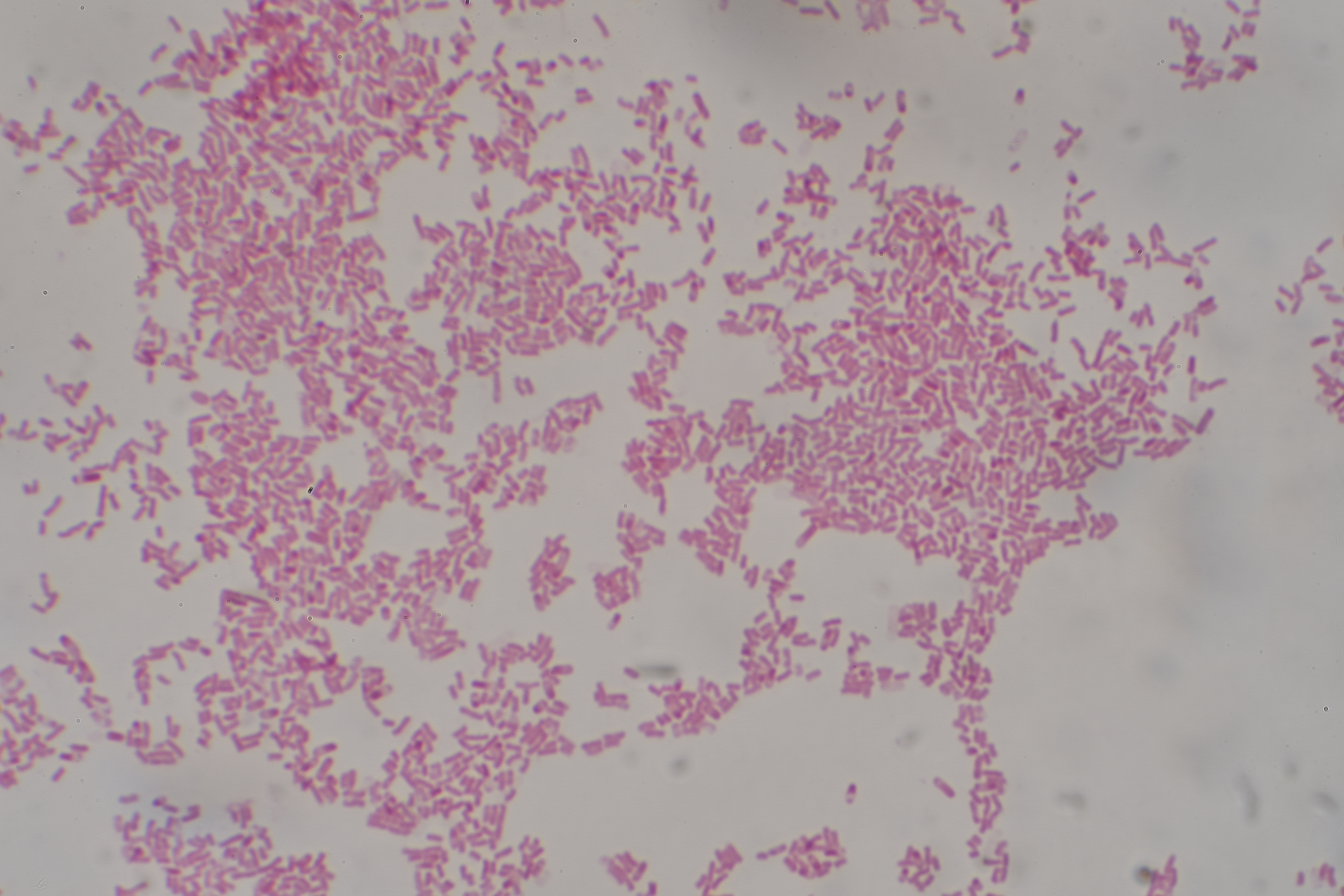
Salmonella vs Shigella — the classic contrast
| Feature | Salmonella (non-typhi) | Shigella |
|---|---|---|
| Lactose | Non-fermenter | Non-fermenter |
| Motility | Motile (flagella) | Non-motile |
| H₂S | Positive | Negative |
| Inoculum needed | High (acid-labile; antacids ↑ risk) | Very low (~10–100 organisms; acid-stable) |
| Spread beyond gut | Yes — can become bacteremic / disseminate | Rarely; stays in gut mucosa |
| Toxin | — | Shiga toxin (S. dysenteriae; can cause HUS) |
| Antibiotics | May prolong the carrier state — treat only if severe/invasive | Treat to shorten course & limit spread |
| Reservoir clue | Poultry, eggs, reptiles/turtles | Human-only; day-care, fecal–oral |
Pseudomonas aeruginosa — aerobic, oxidase-positive, non-lactose GNR with blue-green pyocyanin pigment and a grape-like / corn-tortilla odor.
- Exotoxin A: ADP-ribosylates EF-2 → halts protein synthesis (same mechanism as diphtheria toxin).
- Classic hosts & lesions:
- Cystic fibrosis and ventilator pneumonia (mucoid biofilm)
- Burn-wound sepsis
- Ecthyma gangrenosum — black necrotic skin lesions in neutropenic/septic patients
- Hot-tub folliculitis; contact-lens keratitis; malignant otitis externa in diabetics
- Osteomyelitis from a puncture wound through a rubber sole; IV drug use
- Treatment: an antipseudomonal β-lactam (piperacillin-tazobactam, cefepime, ceftazidime, meropenem, aztreonam) ± an aminoglycoside or antipseudomonal fluoroquinolone (ciprofloxacin).

Curved rods & other high-yield GNRs
| Organism | Key feature / lab clue | Disease | Treatment |
|---|---|---|---|
| Vibrio cholerae | Comma-shaped, oxidase+, grows in alkaline/salty media | Rice-water stool cholera (toxin ↑cAMP via Gs) | Oral rehydration (mainstay) + doxycycline |
| Vibrio vulnificus | Raw oysters, saltwater wounds | Sepsis / necrotizing cellulitis in liver disease / hemochromatosis | Doxycycline + ceftriaxone |
| Campylobacter jejuni | Comma / "seagull" shape, oxidase+, grows 42 °C, microaerophilic | Most common bacterial bloody diarrhea; antecedent to Guillain-Barré & reactive arthritis | Supportive; azithromycin if severe |
| Helicobacter pylori | Curved, urease+, motile; urea breath test | Chronic gastritis, PUD, gastric adenocarcinoma / MALT lymphoma | Triple therapy: PPI + clarithromycin + amoxicillin (bismuth quadruple where clarithromycin resistance is high) |
| Haemophilus influenzae | Coccobacillus; needs factor V (NAD) + X (hematin), chocolate agar | Type b: meningitis, epiglottitis (unvaccinated); nontypeable: otitis media | Ceftriaxone (meningitis); rifampin prophylaxis |
| Legionella pneumophila | Silver stain; charcoal yeast extract + cysteine/iron; urine antigen | Atypical pneumonia with hyponatremia, GI & CNS sx; water-aerosol source | Macrolide or fluoroquinolone |
1. A returning traveler has profuse watery diarrhea, no blood or fever. → ETEC (E. coli; heat-labile + heat-stable toxins). Tx: oral rehydration; azithromycin/rifaximin if needed.
2. A 4-year-old develops bloody diarrhea after undercooked burger / a petting zoo, then oliguria, pallor, and bruising. → EHEC O157:H7 → HUS. Tx: supportive; do NOT give antibiotics.
3. An alcoholic man coughs up thick, dark "currant-jelly" sputum. → *Klebsiella pneumoniae*. Tx: 3rd-gen cephalosporin or carbapenem.
4. A febrile traveler from South Asia has relative bradycardia and rose spots on the trunk. → Salmonella Typhi (typhoid). Tx: ceftriaxone or azithromycin (fluoroquinolone resistance is common in South Asian strains).
5. A cystic fibrosis teen with recurrent pneumonia grows a blue-green, sweet grape-smelling organism. → *Pseudomonas aeruginosa*. Tx: antipseudomonal β-lactam ± aminoglycoside.
6. A patient with recurrent UTIs has alkaline urine and a staghorn calculus. → *Proteus mirabilis* (urease). Tx: stone removal + TMP-SMX / fluoroquinolone.
7. A child has RLQ pain mimicking appendicitis after exposure to puppies / undercooked pork; surgery shows enlarged mesenteric nodes and a normal appendix. → *Yersinia enterocolitica* (pseudoappendicitis).
- "Lactose is KEE" — the fast lactose fermenters: *Klebsiella, E. coli, Enterobacter.*
- Klebsiella's 4 A's: Aspiration pneumonia, Alcoholics/diAbetics, Abscesses — plus currant-jelly sputum.
- cAMP toxins: Cholera locks Gs "on"; Pertussis locks Gi "off" — both ↑cAMP (ETEC's LT copies cholera).
- "A" = EF-2 inhibitors: Pseudomonas exotoxin A and diphtheria toxin both ADP-ribosylate EF-2 to halt protein synthesis.
- Salmonella is motile ("Salmon swim") and makes H₂S; Shigella is non-motile and H₂S–.
- Campylobacter = the "C"urve that triggers Guillain-Barré.
Practice Microbiology now
Board-style questions, spaced-repetition flashcards, and a Socratic AI tutor — free to start.