Cystic Fibrosis & Bronchiectasis
A boards-focused walkthrough of cystic fibrosis and bronchiectasis: CFTR pathophysiology, the classic salty-infant and foul-sputum vignettes, sweat-chloride and HRCT diagnosis, and next-best-step management including CFTR modulators.
CFTR pathophysiology
Cystic fibrosis (CF) is an autosomal recessive disorder caused by mutations in the CFTR gene on chromosome 7, which encodes an ATP-gated chloride channel. The most common mutation, ΔF508 (deletion of Phe508, a Class II folding defect), leaves misfolded CFTR to be degraded in the ER, so the channel never reaches the cell surface.
In airway and GI epithelium, failed Cl⁻ (and secondary water) secretion — plus increased Na⁺/water reabsorption — produces thick, dehydrated secretions that plug lumina and cripple mucociliary clearance. In sweat ducts, CFTR normally reabsorbs luminal Cl⁻; the defect leaves Cl⁻ (and Na⁺) trapped in sweat, giving the hallmark salty sweat and a positive sweat chloride test. Chronic mucus stasis fuels recurrent infection — the same infection–inflammation cycle that ultimately produces bronchiectasis.
- Lungs: recurrent infections with a classic pathogen timeline — S. aureus & H. influenzae early → _Pseudomonas aeruginosa_ (mucoid) in older patients → Burkholderia cepacia (poor prognosis). Bronchiectasis, clubbing, hemoptysis.
- Pancreas: exocrine insufficiency → steatorrhea, failure to thrive, fat-soluble vitamin (A, D, E, K) deficiency; CF-related diabetes later.
- GI: meconium ileus in neonates (classic); distal intestinal obstruction syndrome; focal biliary cirrhosis; rectal prolapse.
- Sinus/airway: chronic sinusitis; nasal polyps in a child = think CF.
- Reproductive: males infertile from congenital bilateral absence of the vas deferens (CBAVD) — obstructive azoospermia with intact spermatogenesis.
- Metabolic: salt loss → hypochloremic, hypokalemic metabolic alkalosis (pseudo-Bartter), especially in heat/dehydration.
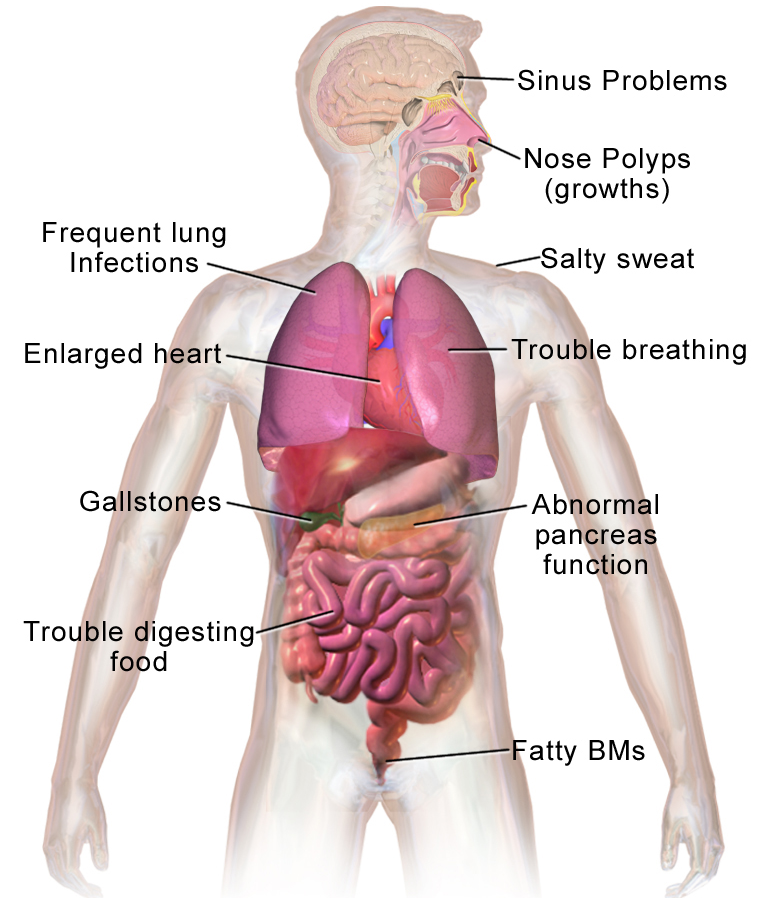
Vignette: A 6-month-old has failure to thrive, bulky greasy foul-smelling stools, and a second episode of pneumonia. The mother notes the baby “tastes salty” when kissed. (Alternate presentation: neonate with bilious vomiting and failure to pass meconium.)
- Diagnosis: cystic fibrosis.
- Best confirmatory test: sweat chloride test (pilocarpine iontophoresis). Cl⁻ ≥ 60 mmol/L is diagnostic (repeat to confirm); 30–59 is intermediate → CFTR genetic testing; < 30 is normal.
- Newborn screen: elevated immunoreactive trypsinogen (IRT) flags CF before symptoms.
- Next step after diagnosis: start airway clearance, pancreatic enzyme replacement + ADEK vitamins, and CFTR genotyping to guide modulator therapy.
- ADEK = the fat-soluble vitamins malabsorbed in pancreatic insufficiency:
- A → night blindness / xerophthalmia
- D → rickets, osteopenia, hypocalcemia
- E → neuropathy, hemolytic anemia
- K → easy bleeding, ↑PT/INR
- “Kiss the baby, taste the salt” — the time-honored bedside clue pointing to a positive sweat chloride test.
- ΔF508 = a “F”olding defect (Class II) and by far the most common CF mutation — an easy anchor for exam recall.
Bronchiectasis — pathophysiology & causes
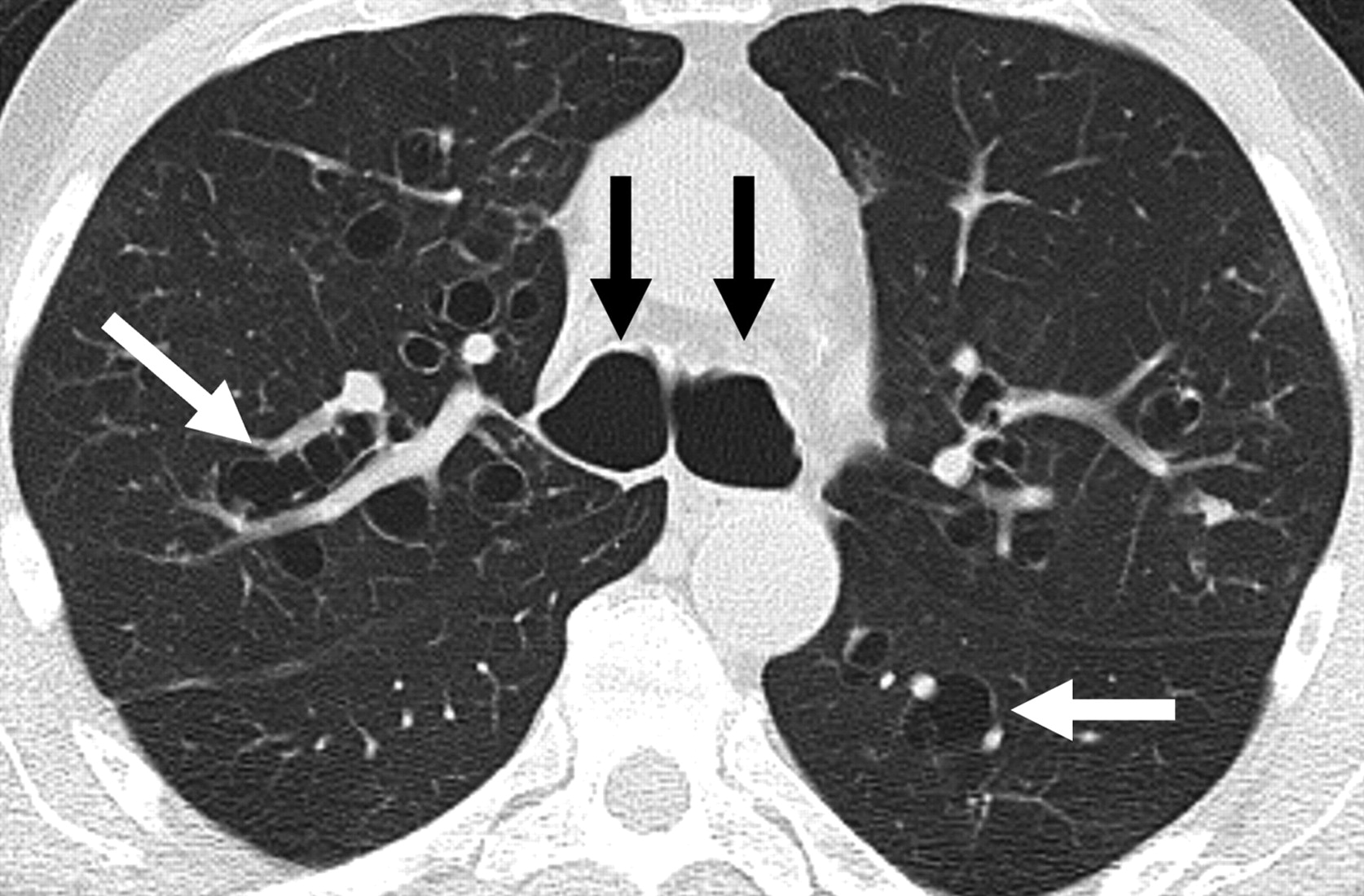
Bronchiectasis is permanent, irreversible dilation of bronchi from destruction of the airway's elastic and muscular walls. A self-perpetuating vicious cycle — infection → neutrophilic inflammation (elastase, proteases) → structural airway damage → impaired clearance → more infection — drives progression.
Board-favorite causes:
- Cystic fibrosis — leading cause in children/young adults (developed countries); classically upper-lobe predominant.
- Primary ciliary dyskinesia / Kartagener — dynein-arm defect → situs inversus + chronic sinusitis + bronchiectasis (+ infertility).
- ABPA — hypersensitivity to Aspergillus in asthma/CF: central bronchiectasis, markedly ↑ IgE, eosinophilia, fleeting infiltrates.
- Post-infectious — TB, pertussis, measles, necrotizing pneumonia.
- Focal obstruction (tumor, foreign body) or immunodeficiency (hypogammaglobulinemia).
Vignette: A 40-year-old with lifelong recurrent respiratory infections reports daily large-volume, foul-smelling purulent sputum, intermittent hemoptysis, and digital clubbing. CXR shows “tram-track” opacities.
- Diagnosis: bronchiectasis.
- Best/confirmatory test: high-resolution CT (HRCT) — the gold standard. Look for the “signet-ring sign” (dilated bronchus larger than its adjacent pulmonary artery), bronchial wall thickening, and loss of normal distal tapering.
- PFTs: obstructive pattern — ↓FEV₁, ↓FEV₁/FVC, air trapping (↑RV).
- Pattern clues: dextrocardia/situs inversus on that CXR → Kartagener; asthmatic with ↑IgE + eosinophilia → ABPA (treat with oral corticosteroids ± itraconazole).
CF vs. non-CF bronchiectasis
| Feature | Cystic fibrosis | Non-CF bronchiectasis |
|---|---|---|
| Inheritance | AR; CFTR (chr 7), ΔF508 | Usually acquired (post-infectious, obstruction, PCD) |
| Lobe predominance | Upper lobes | Varies — ABPA central, TB upper, aspiration lower |
| Key organisms | S. aureus → Pseudomonas, B. cepacia | Pseudomonas, H. influenzae |
| Diagnosis | Sweat Cl⁻ ≥60, CFTR genotype, ↑IRT | HRCT (signet-ring sign) |
| Extrapulmonary | Pancreatic insuff., CBAVD, meconium ileus | Depends on cause (situs inversus in PCD) |
| Signature Rx | CFTR modulators, dornase alfa, hypertonic saline | Airway clearance, treat cause, targeted antibiotics |
- Airway clearance: daily chest physiotherapy / oscillatory (“vest”) therapy.
- Mucolytics: dornase alfa (recombinant DNase) cleaves neutrophil-derived DNA to thin mucus; inhaled hypertonic saline rehydrates secretions.
- Antibiotics: treat exacerbations; chronic inhaled tobramycin for Pseudomonas; azithromycin (anti-inflammatory + antimicrobial).
- Pancreatic care: enzyme replacement with meals + ADEK supplementation.
- CFTR modulators (disease-modifying):
- Ivacaftor — a potentiator that opens gating (Class III, e.g., G551D) channels.
- Correctors (lumacaftor, tezacaftor, elexacaftor) rescue ΔF508 folding/trafficking; triple therapy elexacaftor/tezacaftor/ivacaftor is now standard for patients with ≥ one F508del allele.
- Non-CF bronchiectasis: treat the underlying cause, vaccinate, and consider surgery/bronchial artery embolization for focal disease or massive hemoptysis.
Practice Pulmonary now
Board-style questions, spaced-repetition flashcards, and a Socratic AI tutor — free to start.