CNS Infections: Meningitis & Encephalitis
A boards-focused walkthrough of CNS infection: distinguishing meningitis from encephalitis, reading the CSF, and driving the emergency next-best-step decisions — when to CT before LP, age-based empiric antibiotics plus dexamethasone, and empiric acyclovir for HSV encephalitis — anchored to classic vignette buzzwords (Waterhouse–Friderichsen, temporal-lobe HSV, Listeria, Cryptococcus).
Meninges vs Parenchyma
CNS infection is classified by the tissue inflamed. Meningitis = inflammation of the leptomeninges and CSF → the meningeal triad of fever, nuchal rigidity, and headache with photophobia; higher cortical function is largely preserved. Encephalitis = inflammation of the brain parenchyma → altered mental status, focal deficits, seizures, and personality change. Overlap is meningoencephalitis.
Pathogens reach the CNS by:
- Hematogenous spread — the usual route: nasopharyngeal colonization → bacteremia → seeding of the choroid plexus.
- Direct extension — otitis media, sinusitis, mastoiditis.
- Retrograde axonal transport — HSV, rabies.
Board framing:
- Bacterial meningitis — an emergency; acute, toxic, neutrophil-predominant CSF.
- Viral ('aseptic') meningitis — usually benign/self-limited; enteroviruses are #1.
- Encephalitis — in the US most often HSV-1, which is treatable, so empiric acyclovir covers anyone with encephalitis until HSV is excluded.
The full triad (fever + stiff neck + AMS) appears in a minority (~44%), but ~95% have at least two of headache, fever, neck stiffness, or AMS.
- Antibiotics can't wait — give within ~1 hour of suspicion; never delay abx for CT or LP
- Add dexamethasone just before/with the first antibiotic dose (↓ mortality in pneumococcal adults, ↓ hearing loss in H. influenzae children)
- Empiric backbone (1 mo–50 y): vancomycin + ceftriaxone; add ampicillin (for Listeria) if >50 y, pregnant, or immunocompromised
- Neonates (<1 mo): ampicillin + cefotaxime — avoid ceftriaxone (kernicterus)
- CT head before LP only if: immunocompromised, known CNS disease, new-onset seizure, papilledema, focal deficit, or ↓consciousness — otherwise LP first
- S. pneumoniae = most common bacterial cause in adults; N. meningitidis → petechial/purpuric rash, dorms/military recruits
- Terminal complement (C5–C9 / MAC) deficiency → recurrent Neisseria
- HSV-1 encephalitis → temporal lobe; start IV acyclovir empirically, confirm with CSF HSV PCR
- Cryptococcus (HIV, CD4 <100) → CrAg (most sensitive) / India ink, high opening pressure needing serial LPs
CSF Profiles by Cause
| CSF parameter | Bacterial | Viral (aseptic) | Fungal / TB |
|---|---|---|---|
| Opening pressure | ↑↑ | Normal / mild ↑ | ↑↑ |
| Predominant cell | Neutrophils (PMNs), 100s–1000s | Lymphocytes | Lymphocytes |
| Protein | ↑↑ | Normal / mild ↑ | ↑↑ |
| Glucose | ↓↓ (CSF:serum <0.4) | Normal | ↓ |
| Classic clue | Gram stain +, turbid fluid | Enteroviruses; clear | India ink / AFB; TB "cobweb" clot |

- 19-y-old dorm resident: fever, headache, stiff neck, petechiae → purpura, hypotension. → Meningococcemia ± Waterhouse–Friderichsen (adrenal hemorrhage). Next step: blood cultures + dexamethasone + vancomycin/ceftriaxone now, LP after; droplet precautions; close contacts get rifampin / ciprofloxacin / ceftriaxone prophylaxis.
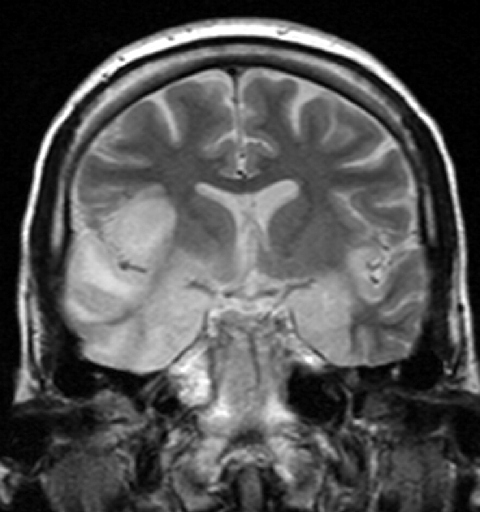
- 68-y-old: fever, confusion, aphasia, focal seizure; MRI temporal-lobe edema, CSF lymphocytes with RBCs. → HSV-1 encephalitis → IV acyclovir immediately; confirm with CSF HSV PCR (don't wait for it).
- Neonate: poor feeding, lethargy, bulging fontanelle; mother ate unpasteurized cheese. → GBS / E. coli / Listeria → ampicillin + cefotaxime (avoid ceftriaxone → kernicterus).
- AIDS, CD4 40: subacute headache, very high opening pressure, India-ink yeast / CrAg+. → Cryptococcus → amphotericin B + flucytosine (induction); serial LPs to control pressure.
Management & Next-Best-Step
Suspected bacterial meningitis is a 'treat-first' emergency — the highest-yield rule is that neither LP nor CT may delay antibiotics.
- Draw blood cultures immediately.
- Does the patient need CT before LP? Yes if immunocompromised, known CNS disease, new-onset seizure, papilledema, focal deficit, or reduced consciousness (herniation risk).
- If CT is indicated: give dexamethasone + empiric antibiotics first, then CT, then LP. If not: LP first, then dexamethasone + antibiotics.
- Dose empiric antibiotics by age/host (next table); give dexamethasone 10 mg IV with or just before the first dose.
- De-escalate on Gram stain/culture/PCR; in adults continue dexamethasone only if S. pneumoniae is confirmed.
For encephalitis, start IV acyclovir the moment HSV is on the differential — untreated HSV encephalitis kills ~70%, and acyclovir works best before coma. CSF HSV PCR is the diagnostic test; MRI shows temporal-lobe involvement; EEG may show temporal periodic discharges (PLEDs/LPDs).
Empiric Antibiotics by Age / Host
| Population | Likely organisms | Empiric therapy |
|---|---|---|
| Neonate (<1 mo) | GBS (S. agalactiae), E. coli, Listeria | Ampicillin + cefotaxime (avoid ceftriaxone) |
| 1 mo–50 y | S. pneumoniae, N. meningitidis (Hib if unvaccinated) | Vancomycin + ceftriaxone |
| >50 y / pregnant / immunocompromised | Above + Listeria | Vancomycin + ceftriaxone + ampicillin |
| Post-neurosurgery / trauma / shunt | Staph (incl. MRSA), gram-negatives (Pseudomonas) | Vancomycin + cefepime (or meropenem) |
"Please SHiNE my SKiS" — the encapsulated bacteria: the classic meningitis pathogens and the organisms that overwhelm asplenic patients.
- Please — Pseudomonas aeruginosa
- S — *Streptococcus pneumoniae* (#1 adult meningitis)
- H — Haemophilus influenzae type b
- N — *Neisseria meningitidis*
- E — Escherichia coli (neonatal)
- S — Salmonella
- K — Klebsiella pneumoniae
- S — group B *Streptococcus* (neonatal)
The polysaccharide capsule resists phagocytosis; the spleen clears these organisms, so asplenia / sickle-cell → fulminant infection. Their conjugate vaccines (pneumococcal, Hib, meningococcal) link the capsular polysaccharide to a protein carrier to recruit T-cell help and protect infants.
- Petechial/purpuric rash + shock + adrenal hemorrhage → N. meningitidis (Waterhouse–Friderichsen)
- Recurrent Neisseria → terminal complement (C5–C9 / MAC) deficiency
- After otitis media/sinusitis/pneumonia, or in asplenics → S. pneumoniae
- Deli meats/unpasteurized dairy; pregnant, neonate, or elderly → Listeria (tumbling motility; ampicillin)
- Temporal lobe, personality change, aphasia, RBCs in CSF → HSV-1 encephalitis
- Young woman + psychosis + orofacial dyskinesias + ovarian teratoma → anti-NMDA-receptor encephalitis
- Warm freshwater swimming, rapidly fatal → Naegleria fowleri
- Summer flaccid paralysis + encephalitis; birds/mosquitoes → West Nile virus
- Hydrophobia, agitation, Negri bodies; animal bite → rabies
- Recurrent 'aseptic' (Mollaret) meningitis → HSV-2
Practice Neuro now
Board-style questions, spaced-repetition flashcards, and a Socratic AI tutor — free to start.