Cancer Chemotherapy: Agents & Toxicities
A Step 1–focused pharmacology lesson on cancer chemotherapy organized by mechanistic class (antimetabolites, alkylators/platinums, microtubule and topoisomerase inhibitors, antitumor antibiotics), emphasizing the drug-specific organ toxicities and rescue agents the boards actually test. Includes four drug-comparison tables, toxicity→drug vignettes, and classic mnemonics.
Framework: shared toxicities vs. signature toxicities
Cancer chemotherapy targets rapidly dividing cells, so the shared side effects are predictable: bone marrow suppression (neutropenia, thrombocytopenia, anemia), alopecia, nausea/vomiting, and mucositis — the collateral damage to fast-turnover normal tissue (marrow, gut, hair, germ cells).
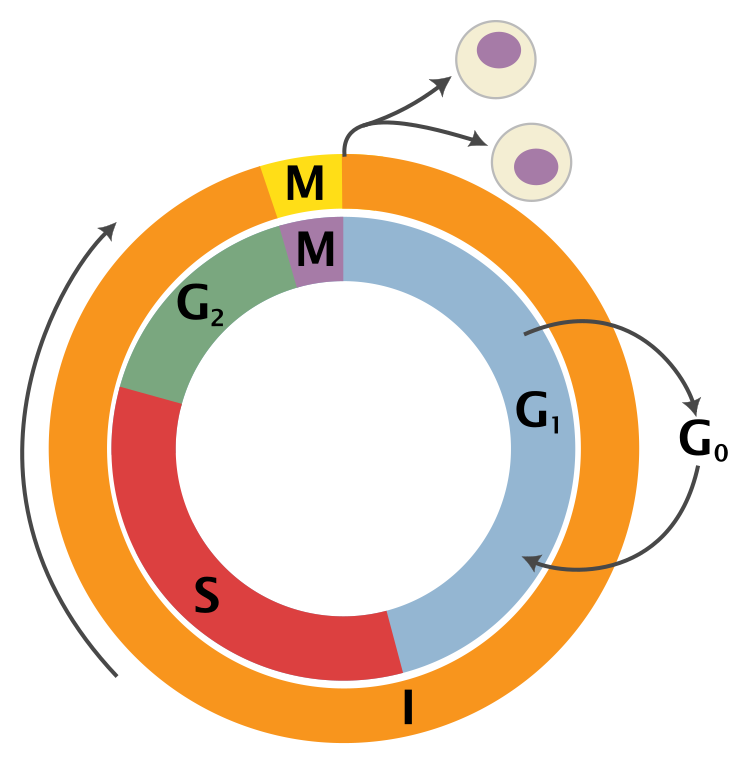
Agents are grouped by mechanism and by where they act in the cell cycle:
- Cell-cycle–specific: antimetabolites (S phase), microtubule inhibitors (M phase), bleomycin (G2/M).
- Cell-cycle–nonspecific: alkylating agents, platinum compounds, and the anthracyclines — these hit dividing and resting cells.
On Step 1 the shared toxicities are rarely the answer. The exam rewards the drug-specific, organ-defining toxicities — heart, lung, bladder, kidney, peripheral nerve, cerebellum — plus a short list of rescue agents. Learn those signatures cold.
- Doxorubicin / daunorubicin → dilated cardiomyopathy (dose-dependent, largely irreversible); prevent with dexrazoxane.
- Bleomycin and busulfan → pulmonary fibrosis (also methotrexate, carmustine).
- Cyclophosphamide / ifosfamide → hemorrhagic cystitis from the metabolite acrolein; prevent with mesna + hydration.
- Cisplatin → nephrotoxicity + ototoxicity + peripheral neuropathy (protect the kidney with amifostine + saline hydration/diuresis); carboplatin is less nephro-/ototoxic but more myelosuppressive (thrombocytopenia).
- Vincristine → peripheral neuropathy and ileus; vinblastine → bone marrow suppression.
- Cytarabine → cerebellar ataxia at high doses (plus pancytopenia).
- 5-FU and methotrexate → mucositis + myelosuppression; MTX toxicity is rescued by leucovorin, 5-FU is not.
- Irinotecan → severe diarrhea.
- 6-MP toxicity is increased by allopurinol (xanthine oxidase inhibition blocks 6-MP breakdown).
Antimetabolites (S phase)
| Drug | Mechanism | Clinical use | Signature toxicity |
|---|---|---|---|
| Methotrexate | Inhibits dihydrofolate reductase → ↓THF → ↓dTMP | ALL, lymphoma, choriocarcinoma; RA, psoriasis, ectopic pregnancy | Myelosuppression (reversed by leucovorin), hepatotoxicity, mucositis, pulmonary fibrosis |
| 5-Fluorouracil (5-FU) | 5-FdUMP inhibits thymidylate synthase → ↓dTMP | Colorectal, pancreatic; topical for actinic keratosis / superficial basal cell carcinoma | Myelosuppression (NOT reversed by leucovorin — leucovorin potentiates it), photosensitivity, hand-foot syndrome |
| 6-Mercaptopurine (6-MP) | Purine analog activated by HGPRT; blocks de novo purine synthesis | ALL maintenance; IBD (as azathioprine) | Myelosuppression, hepatotoxicity; toxicity ↑ by allopurinol |
| Cytarabine (Ara-C) | Pyrimidine analog → inhibits DNA polymerase | AML induction, high-grade lymphoma | Pancytopenia; cerebellar ataxia (high dose) |
| Hydroxyurea | Inhibits ribonucleotide reductase | CML, polycythemia vera; sickle cell disease (↑HbF) | Myelosuppression, macrocytosis |

DNA cross-linkers: alkylating agents & platinums (cell-cycle nonspecific)
| Drug | Mechanism | Clinical use | Signature toxicity |
|---|---|---|---|
| Cyclophosphamide / ifosfamide | Nitrogen mustard; cross-links DNA at guanine N-7; needs hepatic CYP450 activation | Lymphoma/leukemia (CHOP), solid tumors; SLE nephritis, granulomatosis with polyangiitis | Hemorrhagic cystitis (acrolein) — prevent with mesna + hydration; SIADH; (ifosfamide adds neurotoxicity) |
| Carmustine / lomustine (nitrosoureas) | Alkylate DNA; lipophilic → cross the blood–brain barrier | Brain tumors (glioblastoma) | CNS toxicity — ataxia, dizziness, seizures |
| Busulfan | Alkylates DNA | CML; myeloablation before stem cell transplant | Pulmonary fibrosis, hyperpigmentation, severe myelosuppression |
| Cisplatin / carboplatin / oxaliplatin | Cross-link DNA (alkylating-like) | Testicular, ovarian, bladder, lung; colorectal (oxaliplatin) | Cisplatin: nephrotoxicity + ototoxicity + peripheral neuropathy; carboplatin → more myelosuppression; oxaliplatin → cold-induced neuropathy |
Microtubule (M phase) & topoisomerase inhibitors
| Drug | Mechanism | Clinical use | Signature toxicity |
|---|---|---|---|
| Vincristine | Binds β-tubulin → inhibits microtubule polymerization (blocks spindle) | Hodgkin/NHL, ALL, Wilms tumor | Peripheral neuropathy, constipation/ileus (relatively marrow-sparing) |
| Vinblastine | Same — inhibits polymerization | Hodgkin lymphoma (ABVD) | Bone marrow suppression |
| Paclitaxel / docetaxel (taxanes) | Hyperstabilize microtubules → block depolymerization (M-phase arrest) | Ovarian, breast, lung cancer | Neuropathy, myelosuppression, hypersensitivity reactions |
| Etoposide / teniposide | Inhibit topoisomerase II → DNA double-strand breaks | Testicular cancer, small cell lung cancer, AML | Myelosuppression, alopecia |
| Irinotecan / topotecan | Inhibit topoisomerase I | Colorectal (irinotecan); ovarian/SCLC (topotecan) | Severe diarrhea (irinotecan), myelosuppression |
Antitumor antibiotics
| Drug | Mechanism | Clinical use | Signature toxicity |
|---|---|---|---|
| Doxorubicin / daunorubicin (anthracyclines) | Intercalate DNA + inhibit topoisomerase II + generate free radicals | Breast, sarcoma, lymphoma/leukemia (ABVD, CHOP) | Dilated cardiomyopathy (dose-dependent) — prevent with dexrazoxane; red urine (harmless) |
| Bleomycin | Induces free radicals → DNA strand breaks (G2/M) | Testicular cancer, Hodgkin lymphoma (ABVD) | Pulmonary fibrosis; skin hyperpigmentation; minimal myelosuppression |
| Dactinomycin (actinomycin D) | Intercalates DNA → blocks transcription | Pediatric tumors: Wilms, Ewing sarcoma, rhabdomyosarcoma | Myelosuppression |
- A 22-year-old man treated for testicular cancer develops a dry cough, exertional dyspnea, bibasilar crackles, and a restrictive pattern on PFTs. → Bleomycin (pulmonary fibrosis).
- A woman treated for breast cancer years earlier now has progressive dyspnea, orthopnea, and a dilated, globally hypokinetic heart with reduced ejection fraction. → Doxorubicin (dilated cardiomyopathy).
- A child on chemotherapy develops gross hematuria and dysuria. → Cyclophosphamide (hemorrhagic cystitis from acrolein; should have received mesna).
- A patient on FOLFIRI for colon cancer develops severe watery diarrhea. → Irinotecan.
- A patient's creatinine rises alongside new high-frequency hearing loss and tinnitus. → Cisplatin (nephro- and ototoxicity).
- A patient on high-dose cytarabine develops ataxia, nystagmus, and dysarthria. → Cytarabine (cerebellar toxicity).
- A man on ALL therapy develops foot drop, distal tingling, and constipation. → Vincristine (peripheral/autonomic neuropathy).
- Leucovorin (folinic acid): rescues host cells from methotrexate by bypassing DHFR. Paradoxically potentiates 5-FU — never give it to treat 5-FU toxicity.
- Mesna: binds acrolein → prevents cyclophosphamide / ifosfamide hemorrhagic cystitis.
- Dexrazoxane: iron-chelating antioxidant → limits doxorubicin cardiotoxicity.
- Amifostine: free-radical scavenger → limits cisplatin nephrotoxicity.
- Uridine triacetate: antidote for 5-FU / capecitabine overdose.
- Allopurinol + 6-MP or azathioprine: xanthine oxidase inhibition → toxic thiopurine accumulation → reduce the thiopurine dose.
- ABVD (Hodgkin lymphoma) = Adriamycin (doxorubicin), Bleomycin, Vinblastine, Dacarbazine — the regimen packs the two organ-toxicity stars: heart (doxorubicin) + lung (bleomycin).
- "vinBLASTine BLASTs the bone marrow" (myelosuppression); vinCRIStine spares marrow but wrecks nerves (neurotoxiCITY).
- "Children ACT out" → dACTinomycin (actinomycin D) for pediatric tumors (Wilms, Ewing, rhabdomyosarcoma).
- The "B" drugs Breathe badly: Bleomycin and Busulfan → pulmonary fibrosis.
- Cyclophosphamide → Cystitis; Mesna Mops it up.
Practice Pharmacology now
Board-style questions, spaced-repetition flashcards, and a Socratic AI tutor — free to start.