Antipsychotics: EPS & Neuroleptic Malignant Syndrome
A boards-focused lesson on antipsychotic movement complications: the four extrapyramidal symptoms with their \"rule of 4s\" timeline and treatments, plus recognition and next-best-step management of neuroleptic malignant syndrome, including how to distinguish it from serotonin syndrome and malignant hyperthermia.
Why antipsychotics cause movement problems
Antipsychotics treat psychosis by blocking dopamine D2 receptors in the mesolimbic pathway. The trouble is that the same blockade hits other dopamine tracts: the nigrostriatal (motor) pathway → extrapyramidal symptoms (EPS), and the tuberoinfundibular pathway → hyperprolactinemia (galactorrhea, gynecomastia, amenorrhea).
Risk tracks with potency:
- High-potency typicals (haloperidol, fluphenazine) → the most EPS and NMS.
- Low-potency typicals (chlorpromazine, thioridazine) → fewer EPS but more anticholinergic / antihistamine / anti-α1 effects (sedation, dry mouth, orthostasis).
- Atypicals (2nd-gen) → less EPS but metabolic syndrome; risperidone is the atypical with the most EPS and prolactin elevation.
High-yield trap: dopamine-blocking antiemetics (metoclopramide, prochlorperazine, promethazine) cause the exact same dystonia, akathisia, and even NMS. Neuroleptic malignant syndrome (NMS) is the feared, life-threatening idiosyncratic reaction.
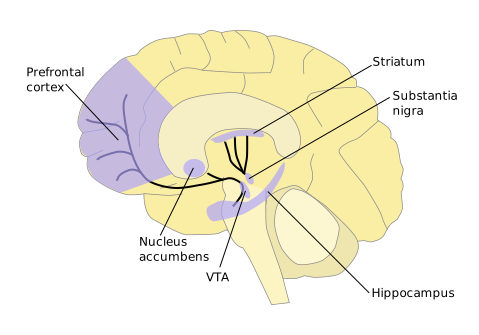
- Nigrostriatal D2 blockade → EPS; tuberoinfundibular D2 blockade → hyperprolactinemia (galactorrhea, gynecomastia, amenorrhea, low libido).
- EPS follow a "rule of 4s" timeline (an approximate heuristic): acute dystonia (hours) → akathisia (days) → drug-induced parkinsonism (weeks) → tardive dyskinesia (months–years).
- Acute dystonia and drug-induced parkinsonism are treated with anticholinergics (benztropine, diphenhydramine); parkinsonism can also use amantadine or a dose reduction.
- Akathisia = subjective inner restlessness / cannot sit still → lower the dose + propranolol (± benzodiazepine). Do NOT mistake it for worsening psychosis and up-titrate.
- Tardive dyskinesia (orofacial choreoathetosis) → VMAT2 inhibitors (valbenazine, deutetrabenazine); anticholinergics WORSEN it; may be irreversible.
- NMS tetrad: hyperthermia + "lead-pipe" rigidity + autonomic instability + altered mental status; labs show ↑↑CK, leukocytosis, myoglobinuria → AKI (rhabdomyolysis).
- NMS can also be triggered by abrupt withdrawal of dopaminergic drugs (stopping levodopa) in Parkinson patients.
- Clozapine = lowest EPS/TD risk but agranulocytosis (mandatory ANC monitoring), myocarditis, seizures, weight gain.
The four extrapyramidal symptoms
| EPS type | Typical onset | Classic features | First-line management |
|---|---|---|---|
| Acute dystonia | Hours–days | Sustained contractions: oculogyric crisis, torticollis, trismus, laryngospasm (airway emergency) | IV/IM benztropine or diphenhydramine (anticholinergic) |
| Akathisia | Days–weeks | Subjective restlessness, pacing, cannot sit still | ↓ dose; propranolol; benzodiazepine adjunct |
| Drug-induced parkinsonism | Weeks–months | Bradykinesia, cogwheel rigidity, resting tremor, masked facies | ↓ dose; benztropine or amantadine |
| Tardive dyskinesia | Months–years | Choreoathetoid orofacial/lingual movements (lip-smacking, tongue protrusion) | ↓ dose / switch (clozapine); VMAT2 inhibitor; STOP anticholinergics |
EPS — "Rule of 4s" (approximate teaching heuristic for onset):
- 4 hours → acute Dystonia
- 4 days → Akathisia
- 4 weeks → Parkinsonism
- 4 months → Tardive dyskinesia
NMS = "FEVER":
- Fever (hyperthermia)
- Encephalopathy (altered mental status)
- Vitals unstable (autonomic instability)
- Enzymes elevated (↑↑CK)
- Rigidity ("lead-pipe")
Quick discriminator: Serotonin syndrome → clonus + hyperreflexia, treat with cyproheptadine; NMS → lead-pipe rigidity + hyporeflexia, treat with dantrolene / bromocriptine.
A 22-year-old man given IM haloperidol for agitation (or IV metoclopramide for migraine) develops involuntary neck twisting and upward deviation of the eyes (oculogyric crisis) ~6 hours later. He is alert and afebrile, with no rigidity.
Buzzwords: oculogyric crisis, torticollis, trismus, tongue protrusion, hours after a D2 blocker; young males are at higher risk.
NEXT BEST STEP: Give IV/IM benztropine or diphenhydramine for rapid relief. Watch for laryngeal dystonia — an airway emergency. This is not tardive dyskinesia (wrong timeline) and not NMS (patient is afebrile with normal mentation and no rigidity).
A 30-year-old man started on haloperidol 5 days ago is brought in with T 40°C, generalized "lead-pipe" rigidity, confusion, fluctuating BP 170/100, diaphoresis, and HR 130. Labs: CK 6,000, WBC 15,000, and myoglobinuria on urinalysis.
Buzzwords: recent antipsychotic start or dose increase (or abrupt stop of a Parkinson drug), hyperthermia, lead-pipe rigidity, autonomic instability, altered mentation, ↑↑CK.
NEXT BEST STEP:
- Immediately STOP the antipsychotic.
- Begin aggressive supportive care: IV fluids, active cooling, correct electrolytes, and monitor for rhabdomyolysis → AKI.
- For severe/refractory cases add dantrolene (for rigidity/hyperthermia) ± a dopaminergic agent (bromocriptine, amantadine); benzodiazepines help agitation and can break milder cases.
- Restart an antipsychotic — preferably a lower-potency or atypical agent — only after full recovery (≥ 2 weeks later).

NMS vs. serotonin syndrome vs. malignant hyperthermia
| Feature | Neuroleptic malignant syndrome | Serotonin syndrome | Malignant hyperthermia |
|---|---|---|---|
| Trigger | D2 antagonists (antipsychotics, metoclopramide) or dopaminergic withdrawal | Serotonergic drugs (SSRIs, MAOIs, tramadol, linezolid, triptans) | Volatile anesthetics (halothane, sevoflurane) + succinylcholine |
| Onset | Days–weeks (slow) | < 24 hours (rapid) | Minutes–hours (intra-/post-op) |
| Neuromuscular | Lead-pipe rigidity, hyporeflexia | Hyperreflexia, clonus (esp. lower limbs), myoclonus | Masseter/generalized rigidity, rising ETCO2 |
| Other clues | ↑↑CK, leukocytosis | Mydriasis, diarrhea, agitation | Autosomal-dominant RYR1 mutation |
| Treatment | Stop drug + supportive; dantrolene, bromocriptine | Stop drug + supportive; cyproheptadine | Dantrolene + stop trigger |
Tardive dyskinesia & prevention pearls
Tardive dyskinesia (TD) results from chronic D2 blockade → receptor upregulation/supersensitivity, producing involuntary choreoathetoid movements of the face, tongue, and trunk after months to years. It is often irreversible, so prevention wins: use the lowest effective dose, prefer atypicals, and screen with the AIMS (Abnormal Involuntary Movement Scale).
Critical board contrast: anticholinergics (benztropine) relieve acute dystonia and drug-induced parkinsonism but WORSEN tardive dyskinesia. First-line TD therapy is a VMAT2 inhibitor (valbenazine, deutetrabenazine); also consider dose reduction or switching (clozapine has the lowest TD risk).
Other on-service pearls: tuberoinfundibular blockade → hyperprolactinemia (galactorrhea, gynecomastia, amenorrhea, low libido — worst with risperidone). Metabolic syndrome (weight gain, dyslipidemia, new-onset diabetes) is worst with olanzapine and clozapine — monitor weight, fasting glucose/HbA1c, and lipids.
Practice Psychiatry now
Board-style questions, spaced-repetition flashcards, and a Socratic AI tutor — free to start.