Antifungals & Antivirals
A Step 1 high-yield pharmacology lesson on antifungals and antivirals, organized around their molecular targets (ergosterol, cell wall, and the DNA/microtubule exceptions for fungi; virus-specific kinases, polymerases, and neuraminidase for viruses), with drug-comparison tables, board-classic toxicities and associations, and vignette-to-drug practice.
The organizing principle: selective toxicity
Both drug classes live or die by selective toxicity — hitting the pathogen while sparing human cells — and the boards test the exact molecular targets that make this possible.
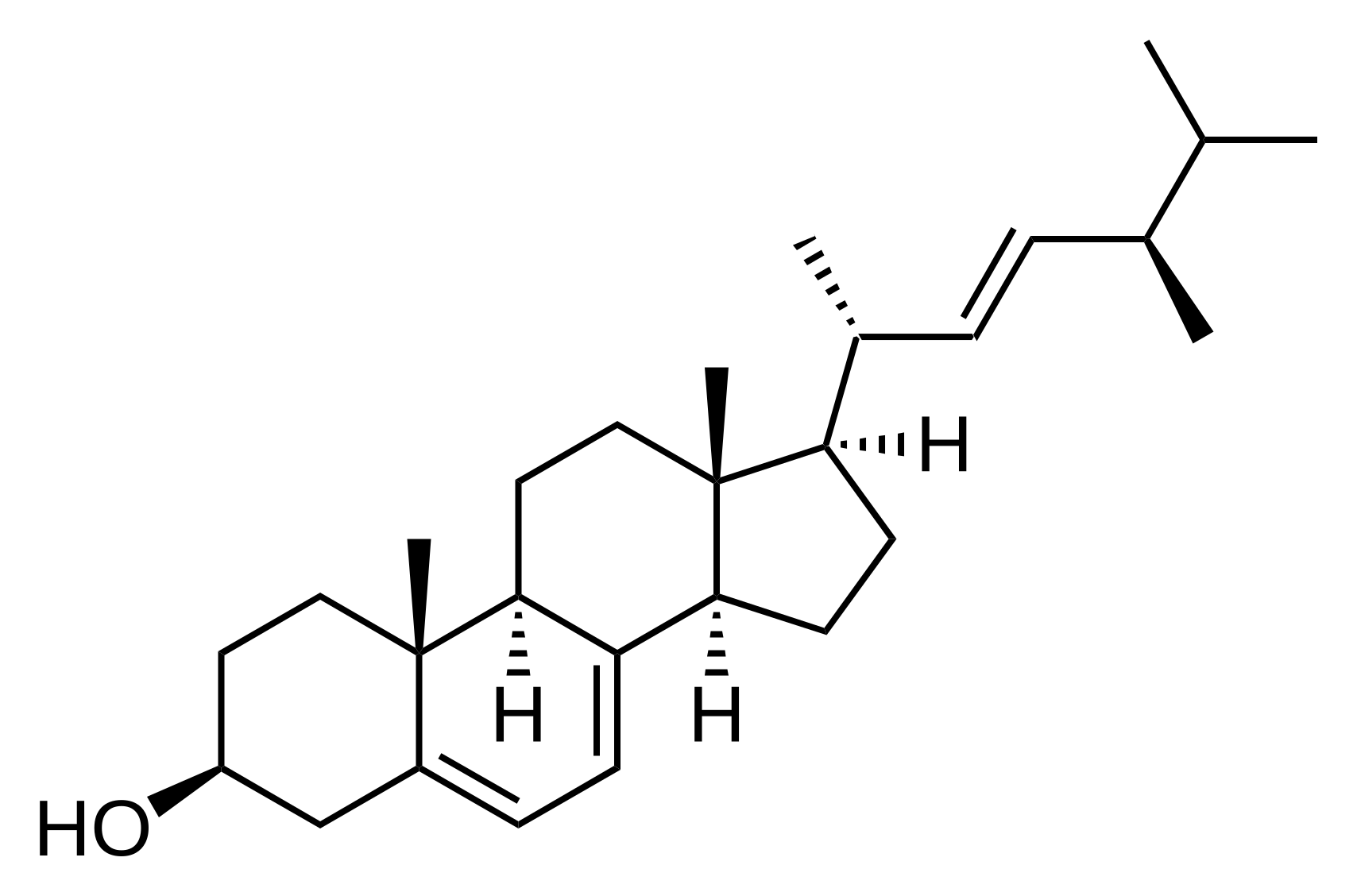
Antifungals mostly exploit two structures we lack: ergosterol, the fungal membrane sterol (our analog is cholesterol), and the fungal cell wall (β-1,3-glucan). Two agents are exceptions to that membrane/wall framing — flucytosine targets fungal DNA/RNA synthesis and griseofulvin binds microtubules — so keep them mentally separate. Because fungi are eukaryotes like us, the overlap is large, so systemic antifungals carry heavy host toxicity — nephrotoxicity, hepatotoxicity, and marrow suppression dominate the vignettes.
Antivirals face the opposite problem: viruses hijack host machinery, so the best drugs target a step that is uniquely viral. The recurring theme is activation by a viral kinase (acyclovir needs HSV/VZV thymidine kinase; ganciclovir needs CMV UL97 kinase) or inhibition of a virus-specific enzyme (viral DNA/RNA polymerase, influenza neuraminidase). When a drug bypasses the viral kinase (foscarnet, cidofovir), it stays active against kinase-mutant resistant strains — a favorite exam twist.
- Azoles inhibit lanosterol 14-α-demethylase (a fungal CYP450), blocking ergosterol synthesis; they also inhibit human CYP450 → major drug interactions.
- Ketoconazole also blocks human steroidogenesis → gynecomastia, ↓ libido (classic association).
- Voriconazole → visual disturbances (photopsia); it is the drug of choice for invasive Aspergillus.
- Amphotericin B binds ergosterol and forms membrane pores → the go-to for serious systemic mycoses; its toxicity is nephrotoxicity + K+/Mg2+ wasting.
- Nystatin shares amphotericin's mechanism but is too toxic IV → topical only (oral thrush, vaginal/diaper candidiasis).
- Terbinafine inhibits squalene epoxidase — first-line for onychomycosis (nail fungus).
- Echinocandins ("-fungins") inhibit β-1,3-glucan synthase = the only class hitting the cell wall (first-line for invasive candidiasis).
- Flucytosine is converted (by fungal cytosine deaminase) to 5-FU → inhibits fungal DNA/RNA synthesis (5-FdUMP blocks thymidylate synthase); paired with amphotericin for cryptococcal meningitis; toxicity = bone marrow suppression.
- Griseofulvin disrupts microtubules, deposits in keratin — oral therapy for dermatophytes; teratogenic, induces CYP450, disulfiram-like reaction.
Antifungal drugs at a glance
| Drug (class) | Mechanism | Clinical use | Key toxicity |
|---|---|---|---|
| Amphotericin B (polyene) | Binds ergosterol → membrane pores (ion leak) | Serious systemic mycoses: Cryptococcus, Histoplasma, Blastomyces, Coccidioides, Mucor, systemic Candida | Nephrotoxicity; hypokalemia + hypomagnesemia; fever/chills on infusion; anemia; phlebitis |
| Nystatin (polyene) | Same as amphotericin — too toxic for IV | Topical only: oral thrush (swish & swallow), vaginal/diaper candidiasis | Minimal systemic (topical) |
| Azoles (fluconazole, itraconazole, voriconazole, ketoconazole, clotrimazole) | Inhibit lanosterol 14-α-demethylase (CYP450) → ↓ ergosterol | Fluconazole: cryptococcal maintenance, candidiasis; itraconazole: Histo/Blasto; voriconazole: Aspergillus | CYP450 inhibition (interactions); hepatotoxicity; ketoconazole → ↓ testosterone/gynecomastia; voriconazole → visual disturbance |
| Terbinafine (allylamine) | Inhibits squalene epoxidase | Dermatophytes, esp. onychomycosis | Hepatotoxicity; GI upset; taste disturbance |
| Echinocandins (caspofungin, micafungin, anidulafungin) | Inhibit β-1,3-glucan synthase (cell wall) | Invasive candidiasis (first-line); aspergillosis (salvage) | GI upset; flushing (histamine release) |
| Flucytosine | → 5-FU → blocks fungal DNA/RNA synthesis (5-FdUMP inhibits thymidylate synthase) | + Amphotericin for cryptococcal meningitis | Bone marrow suppression |
| Griseofulvin | Disrupts microtubules; deposits in keratin | Oral tx of dermatophytoses (tinea/ringworm, tinea capitis) | Teratogenic; CYP450 induction; disulfiram-like reaction; headache/confusion |
- Acyclovir/valacyclovir/famciclovir: guanosine analogs activated by viral thymidine kinase (HSV, VZV) → chain-terminate viral DNA polymerase. Little/no activity vs CMV (CMV lacks thymidine kinase). Well tolerated; crystalline nephropathy if dehydrated.
- Resistance to acyclovir = mutated/absent viral thymidine kinase → switch to foscarnet.
- Ganciclovir/valganciclovir: monophosphorylated by CMV kinase (UL97) → drug of choice for CMV (retinitis in immunocompromised). More toxic than acyclovir: neutropenia/pancytopenia, nephrotoxicity.
- Foscarnet = pyrophosphate analog that directly blocks viral DNA polymerase/RT — no kinase activation needed. Used for CMV retinitis when ganciclovir fails and acyclovir-resistant HSV. Toxicity: nephrotoxicity + electrolyte derangements (↓/↑ Ca, ↓ Mg) → seizures.
- Cidofovir: nucleotide analog inhibiting viral DNA polymerase, no viral kinase needed; nephrotoxic → give with probenecid + IV saline.
- Oseltamivir/zanamivir: inhibit influenza neuraminidase → block release of progeny virions; work on influenza A and B.
- Ribavirin: inhibits IMP dehydrogenase (↓ guanine nucleotides); historically part of chronic HCV combination therapy (now largely replaced by direct-acting antivirals); toxicity = hemolytic anemia and severe teratogen.
Antiviral drugs at a glance
| Drug | Mechanism | Clinical use | Key toxicity |
|---|---|---|---|
| Acyclovir / valacyclovir / famciclovir | Guanosine analog; viral TK-activated → inhibits viral DNA pol (chain termination) | HSV, VZV: genital herpes, zoster, HSV encephalitis | Well tolerated; crystalline nephropathy if dehydrated |
| Ganciclovir / valganciclovir | Guanosine analog; CMV UL97 kinase-activated → inhibits viral DNA pol | CMV (retinitis, immunocompromised) | Bone marrow suppression (neutropenia); nephrotoxicity |
| Foscarnet | Pyrophosphate analog; directly inhibits viral DNA pol/RT (no kinase) | CMV retinitis (ganciclovir failure); acyclovir-resistant HSV | Nephrotoxicity; Ca/Mg abnormalities → seizures |
| Cidofovir | Nucleotide analog; inhibits viral DNA pol (no viral kinase) | CMV retinitis; acyclovir-resistant HSV | Nephrotoxicity (give probenecid + saline) |
| Oseltamivir / zanamivir | Inhibit influenza neuraminidase → ↓ viral release | Influenza A and B (tx/prophylaxis) | GI upset (oseltamivir); bronchospasm (inhaled zanamivir) |
| Ribavirin | Inhibits IMP dehydrogenase → ↓ guanine nucleotides | Chronic HCV (older combination regimens; DAAs now first-line); RSV (historical) | Hemolytic anemia; severe teratogen |
1. An AIDS patient (CD4 20) has headache, high CSF opening pressure, and India-ink/cryptococcal-antigen-positive CSF. Induction therapy? → Amphotericin B + flucytosine (then fluconazole for maintenance).
2. During IV therapy for disseminated histoplasmosis, a patient develops rigors and fever, then a rising creatinine with K+ 3.0 and Mg2+ low. → Amphotericin B ("shake and bake" infusion reaction + renal K+/Mg2+ wasting; use liposomal + hydration).
3. A transplant patient with CMV retinitis on ganciclovir develops ANC 400; switched to another agent, he then has a tonic-clonic seizure with Ca2+ 6.5. → Foscarnet (marrow-sparing but causes electrolyte-driven seizures).
4. A 55-year-old has a thick, discolored, crumbling great-toenail; KOH shows septate hyphae. → oral Terbinafine.
5. A man treated long-term for chronic mucocutaneous candidiasis develops gynecomastia and decreased libido. → Ketoconazole (inhibits human steroidogenesis).
6. A hepatitis C patient on a ribavirin-containing regimen develops fatigue, a falling hemoglobin with ↑ reticulocytes and ↑ indirect bilirubin. → Ribavirin-induced hemolytic anemia (also strongly teratogenic — mandatory contraception).

- "Ampho-terrible" — Amphotericin B's toxicity profile; the infusion fever/chills are called "shake and bake." Remember to supplement K+ and Mg2+.
- Amphotericin & nystatin "tear holes" in the fungal membrane by binding ergosterol to form pores. Nystatin = "swish and swallow" for oral thrush.
- FOScarnet = pyroFOSphate analog — needs no viral kinase, so it works on kinase-mutant (acyclovir/ganciclovir-resistant) virus; watch for electrolyte-driven seizures.
- "-azoles" are potent CYP450 inhibitors → think drug interactions on every azole question.
- Griseo-FULL-vin deposits FULLy in keratin (skin, hair, nails) — for dermatophytes only.
Resistance & drug-specific associations to lock in
The boards reward pattern recognition on why a drug fails and what replaces it:
- Acyclovir resistance → thymidine-kinase-mutant/deficient HSV (can't monophosphorylate the drug) → use foscarnet.
- Ganciclovir resistance → mutated UL97 kinase or CMV DNA polymerase → use foscarnet or cidofovir.
- Nephrotoxicity cluster: amphotericin B (K+/Mg2+ wasting), foscarnet (Ca/Mg + seizures), cidofovir (give probenecid + saline), acyclovir (crystalluria if dehydrated) — hydration is protective across the board.
- Signature toxicity → drug: gynecomastia = ketoconazole; visual changes = voriconazole; neutropenia = ganciclovir; hemolytic anemia + teratogen = ribavirin; disulfiram-like reaction + teratogen (antifungal) = griseofulvin.
- Antifungal targets are five buckets, not two: (1) ergosterol synthesis — azoles (14-α-demethylase) and terbinafine (squalene epoxidase); (2) the finished ergosterol membrane — amphotericin B and nystatin (pore-forming polyenes); (3) the cell wall — echinocandins (β-1,3-glucan synthase, the only wall-active class); (4) fungal DNA/RNA synthesis — flucytosine (→5-FU); (5) microtubules — griseofulvin. Note that flucytosine and griseofulvin do not touch ergosterol.
Practice Pharmacology now
Board-style questions, spaced-repetition flashcards, and a Socratic AI tutor — free to start.