Anticoagulants & Antiplatelet Drugs
A Step 1–focused survey of anticoagulants (heparins, warfarin, and the DOACs), antiplatelet agents (aspirin, P2Y12 and GpIIb/IIIa inhibitors), and thrombolytics — organized around each drug's mechanism, monitoring test, antidote, and signature toxicity. Emphasizes board-favorite associations like HIT, warfarin skin necrosis, Reye syndrome, and ticlopidine agranulocytosis.
Overview: Where Each Drug Class Hits
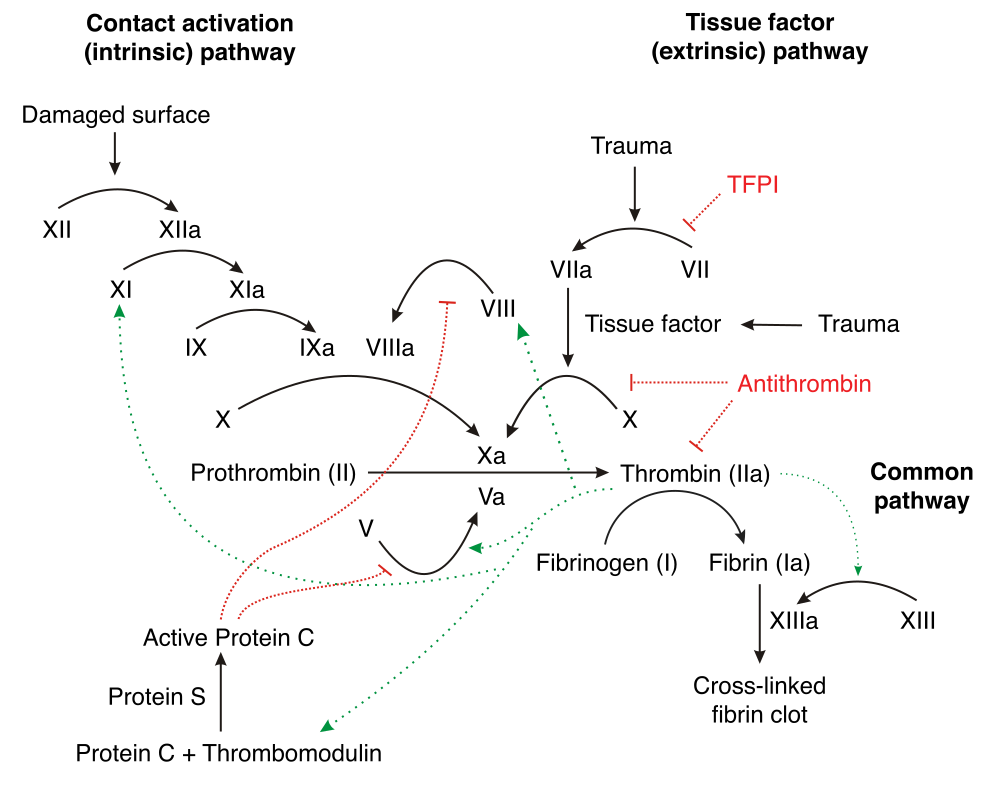
Hemostasis has two arms, and the boards test drugs by which arm they block.
- Primary hemostasis = the platelet plug. Antiplatelet drugs work here and target arterial ('white') thrombi — the clots behind MI, ischemic stroke, and coronary stents.
- Secondary hemostasis = the coagulation cascade generating fibrin. Anticoagulants work here and target venous ('red') thrombi — DVT, PE, and cardioembolism from atrial fibrillation.
- Thrombolytics (fibrinolytics) dissolve a clot that has already formed.
For every agent, a Step 1 question almost always hinges on four things: the mechanism, the lab test that monitors it, the antidote, and one signature toxicity. Master those and the class becomes predictable.
- Heparin (unfractionated) activates antithrombin III, which then inactivates thrombin (IIa) and factor Xa. Monitored by aPTT. Rapid onset, IV/SC, safe in pregnancy (does not cross the placenta). Reversed by protamine sulfate.
- LMWH (enoxaparin) and fondaparinux act predominantly on factor Xa (fondaparinux = Xa only). Longer half-life, SC, no routine monitoring, and lower HIT risk (essentially none with fondaparinux).
- HIT (type II) = IgG antibodies against the heparin–platelet factor 4 (PF4) complex → platelet activation → thrombocytopenia + paradoxical thrombosis ~5–10 days in. Stop all heparin; switch to a direct thrombin inhibitor (argatroban, bivalirudin).
- Warfarin inhibits vitamin K epoxide reductase, blocking γ-carboxylation of factors II, VII, IX, X and proteins C & S. Monitored by PT/INR. Delayed onset, oral, teratogenic, and CYP450-interaction-prone.
- Because protein C has a short half-life and falls first, warfarin causes a transient hypercoagulable state → risk of skin necrosis; this is why heparin 'bridging' overlaps the first days.
- DOACs need no routine monitoring: dabigatran = oral direct thrombin inhibitor; apixaban / rivaroxaban / edoxaban = oral direct factor Xa inhibitors.
Anticoagulants at a Glance
| Drug | Mechanism | Clinical use | Key toxicity / classic association |
|---|---|---|---|
| Unfractionated heparin | Activates antithrombin III → inhibits thrombin (IIa) & Xa | Immediate anticoagulation (PE, DVT, ACS); safe in pregnancy | Bleeding, HIT, osteoporosis; reverse with protamine |
| LMWH (enoxaparin, dalteparin) | Activates ATIII → inhibits Xa ≫ IIa | Outpatient DVT/PE Rx & prophylaxis; no routine monitoring | Bleeding; lower HIT risk; only partly reversed by protamine |
| Fondaparinux | Activates ATIII → inhibits Xa only | DVT/PE; usable when HIT is a concern | Bleeding; essentially no HIT |
| Warfarin | Inhibits vitamin K epoxide reductase → ↓ II, VII, IX, X, protein C & S | Long-term anticoagulation (AFib, mechanical valves) | Bleeding, skin necrosis, teratogen; reverse with vitamin K / PCC |
| Dabigatran | Direct thrombin (IIa) inhibitor, oral | AFib, DVT/PE | Bleeding; reverse with idarucizumab |
| Rivaroxaban, apixaban, edoxaban | Direct factor Xa inhibitors, oral | AFib, DVT/PE; no routine monitoring | Bleeding; reverse with andexanet alfa |
| Argatroban, bivalirudin | Direct thrombin inhibitors, parenteral | Anticoagulation in HIT | Bleeding |
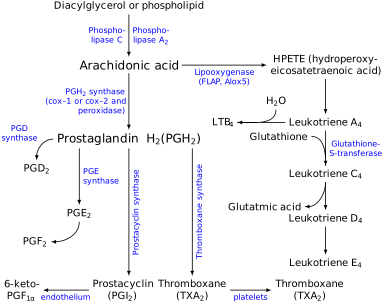
- Aspirin irreversibly acetylates COX-1, shutting off thromboxane A₂ (TXA₂) for the platelet's entire lifespan (~7–10 days). Toxicity: GI ulcers/bleeding, tinnitus (salicylism), and Reye syndrome in children with a viral illness.
- P2Y12 (ADP-receptor) blockers — clopidogrel, prasugrel, ticagrelor, ticlopidine — prevent ADP-driven activation of GpIIb/IIIa. Clopidogrel is a prodrug activated by CYP2C19 (poor metabolizers → reduced effect); ticagrelor is reversible and not a prodrug.
- Ticlopidine is the classic 'don't-forget-the-toxicity' drug: neutropenia/agranulocytosis (and TTP) — largely replaced by clopidogrel.
- GpIIb/IIIa inhibitors — abciximab, eptifibatide, tirofiban — block the final common pathway of platelet aggregation (fibrinogen cross-linking). Watch for bleeding + thrombocytopenia.
- Cilostazol / dipyridamole are phosphodiesterase inhibitors (↑ cAMP); cilostazol treats intermittent claudication.
- Thrombolytics — alteplase (tPA), reteplase, tenecteplase, streptokinase — convert plasminogen → plasmin to lyse fibrin. Feared toxicity is intracranial hemorrhage. For acute ischemic stroke, only alteplase/tenecteplase are used (not streptokinase, which is antigenic and showed net harm in stroke trials).
Antiplatelet Drugs & Thrombolytics
| Drug | Mechanism | Clinical use | Key toxicity / classic association |
|---|---|---|---|
| Aspirin | Irreversibly acetylates COX-1 → ↓ TXA₂ | ACS; secondary prevention of MI/stroke | GI bleeding, tinnitus (overdose), Reye syndrome (children) |
| Clopidogrel, prasugrel, ticagrelor | Block P2Y12 (ADP) receptor | ACS, coronary stents (+ aspirin = DAPT) | Bleeding; clopidogrel = prodrug (CYP2C19) |
| Ticlopidine | P2Y12 (ADP) receptor blocker | Rarely used (older agent) | Neutropenia / agranulocytosis, TTP |
| Abciximab, eptifibatide, tirofiban | Block GpIIb/IIIa (final common pathway) | PCI / ACS | Bleeding, thrombocytopenia |
| Cilostazol, dipyridamole | PDE inhibitor → ↑ cAMP (↓ aggregation, vasodilation) | Intermittent claudication (cilostazol) | Headache, flushing, hypotension |
| Alteplase (tPA), streptokinase | Convert plasminogen → plasmin → lyse fibrin | STEMI, massive PE; acute ischemic stroke (alteplase) | Intracranial hemorrhage; reverse with aminocaproic / tranexamic acid |
Match the classic clue to the answer:
- Day 5 of heparin, platelet count drops >50% and a new DVT appears → HIT (type II). Stop heparin; start argatroban.
- Patient started on warfarin develops painful skin necrosis over the thighs/breasts on day 3 → warfarin-induced skin necrosis (early protein C depletion).
- Child with a viral illness given aspirin develops hepatic failure + encephalopathy → Reye syndrome.
- Tinnitus with early respiratory alkalosis followed by an anion-gap metabolic acidosis → aspirin (salicylate) toxicity.
- Pregnant woman needs anticoagulation for a DVT → LMWH or heparin (warfarin is teratogenic).
- Acute ischemic stroke presenting within the window with a non-hemorrhagic head CT → alteplase (tPA).
- Patient needs anticoagulation but has a history of HIT → direct thrombin inhibitor (argatroban / bivalirudin).
- "1972" → the vitamin K–dependent factors II, VII, IX, X (2, 7, 9, 10), plus proteins C & S — exactly what warfarin depletes.
- WEPT → Warfarin → Extrinsic pathway → PT/INR (factor VII has the shortest half-life, so PT rises first). Contrast: Heparin → intrinsic pathway → PTT.
- "-xaban bans Xa" → rivaroxaban, apixaban, edoxaban are direct factor Xa inhibitors.
- "-gatran / -irudin / argatro-ban = direct Thrombin" → dabigatran, bivalirudin, argatroban directly inhibit thrombin (IIa).
- Heparin → protamine sulfate (LMWH only partially reversed).
- Warfarin → vitamin K (slow, hours–days) + FFP or PCC (rapid, for active bleeding).
- Dabigatran (direct thrombin inhibitor) → idarucizumab.
- Direct Xa inhibitors (apixaban, rivaroxaban) → andexanet alfa.
- Thrombolytics (tPA) → aminocaproic acid / tranexamic acid (± cryoprecipitate/FFP).
- Aspirin / antiplatelet bleeding → platelet transfusion (± desmopressin).
Practice Pharmacology now
Board-style questions, spaced-repetition flashcards, and a Socratic AI tutor — free to start.