Antibiotics: Mechanisms & Spectrum
A board-focused map of antibiotics organized by target — cell wall, ribosome, nucleic acid, folate, and membrane — with the bactericidal/bacteriostatic split, spectrum pearls (MRSA, Pseudomonas, atypicals, anaerobes), and the signature toxicities examiners love to test.
The framework: attack by target
The fastest way to master antibiotics for boards is to stop memorizing drugs one-by-one and instead group them by the bacterial structure they attack. There are five targets:
- Cell wall (peptidoglycan) — beta-lactams and vancomycin
- Ribosome / protein synthesis — the 30S and 50S inhibitors
- Nucleic acids (DNA/RNA) — fluoroquinolones, rifampin, metronidazole
- Folate metabolism — sulfonamides and trimethoprim
- Cell membrane — daptomycin (gram-positive), polymyxins (gram-negative)
Layered on top is the bactericidal vs. bacteriostatic distinction. This matters clinically: infections where host immunity can't help finish the job — endocarditis, meningitis, osteomyelitis, and neutropenia — demand a bactericidal drug. Because most cell-wall agents only kill actively dividing organisms, bacteriostatic drugs (which halt growth) can theoretically antagonize them.
Mechanism map
| Target | Drug classes | Specific action | Cidal / Static |
|---|---|---|---|
| Cell wall — cross-linking | Penicillins, cephalosporins, carbapenems, monobactams | Bind PBPs (transpeptidases), block peptidoglycan cross-link | Cidal |
| Cell wall — D-Ala-D-Ala | Vancomycin | Binds terminal D-Ala-D-Ala → sterically blocks transglycosylation & cross-linking (transpeptidation) | Cidal |
| 30S ribosome | Aminoglycosides, tetracyclines | AG: block initiation + cause misreading; Tetra: block aminoacyl-tRNA at A-site | AG cidal / Tetra static |
| 50S ribosome | Macrolides, clindamycin, chloramphenicol, linezolid, streptogramins | Block translocation / peptidyltransferase / initiation complex | Mostly static |
| DNA / RNA | Fluoroquinolones (gyrase, topo IV), rifampin (RNA pol), metronidazole (free radicals) | Halt replication/transcription | Cidal |
| Folate | Sulfonamides (DHPS), trimethoprim (DHFR) | Sequential block of folate synthesis | Static (cidal in combo) |
| Cell membrane | Daptomycin (G+), polymyxins (G−) | Depolarize / disrupt membrane | Cidal |
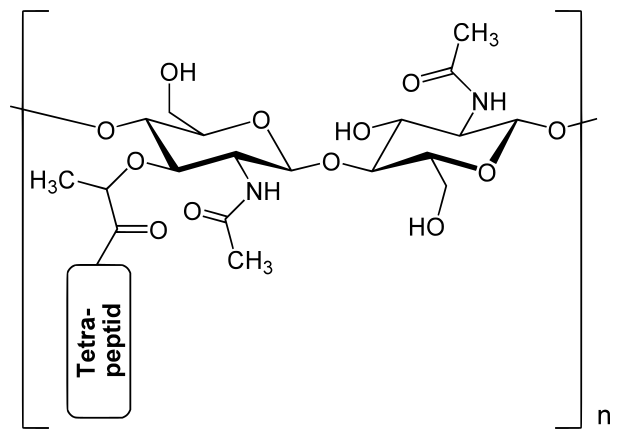
- Beta-lactams bind PBPs and are bactericidal — but only against actively dividing cells; killing is time-dependent.
- Vancomycin targets D-Ala-D-Ala; resistance (VRE) comes from swapping to D-Ala-D-Lactate. Covers MRSA; oral vancomycin for C. difficile (not absorbed).
- Aminoglycosides need O₂ for uptake → useless against anaerobes; concentration-dependent killing; synergize with beta-lactams.
- Atypicals (Mycoplasma, Chlamydia, Legionella) are covered by macrolides, tetracyclines, and fluoroquinolones — the wall-less/intracellular bugs.
- Fluoroquinolones hit DNA gyrase (topo II) in gram-negatives and topo IV in gram-positives; concentration-dependent.
- TMP-SMX blocks folate at two sequential steps → synergistic; used for PCP, community MRSA, and UTIs.
- Metronidazole covers anaerobes (below the diaphragm) and protozoa (Giardia, Trichomonas, Entamoeba).
- Aztreonam (monobactam) hits aerobic gram-negative rods only and is safe in penicillin allergy (no cross-reactivity).

Ribosomal subunit — "Buy AT 30, CCEL at 50":
- 30S — Aminoglycosides, Tetracyclines
- 50S — Chloramphenicol, Clindamycin, Erythromycin (macrolides), Linezolid (+ streptogramins)
Bacteriostatic — "ECSTaTiC": Erythromycin, Clindamycin, Sulfonamides, Trimethoprim, Tetracyclines, Chloramphenicol.
Classic trap: aminoglycosides are 30S protein-synthesis inhibitors yet are bactericidal — the one exception examiners love, because most protein-synthesis drugs are static.
30S vs 50S protein-synthesis inhibitors
| Feature | 30S inhibitors | 50S inhibitors |
|---|---|---|
| Drugs | Aminoglycosides, Tetracyclines | Macrolides, Clindamycin, Chloramphenicol, Linezolid |
| Mechanism | AG: block initiation + misreading; Tetra: block aminoacyl-tRNA at A-site | Macrolides: block translocation; Chloramphenicol: block peptidyltransferase; Linezolid: block initiation complex |
| Cidal/static | AG cidal; Tetra static | Mostly static |
| Signature toxicity | AG: nephro/ototoxicity; Tetra: teeth/bone discoloration, photosensitivity | Macrolides: QT, CYP inhibition (not azithro); Chloramphenicol: aplastic anemia, gray baby; Clinda: *C. diff*; Linezolid: serotonin syndrome, thrombocytopenia |
Spectrum & resistance pearls
MRSA carries the mecA gene → altered PBP2a with low beta-lactam affinity. Cover it with vancomycin, daptomycin, linezolid, ceftaroline (the 5th-gen cephalosporin that binds PBP2a), or — for milder community infections — TMP-SMX or doxycycline. Daptomycin is a great MRSA option except in pneumonia, where pulmonary surfactant inactivates it.
*Pseudomonas* requires anti-pseudomonal agents: piperacillin-tazobactam, ceftazidime, cefepime, carbapenems (except ertapenem), aztreonam, ciprofloxacin, and aminoglycosides.
Anaerobes: think metronidazole below the diaphragm and clindamycin above the diaphragm.
Resistance mechanisms to know cold: beta-lactamases (degrade the ring), altered PBP2a (MRSA), D-Ala-D-Lactate (VRE), and efflux pumps / ribosomal methylation for macrolides and tetracyclines.
- Flushing/erythema of the upper body during a rapid vancomycin infusion → red man syndrome (a.k.a. vancomycin flushing reaction; nonspecific histamine release, not an IgE-mediated allergy). Next step: slow the infusion ± antihistamine — do NOT switch drugs.
- Achilles tendon rupture or prolonged QT on an antibiotic → fluoroquinolone; avoid in children/pregnancy (cartilage).
- Cardiovascular collapse, ashen-gray neonate on chloramphenicol → gray baby syndrome (immature UDP-glucuronosyltransferase).
- Flushing, tachycardia, vomiting after alcohol on antibiotics → disulfiram-like reaction with metronidazole (also cefotetan).
- Progressive hearing loss + rising creatinine → aminoglycoside nephro-/ototoxicity.
- Pill esophagitis + photosensitivity → doxycycline (take upright with water; avoid dairy/antacids/iron — divalent cations chelate it).
- Target/bullous rash (SJS) or hemolysis in a G6PD-deficient patient → sulfonamide.
- Penicillin-allergic patient needing gram-negative coverage → aztreonam (no cross-reactivity).
- Aminoglycosides → nephrotoxicity + ototoxicity, neuromuscular blockade
- Vancomycin → nephrotoxicity, red man syndrome
- Fluoroquinolones → tendon rupture, QT prolongation, cartilage damage
- Tetracyclines → tooth discoloration, photosensitivity, avoid in pregnancy/<8 yr
- Chloramphenicol → aplastic anemia, gray baby syndrome
- Clindamycin → *C. difficile* colitis
- Linezolid → serotonin syndrome (weak MAOI), thrombocytopenia
- Macrolides → QT prolongation, CYP450 inhibition, cholestatic hepatitis
- Metronidazole → disulfiram reaction, metallic taste, peripheral neuropathy
- Rifampin → orange body fluids, potent CYP450 inducer, hepatotoxicity
- Sulfonamides → SJS/TEN, hemolysis (G6PD), kernicterus in neonates
- Daptomycin → myopathy (↑CK); inactivated by surfactant → not for pneumonia
Practice Infectious Disease now
Board-style questions, spaced-repetition flashcards, and a Socratic AI tutor — free to start.