Acne & Rosacea
A boards-focused dermatology lesson contrasting acne vulgaris and rosacea from pathophysiology through morphology, diagnosis, and stepwise management, anchored on the comedone-based acne-vs-rosacea discriminator and the isotretinoin workup. Emphasizes NEXT-BEST-STEP decisions tested on STEP 2 CK.
Pathophysiology: two look-alike disorders
Acne vulgaris arises from four interacting events within the pilosebaceous unit: (1) androgen-driven sebum overproduction, (2) abnormal follicular hyperkeratinization that plugs the follicle (microcomedo), (3) proliferation of *Cutibacterium acnes (formerly Propionibacterium acnes*), and (4) inflammation. The comedo is the precursor lesion.
Rosacea is a separate chronic inflammatory disorder of the central face driven by vascular/neurogenic dysregulation and innate-immune dysfunction (elevated cathelicidin LL-37 via increased kallikrein-5), with *Demodex folliculorum* implicated.
The single board-critical discriminator: acne HAS comedones; rosacea does NOT. Rosacea instead shows flushing, persistent centrofacial erythema, and telangiectasias. Both favor sebaceous skin but differ in age (teens vs adults 30–50), triggers, and treatment.
- Noninflammatory = comedones: open comedo (blackhead — dilated pore, oxidized melanin/keratin, not dirt) and closed comedo (whitehead).
- Inflammatory lesions: papules, pustules, nodules, cysts.
- Distribution: face, chest, upper back (high sebaceous-gland density).
- Grading: mild (comedonal) → moderate (papulopustular) → severe (nodulocystic, scarring).
- Earliest change is the microcomedo (plugged follicle).
- Nodulocystic disease or scarring flags need for aggressive therapy (isotretinoin).
- Sudden severe acne + virilization (hirsutism, irregular menses, deepening voice) → screen for hyperandrogenism/PCOS or an androgen-secreting tumor.
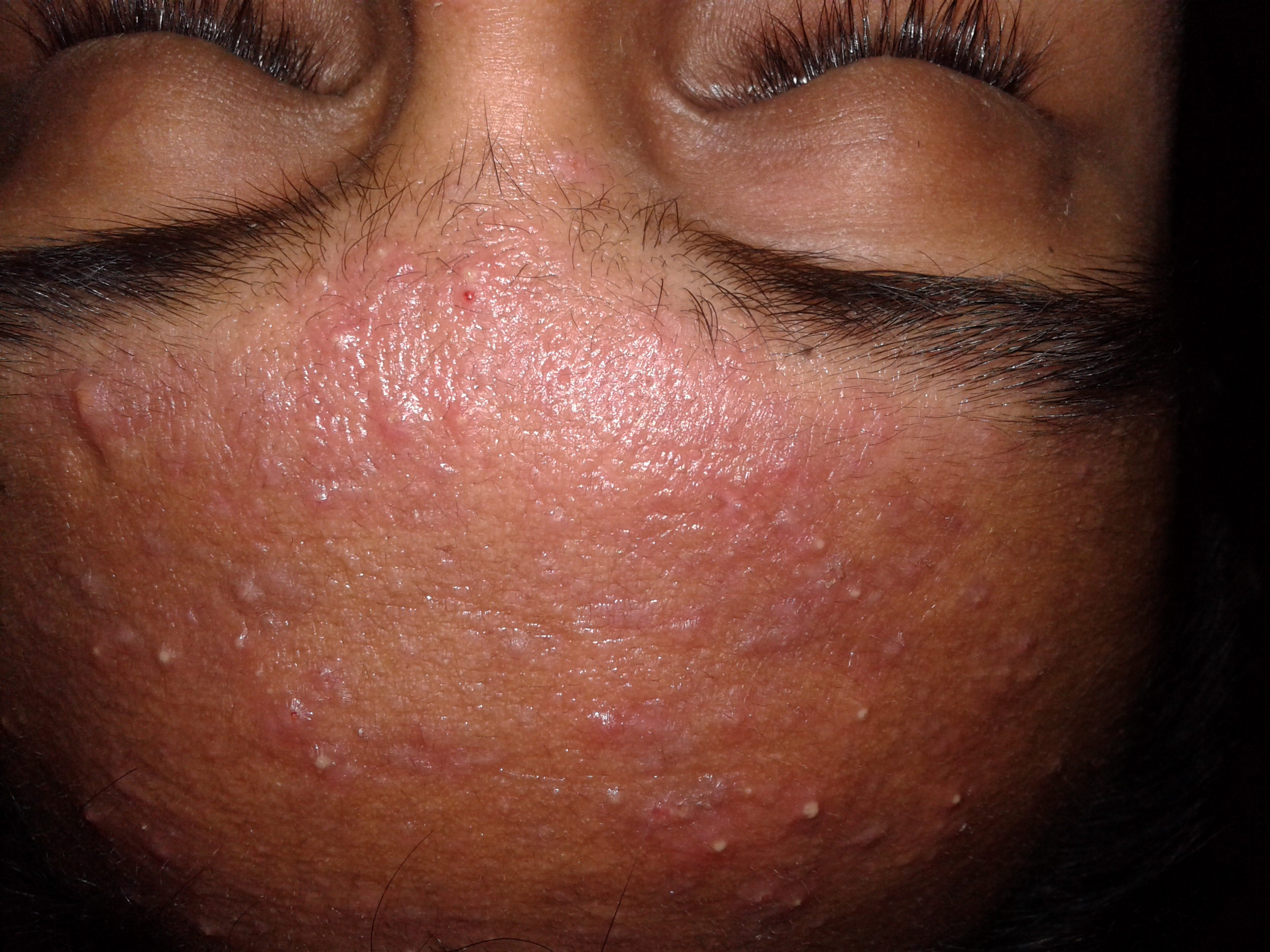
Acne vulgaris vs Rosacea
| Feature | Acne vulgaris | Rosacea |
|---|---|---|
| Typical patient | Adolescents / young adults | Adults 30–50, fair-skinned |
| Comedones | Present | Absent |
| Hallmark lesions | Comedones, papules, pustules, cysts | Flushing, erythema, telangiectasias, papulopustules |
| Distribution | Face, chest, back | Central face (cheeks, nose, chin) |
| Triggers | Androgens, occlusion, drugs (steroids, lithium) | Heat, sun, alcohol, spicy food, hot drinks, stress |
| Eye involvement | No | Yes (ocular rosacea) |
| First-line Rx | Topical retinoid + benzoyl peroxide | Trigger avoidance; topical metronidazole / azelaic acid / ivermectin |
- Mild comedonal: topical retinoid (tretinoin, adapalene) ± benzoyl peroxide (BPO).
- Mild–moderate inflammatory: topical retinoid + BPO + topical antibiotic (clindamycin).
- Moderate–severe: add oral antibiotic (doxycycline, minocycline) — always with topical retinoid + BPO; never antibiotic monotherapy.
- BPO reduces C. acnes antibiotic resistance — pair it with any antibiotic.
- Severe nodulocystic / scarring / refractory: oral isotretinoin.
- Hormonal (women): combined OCPs and/or spironolactone (esp. hormonal-pattern jawline acne).
- Limit oral antibiotics to ~3 months to curb resistance.
Vignette: A 19-year-old man has deep, painful nodules and cysts on the face, chest, and back with early scarring, unimproved after 4 months of oral doxycycline plus topical retinoid/BPO.
Diagnosis: Severe nodulocystic acne, refractory → oral isotretinoin.
Next best steps before starting:
- In patients who can become pregnant (per iPLEDGE): two negative pregnancy tests before starting + two forms of contraception — isotretinoin is teratogenic.
- Baseline lipids and LFTs (causes hypertriglyceridemia and transaminitis); monitor during therapy.
- Do NOT co-prescribe tetracyclines → additive risk of pseudotumor cerebri (idiopathic intracranial hypertension).
- Counsel on cheilitis/xerosis (most common), retinoid dermatitis, impaired night vision, and mood changes.

- Erythematotelangiectatic: flushing, persistent central erythema, telangiectasias → topical brimonidine/oxymetazoline (α-agonist vasoconstrictors) for erythema; pulsed-dye laser for telangiectasias.
- Papulopustular: papules/pustules without comedones → topical metronidazole, azelaic acid, or ivermectin (targets Demodex); oral doxycycline (subantimicrobial 40 mg) if moderate–severe.
- Phymatous (rhinophyma): sebaceous/soft-tissue hyperplasia of the nose, mostly in men → surgery/laser.
- Ocular rosacea: blepharitis, conjunctivitis, gritty/dry eyes → lid hygiene, artificial tears, oral doxycycline.
- Avoid topical corticosteroids — they cause/worsen steroid rosacea.
- Universal: trigger avoidance + daily sunscreen.
Vignette: A 48-year-old fair-skinned woman reports facial flushing triggered by red wine and hot drinks, persistent redness across the cheeks and nose, scattered papules and pustules, and visible telangiectasias. No comedones are present.
Diagnosis: Rosacea (mixed erythematotelangiectatic + papulopustular).
Next best step:
- Start topical metronidazole or azelaic acid for the papulopustules; counsel on trigger avoidance + sunscreen.
- Persistent erythema/flushing → topical brimonidine.
- Gritty, watery eyes → suspect ocular rosacea (add lid hygiene ± oral doxycycline).
- Do not prescribe topical steroids — a classic wrong answer that worsens rosacea.
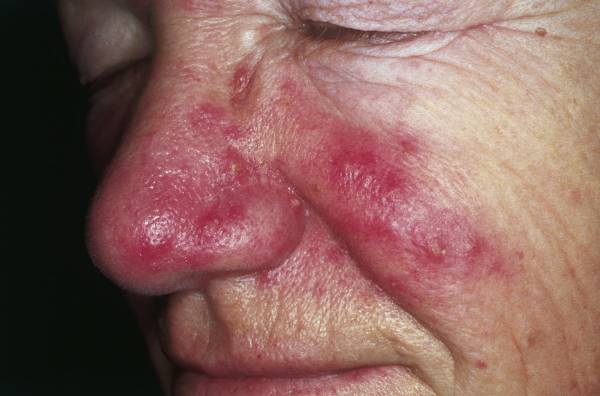
- "No comedones? Think rosacea." Comedones are the best single feature separating acne from rosacea.
- iPLEDGE "2 & 2": 2 negative pregnancy tests before starting + 2 forms of contraception — because isotretinoin is teratogenic.
- Vitamin-A + tetracyclines → raised pressure: isotretinoin (a vitamin-A derivative) plus a tetracycline → pseudotumor cerebri; never combine.
- Rosacea triggers run "hot": heat, hot drinks, sun, alcohol (esp. red wine), spicy food, and stress — a thematic cluster of everything that provokes flushing.
Practice Dermatology now
Board-style questions, spaced-repetition flashcards, and a Socratic AI tutor — free to start.